
Not all backlinks are equal. Earning inbound links is one of the highest-leverage things you can do in SEO, but the wrong links do not just fail to help. They actively damage your rankings, sometimes permanently. In fact, many brands opt for SEO without link building just to avoid these risks entirely.
Link farming is one of the most common ways this goes wrong.
And in the current search environment, it is not always obvious when it is happening. A site can look legitimate on the surface with reasonable DR, plausible topic relevance, and real-looking content and still be part of a coordinated link scheme that Google’s SpamBrain has already flagged.
This guide covers everything you need to know: what link farms are, how Google detects them today, the warning signs to look for before you build or accept a link, and exactly what to do if your site has already been affected.
What Is a Link Farm?
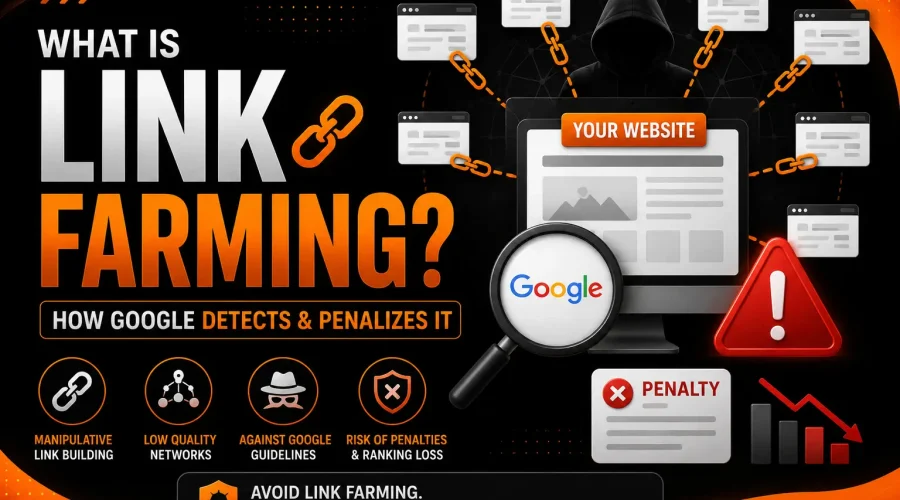
A link farm is a group of websites that exist for one purpose only: to link to each other, or to target sites, in order to artificially inflate search engine rankings. There is no genuine editorial content, no real audience, and no actual reason for any of those links to exist except to manipulate PageRank.
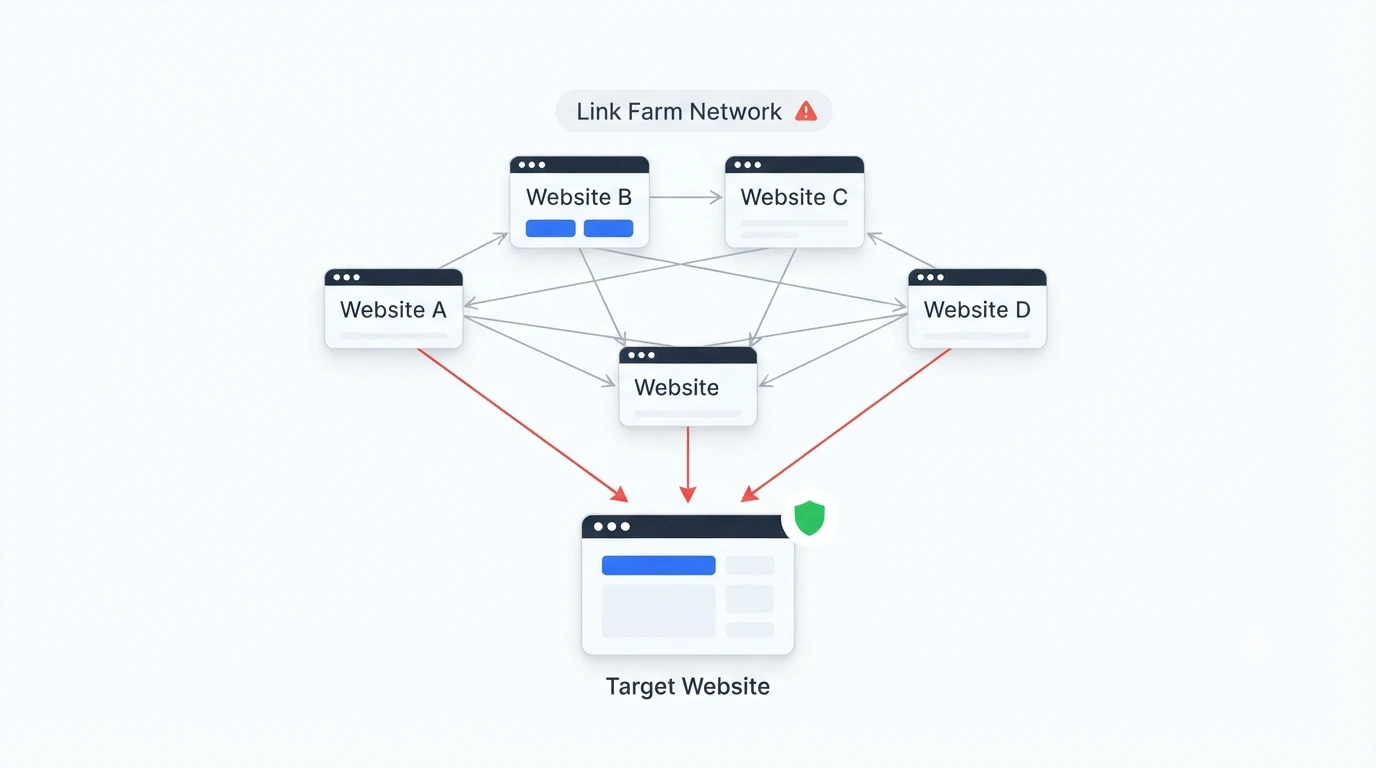
Link farming is a black-hat link-building tactic that directly violates Google’s spam policies and its guidelines on link schemes and unnatural links. The mechanics are straightforward. Google treats backlinks as editorial votes of confidence.
The more credible sites that link to you, the higher you tend to rank. Link farms manufacture those votes instead of earning them.
Why Do People Use Link Farms?
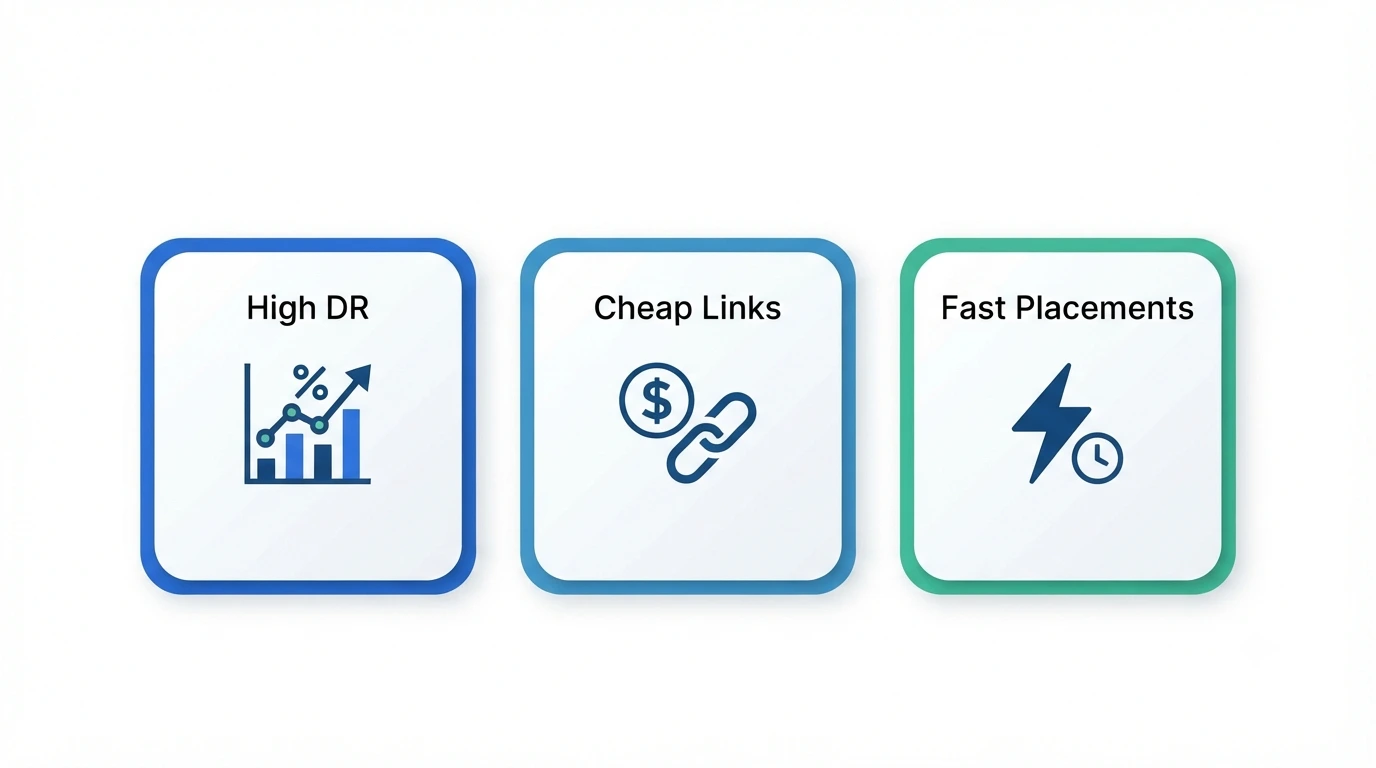
Despite the clear algorithmic risks, link farms remain widely used across competitive niches. Agencies and webmasters typically rely on them for three main reasons:
- Manipulating High-Authority Metrics: Link farm operators build their networks on expired domains that already hold historical backlinks. Because of this, third-party SEO tools show attractive metrics like a high Domain Rating (DR) or Domain Authority (DA). Inexperienced buyers look at these isolated metrics and assume they are purchasing a premium placement.
- Significantly Lower Acquisition Costs: Legitimate link building requires significant investment in manual blogger outreach, relationship management, and high-quality content production. Link farms bypass these expenses entirely. Because the operator owns the infrastructure, they can sell placements for $50 to $150 while maximizing their profit margins.
- Guaranteed and Faster Placements: Securing natural editorial links is highly unpredictable and depends entirely on the publisher’s editorial discretion. Link farms offer a transactional alternative with guaranteed placements and fast turnaround times. Since there is no real editorial review process, links go live within 24 to 48 hours.
Link Farm vs. Legitimate Site
| Signal | Legitimate Site | Link Farm |
| Organic traffic | 1,000+ per month | Near zero |
| Content quality | Original, in-depth | Thin or AI-generated |
| Authors | Named, real people | Anonymous / “Guest Writer” |
| Outbound links | Few, relevant | Hundreds, often unrelated |
| Design | Custom | Basic template |
| DR vs. traffic ratio | Aligned | High DR, near-zero traffic |
The domain rating alone tells you very little. A site with a DR of 55 and 40 monthly organic visitors has either been penalized already or is part of a link network. Legitimate sites at that DR level have real, consistent audiences.
A Brief History: From 1999 to SpamBrain
Understanding why link farms are penalized so heavily today requires knowing how Google’s response to them has evolved, because this has been one of the most sustained enforcement campaigns in search history.
| Year | Event | Impact |
| 1999 | Link farms emerge, exploiting Inktomi’s volume-based ranking algorithm | Mass manipulation of early search rankings |
| 2012 | Google Penguin 1.0 specifically targets unnatural link patterns and link schemes | Affected approximately 3% of all queries; link farms penalised at scale |
| 2013 | Penguin 2.0 with deeper crawl and stricter detection | More link schemes devalued |
| 2016 | Penguin integrated into Google’s core algorithm as a real-time signal | Link quality evaluated continuously, not just in periodic waves |
| 2021 | SpamBrain AI launched with machine learning-based spam detection | Identifies link farm clusters algorithmically rather than through rule-based filters |
| 2022 | SpamBrain link spam update | Links from farm networks devalued automatically at scale |
| 2024 | March Spam Update | AI content farms and associated link networks targeted |
| 2025 | SpamBrain improved with cluster-level detection | Entire domain clusters penalised, not just individual sites |
The critical shift in recent updates is that Google’s SpamBrain detection system no longer evaluates individual links in isolation. It evaluates the relationships between sites across the entire link graph.
A network of sites that all link to each other and to a shared set of target domains gets identified as a cluster, and every site in that cluster can be affected, including yours if you received those links. A single link farm link can now put your entire domain at risk.
How Does Google Detect Link Farms Today?
This is where most articles on this topic either go shallow or skip entirely. Understanding how detection actually works explains why modern link farms fail even when they look sophisticated on the surface.
SpamBrain AI and Link Graph Pattern Analysis
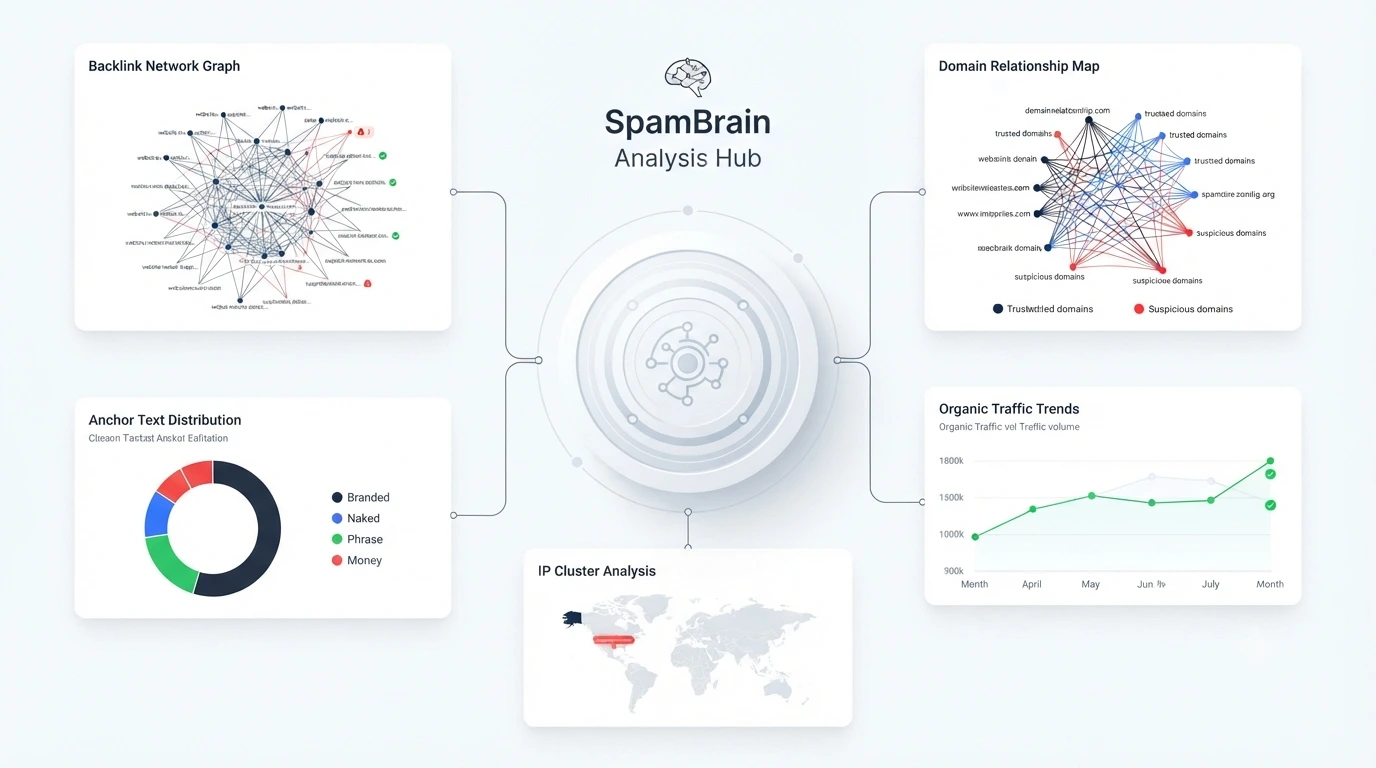
SpamBrain uses machine learning to analyze link graphs at scale. It does not just flag individual bad links. It identifies entire networks by detecting patterns that do not occur in natural editorial linking: sites that receive and give links in statistically unusual patterns, domain clusters hosted on similar IP ranges or sharing technical footprints, anchor text distributions that are unnaturally keyword-exact across multiple linking domains, and link velocity spikes that do not correlate with any content publication or brand event.
Traffic vs. DR Ratio
High DR combined with near-zero organic traffic is an immediate red flag. Real domain authority comes from real editorial citations. Sites that have built DR through genuine content earn organic traffic alongside it. Sites that bought or farmed their way to high DR do not.
Anchor Text Patterns
When the same keyword-rich anchor text appears across 15 different linking sites, that is not natural. Real editorial links use varied, contextual language. A backlink profile showing unnaturally exact anchor distribution across multiple referring domains triggers algorithmic review.
IP Clustering
Link farm operators often host their networks on the same server infrastructure to reduce costs. Multiple referring domains resolving to the same IP range is a classic footprint that SpamBrain is specifically trained to identify.
Link Velocity Spikes
A sudden unexplained increase of 200 new referring domains in a 30-day window, with no attributable content, PR campaign, or product launch behind it, triggers review. Legitimate link velocity follows content and brand events. Artificial velocity does not.
8 Warning Signs of a Link Farm
These are the signals to check before accepting a link or reviewing your backlink profile. Any single one might be explainable. Three or more together almost always indicate a link farm or low-quality link scheme.
High DR Plus Zero Organic Traffic
The number one red flag. A site with DR 45 and 20 organic monthly visitors has had its metrics artificially inflated. Check Ahrefs’ estimated organic traffic alongside the domain rating.
If the ratio is wildly off, that site is either already penalized or part of a link network. Legitimate sites with DR 40+ typically have at minimum thousands of monthly organic visitors.
Anonymous Authors
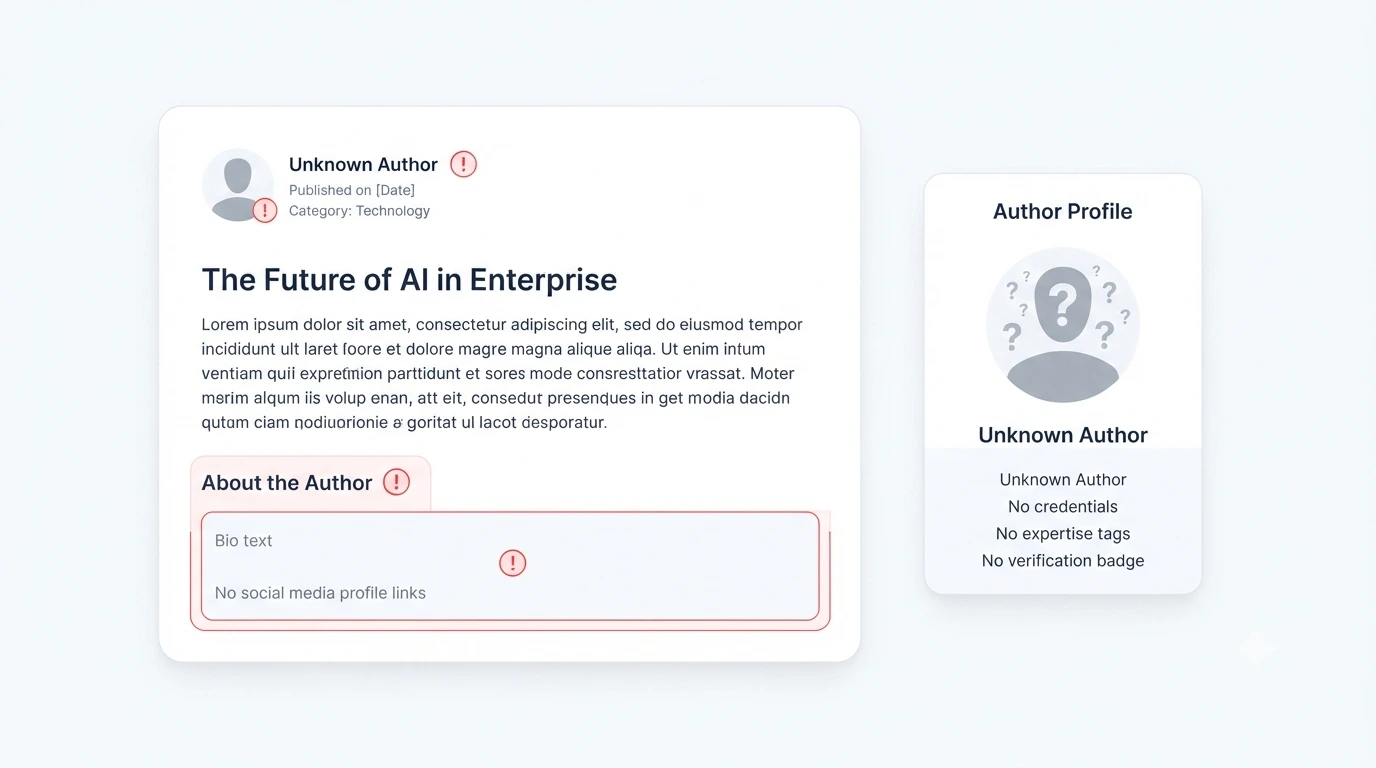
Link farm content is not written to be read. It is written to hide links to other sites, and the people producing it do not want their names attached to it. Authors are typically listed as “Guest Writer,” “Editorial Team,” or “[Site Name] Staff.” Genuine publishers showcase named contributors with real bios and professional backgrounds.
Content on Unrelated Topics and Classic Link Scheme Behavior
Link farms accept payment from any niche. The result is a collection of articles across an incoherent range of subjects. A site covering cybersecurity, weight loss, casino bonuses, and SaaS tools in the same week with no clear editorial identity is a strong signal.
Be especially wary of sites covering competitive niches like gambling and pharmaceuticals alongside tech content.
Hundreds of Outbound Links Per Page
Link farm pages often contain 50 to 200 outbound links per article with no natural editorial context. If every post ends in a block of unrelated external links, or if the footer contains dozens of unrelated domains, that site exists to distribute link equity and not to inform readers.
Exact-Match Anchor Text Across Multiple Sites
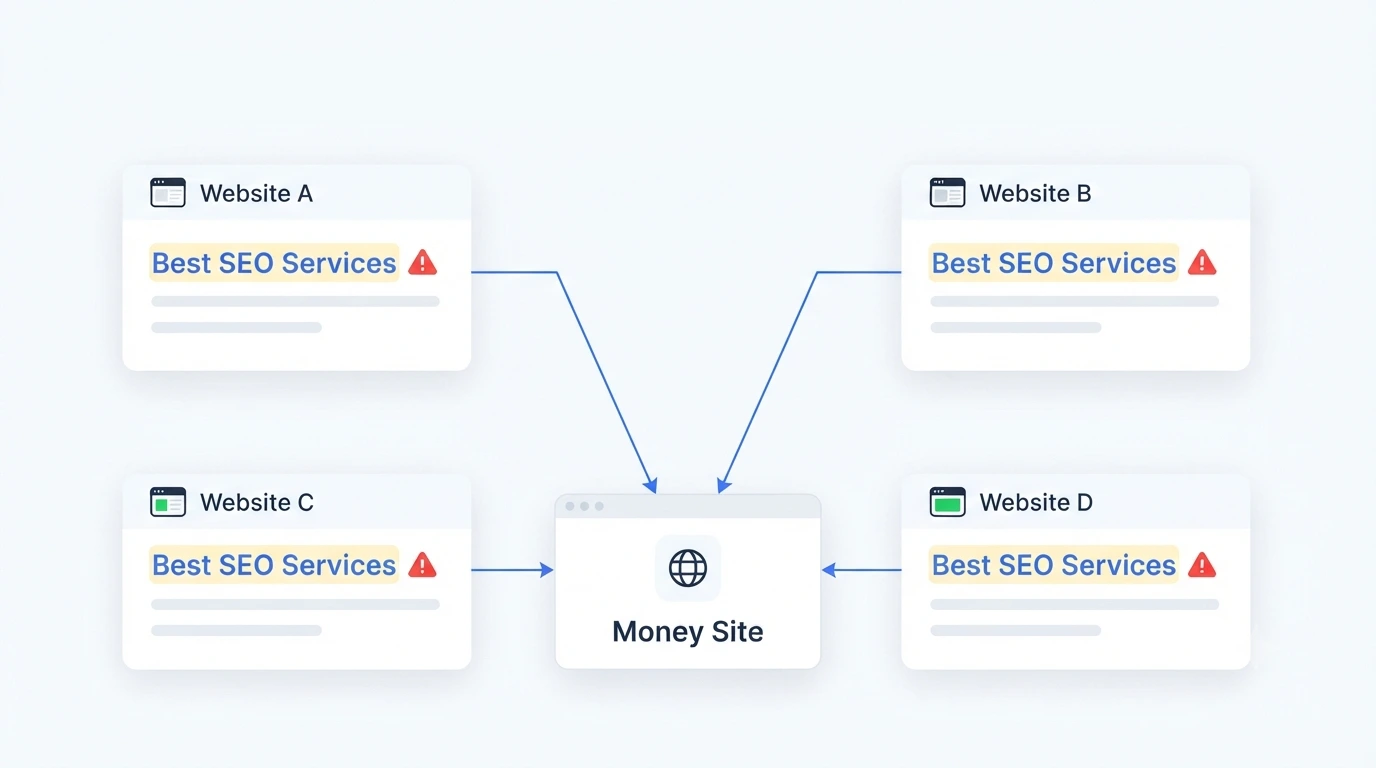
When you see the same keyword-rich anchor text repeated across 20 different linking domains, that is an unnatural link pattern. A healthy backlink profile mixes branded, generic, partial-match, and contextual anchors across different referring domains. Uniform exact-match patterns are a clear signal of link scheme participation.
Basic Cookie-Cutter Template Design
Link farm operators do not invest in site design. They use a basic WordPress template with minimal customization, often the same template across multiple sites in their network. High-quality editorial sites have customized designs that reflect genuine brand identity.
Vague or Empty About Page
Legitimate sites are transparent about who runs them. Link farms have minimal About page information with no real owner, no named team, and sometimes no contact details at all. If there is a contact form, it usually exists primarily as a way to inquire about buying links.
SaaS-Specific: “Top Tools” Content With No Real SaaS Audience
For SaaS companies, a specific variant is worth watching for: sites that publish “Top SaaS Tools” or “Best Project Management Software” content but have zero real SaaS audience behind it. No engaged readers, no social sharing history, no comment activity. Just keyword-stuffed roundups that exist purely for link placement.
Link Farm vs. PBN vs. Web Directory: What Is the Difference?
These three are frequently confused even by experienced SEOs. The distinction matters because the risk profile and detection method for each is different.
| Factor | Link Farm | PBN | Web Directory |
| Purpose | Sell links to any niche | Boost a single owner’s sites | Curated listings and NAP citations |
| Ownership | Often distributed across fake entities | Typically one owner controls all sites | Third-party editorial team |
| Google risk | Very high | Very high | Low to medium |
| Detectable? | Yes, DR to traffic mismatch exposes most | Yes, footprints from shared hosting and templates | Legitimate directories are mostly fine |
| Worth using? | Never | Never | Sometimes, if niche-relevant |
The key practical difference: a PBN is usually harder to detect because its operator invests more in making individual sites look legitimate. A link farm is typically more obvious because it is built for scale, not stealth.
Both violate Google’s guidelines on link schemes and unnatural links. Both are targeted by SpamBrain. Neither should be part of any link-building strategy.
Real Link Farm Examples
Here is what these sites look like in practice when they show up in a client’s backlink profile.
Example 1: NetWorthPedia.com (The Expired Domain Farm)
A client came to us after their rankings dropped significantly. Their previous agency had placed 30+ links on this site, selling it as a “premium placement” because it boasts a DR 58. On the surface, the metrics looked reasonable to an untrained eye.
But the reality is that the site has seen fewer than 50 monthly organic visitors for over a year. It was built on an expired domain bought at an auction to inherit its existing backlink history, a common approach used to trick SEO tools and appear authoritative.
Google had already devalued the entire cluster, meaning the client paid premium prices for zero SEO value.
Example 2: TechVibeDigital.com (The “Tech” Site Pattern)
Sites with “tech” forced into the domain name just to look relevant are disproportionately likely to be link farms. Spammers target this category because SaaS and software companies are actively building links and looking for placements.
The tell on this domain is that it covers topics ranging from enterprise cloud software to DIY home decor and casino tips with zero editorial coherence. Furthermore, all articles follow the same thin structural template designed to squeeze 80+ outbound links onto a single page, with no real authors or verifiable company details behind the site.
As a general rule: aside from massive exceptions like TechCrunch, 95% of these generic tech publications make no sense for a real business and should be completely avoided.
Why Is Link Farming Especially Dangerous for SaaS Companies?
SaaS companies face compounded risk from link farm exposure compared to most other verticals. There are four reasons specifically worth understanding. For a broader picture of how to build links safely in this space, see our guide to safe SaaS link-building strategies.
High-value keyword exposure: SaaS keywords carry $50 to $200+ CPCs. If a Google penalty suppresses your rankings on those terms, the revenue impact is immediate and significant, often far exceeding whatever was spent on the link-building campaign that caused the problem.
- Investor and board scrutiny of organic traffic: SaaS companies are typically evaluated on organic traffic growth as a core business metric. A ranking drop triggered by a link farm penalty shows up directly in the metrics investors track. This creates credibility damage beyond the immediate SEO impact.
- Long sales cycle where trust is the product: SaaS purchases involve extended evaluation cycles. Brand trust is essential. Association with spammy link schemes, even unintentional, creates reputational risk if discovered during due diligence by prospects, partners, or acquirers.
- Outsourced link building creates visibility gaps: SaaS companies frequently outsource their link building to agencies or contractors. Without proper vetting of the sites being used, links end up on link farms that were never reviewed by anyone in-house. The penalty lands on your domain, not the agency’s.
How to Check If Your Backlinks Come From a Link Farm?
Run this audit process quarterly. It takes approximately 90 minutes with the right tools and can prevent a recovery process that typically takes 3 to 12 months. For a complete walkthrough, see our full backlink audit guide.
- Step 1: Open Google Search Console and navigate to the Links section
Export your top linking sites list as a starting point. - Step 2: Pull your full referring domain list from Ahrefs or SEMrush
Export all referring domains with DR, organic traffic estimate, and anchor text data in a single sheet. - Step 3: Filter for DR to traffic mismatches
Sort by DR descending. Any domain with DR 30+ and fewer than 500 monthly organic visitors warrants manual review. This is your primary filter for identifying suspicious referring domains. - Step 4: For each suspicious domain, check these five things
Does the site have genuine organic traffic? Is the content relevant to your industry or incoherently broad? Is there a named author with a verifiable professional presence? How many outbound links does the linking page contain? Is the site design custom or a basic template that looks identical to other sites? - Step 5: Compile suspicious domains into a separate list for further action
Flag domains that fail on three or more of the above checks. These go into your disavow review queue.
How to Recover From a Link Farm Penalty?
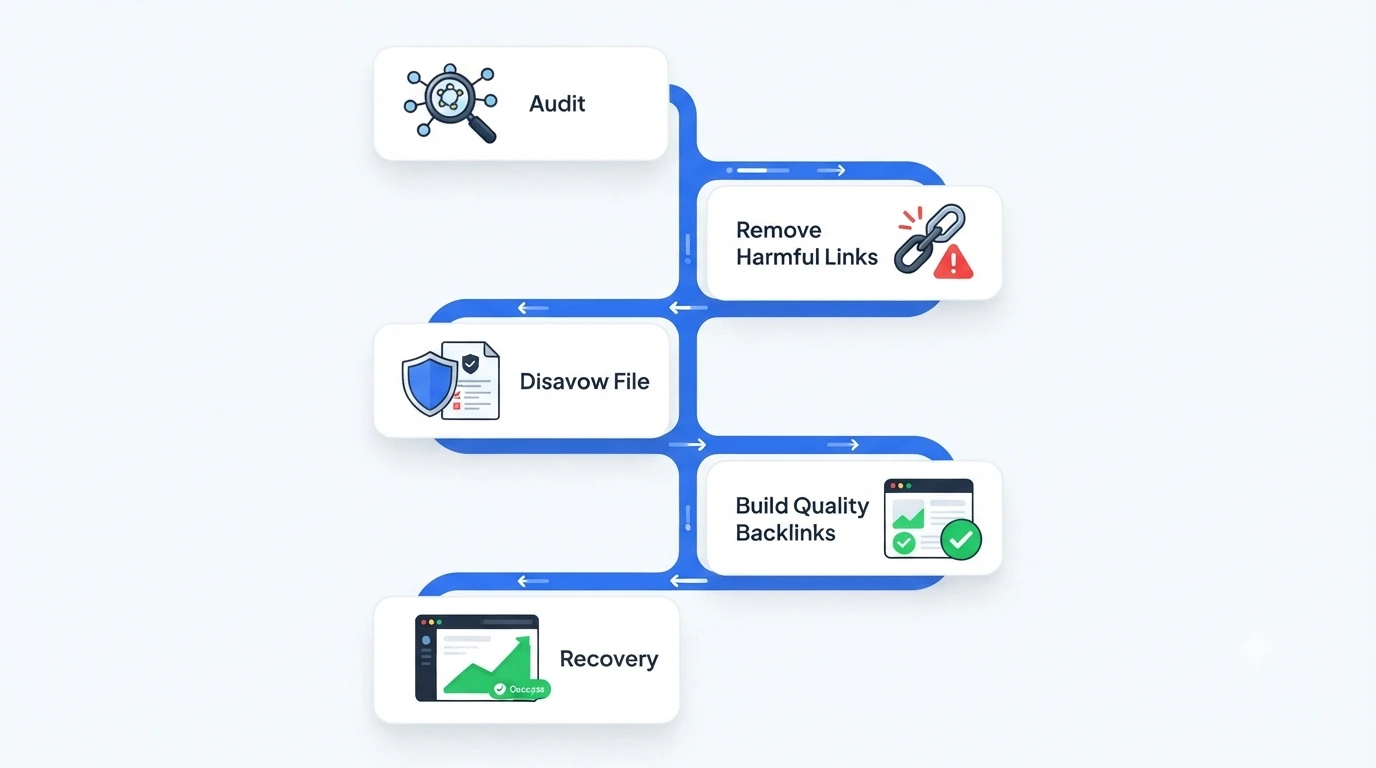
Recovery is possible. But the timeline depends on whether you received an algorithmic penalty through SpamBrain devaluation or a manual action. These require different responses.
Determine Whether It Is Algorithmic or Manual
Open Google Search Console and check Security and Manual Actions. If you see a manual action entry related to unnatural links, you have a manual penalty and need to submit a reconsideration request after cleanup.
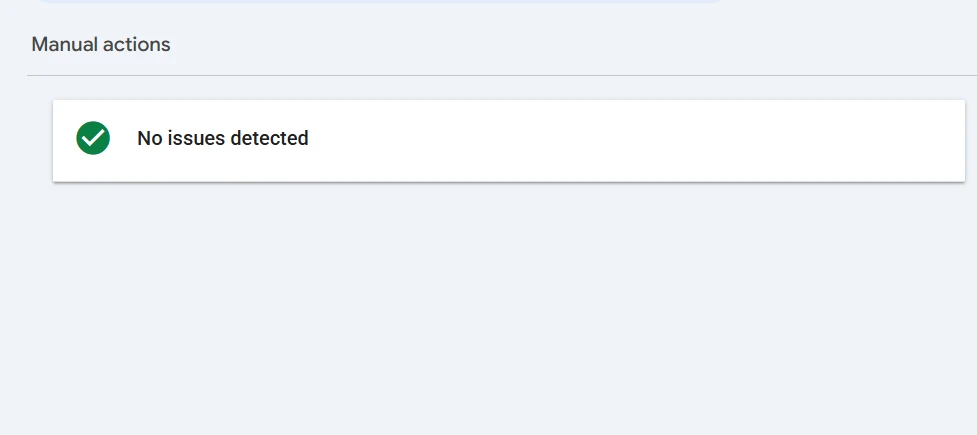
If there is no manual action but you noticed a ranking drop coinciding with a core update or spam update, it is most likely algorithmic devaluation.
Identify Toxic Links Using Ahrefs or SEMrush
Export your full referring domain list and categorize every domain as clean (leave alone), suspicious (monitor), or harmful (disavow). Be conservative because disavowing healthy links can reduce rankings just as badly as keeping harmful ones.
Attempt Direct Link Removal First
Contact webmasters of the most harmful linking sites and request removal. For link farm sites, this often goes unanswered, but the documented outreach effort demonstrates good faith to Google if you later submit a reconsideration request. Keep records of all outreach and any responses received.
Build a Disavow File and Submit It
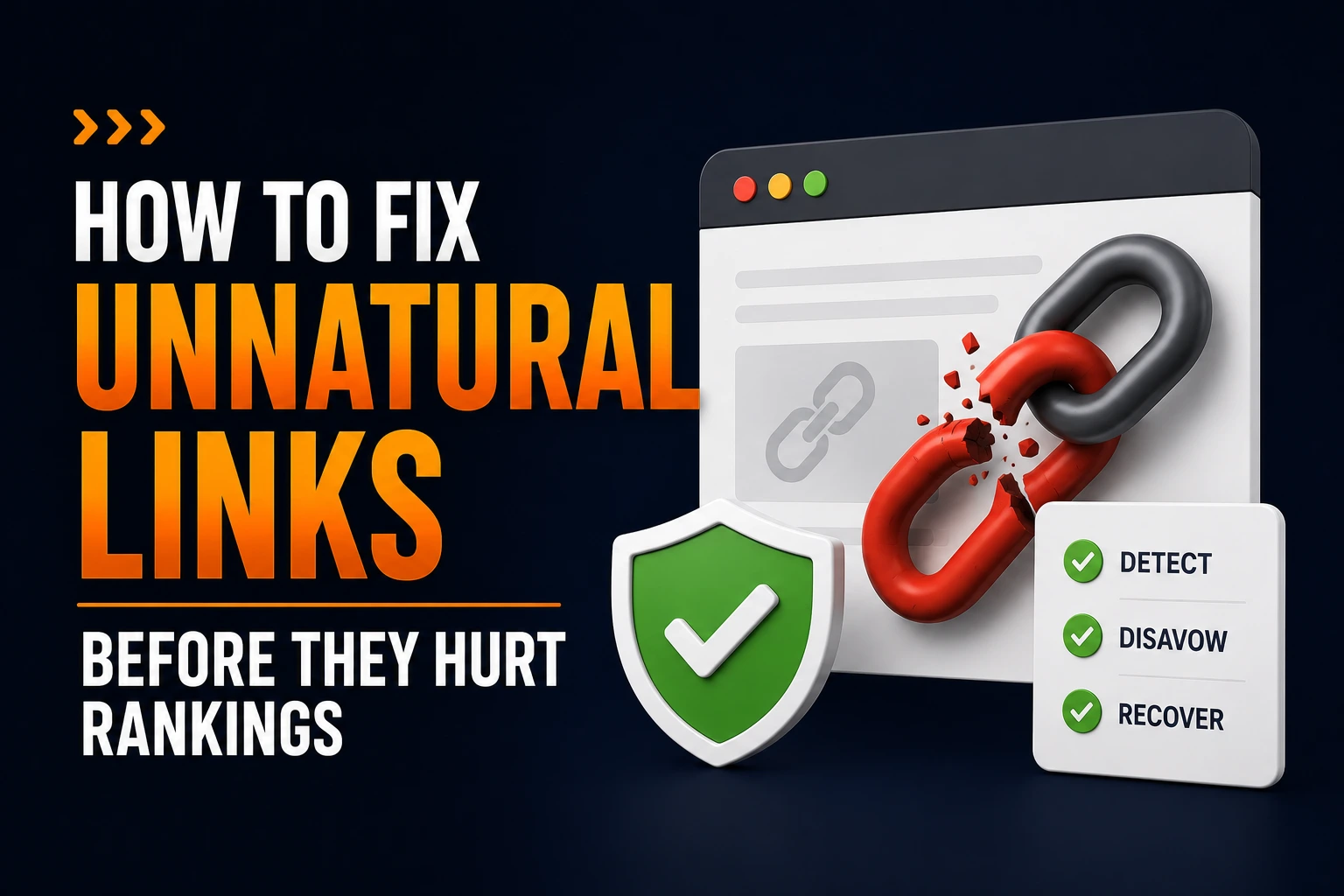
For links you were unable to remove manually, create a plain text file in the format “domain: example.com” and upload it through Google’s Disavow Tool in Search Console.
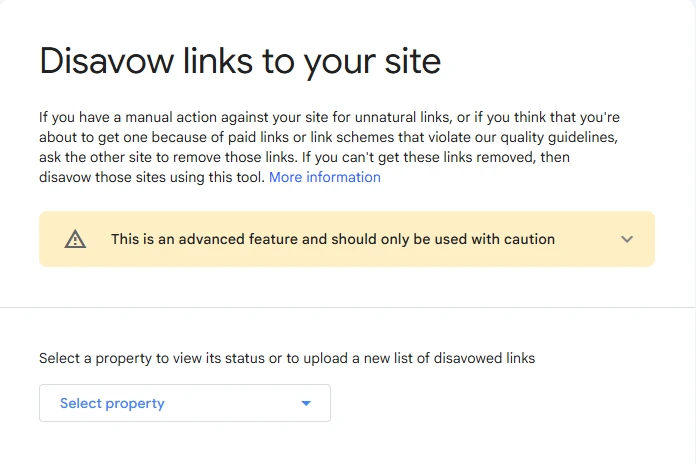
Disavow at the domain level rather than the URL level when dealing with link farm networks because it is more efficient and comprehensive. Our complete disavow file guide walks through the exact process.
Recovery timelines by penalty type:
| Penalty Type | Expected Recovery Window |
| Algorithmic (SpamBrain devaluation) | 3 to 9 months across 1 to 3 core update cycles |
| Manual action on unnatural links | Google review 4 to 8 weeks; ranking recovery 3 to 6 months after reinstatement |
| Severe site-wide contamination | 6 to 18 months; some sites never fully recover |
| Negative SEO attack via third-party farm links | Typically 4 to 12 weeks after disavowal |
Ethical Alternatives: What to Do Instead
The frustrating reality is that link farms often cost similar amounts to legitimate link building, sometimes more. A link from a PBN site delivers zero value and potential ranking damage. The same effort on an contextual link placed on a real-traffic site delivers actual authority, referral traffic, and AI search visibility.
Every placement worth building shares one characteristic: the referring site has genuine organic traffic that proves a real audience exists. That is the check that filters out link farms, link schemes, and unnatural links before they become your problem.
- Guest Post Service
Editorial placements on real-traffic sites with genuine audiences and named editorial teams. Links placed within contextual content that serves real readers. - Niche Edits Service
Links inserted into existing, already-indexed content on high-authority sites. Often activates 20 to 30% faster than new guest posts because the surrounding content is already ranked. - White Label Link Building
For agencies managing SaaS client portfolios with fully managed campaigns, transparent site vetting, no PBNs, and no link farm placements.
FAQs
Can a link farm ever be useful?
No, it is almost always harmful and can lead to a total loss of search visibility.
How do I know if I am accidentally using a link farm?
Check your backlinks for sites with zero traffic and unrelated content topics.
What is the difference between a link farm and a PBN?
A link farm is a public site selling links, while a PBN is a private network of sites.
How do I get out of a link farming penalty?
You must remove or disavow the bad links and then request a review from the search engine.
Is guest posting the same as link farming?
Guest posting on a real site with a real audience is a safe and healthy tactic.
How does Google detect a link farm?
Google uses algorithms to find sites with no traffic that only exist to link out./