
Every mature website accumulates dead weight over time. A resource page still points to a tool that shut down years ago. A “top guides” roundup links to an article that was quietly taken offline. A university page cites a report that moved to a new URL and never got updated.
Most site owners never notice. Their attention is elsewhere, and a single 404 buried in a five-year-old blog post rarely makes it onto anyone’s to-do list. That gap is exactly where broken link building lives, and it is one of the more underrated tactics in a modern link building playbook.
Done properly, it earns you editorial backlinks from sites that would likely ignore a cold guest post pitch. Done carelessly, it turns into hours of research for very little return. The difference comes down to how well you target, evaluate, and pitch each opportunity, which is what this guide walks through in detail.
What Broken Link Building Actually Involves?
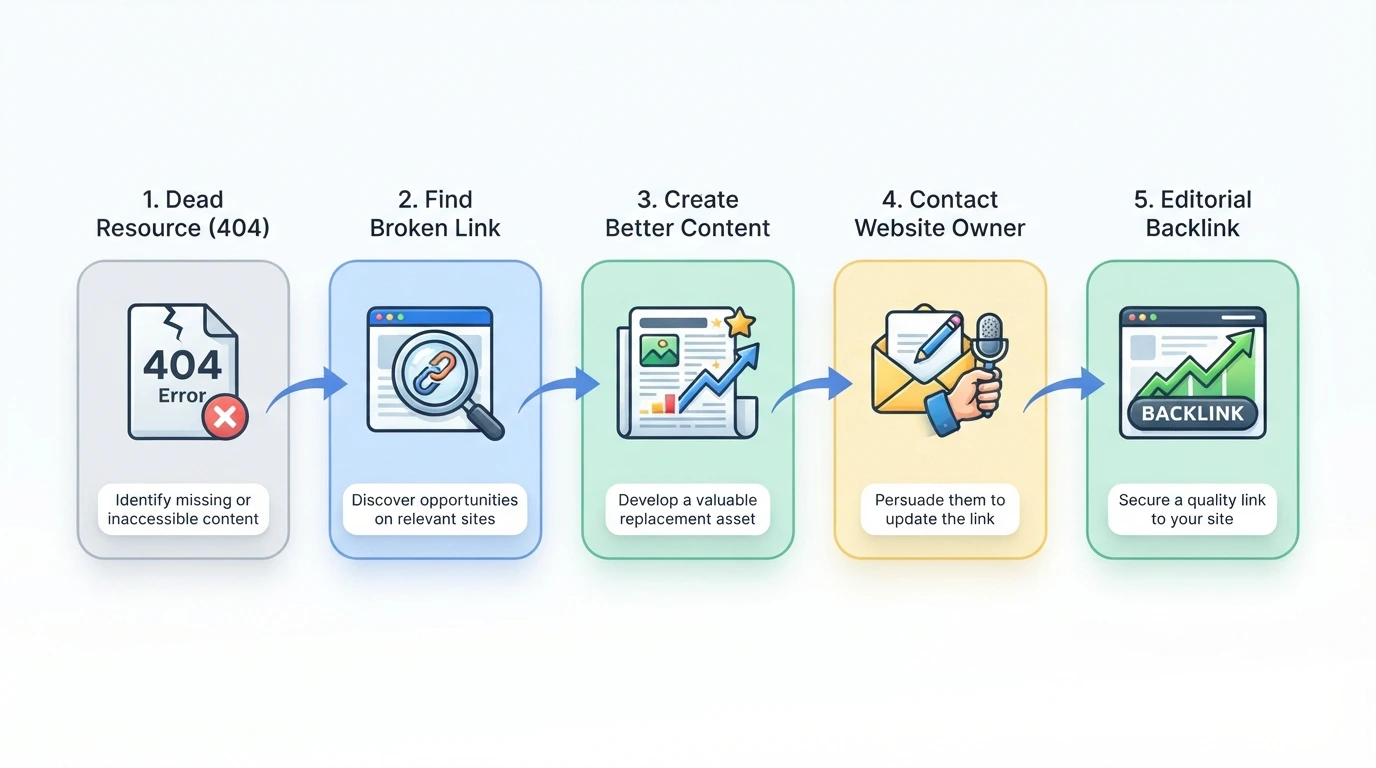
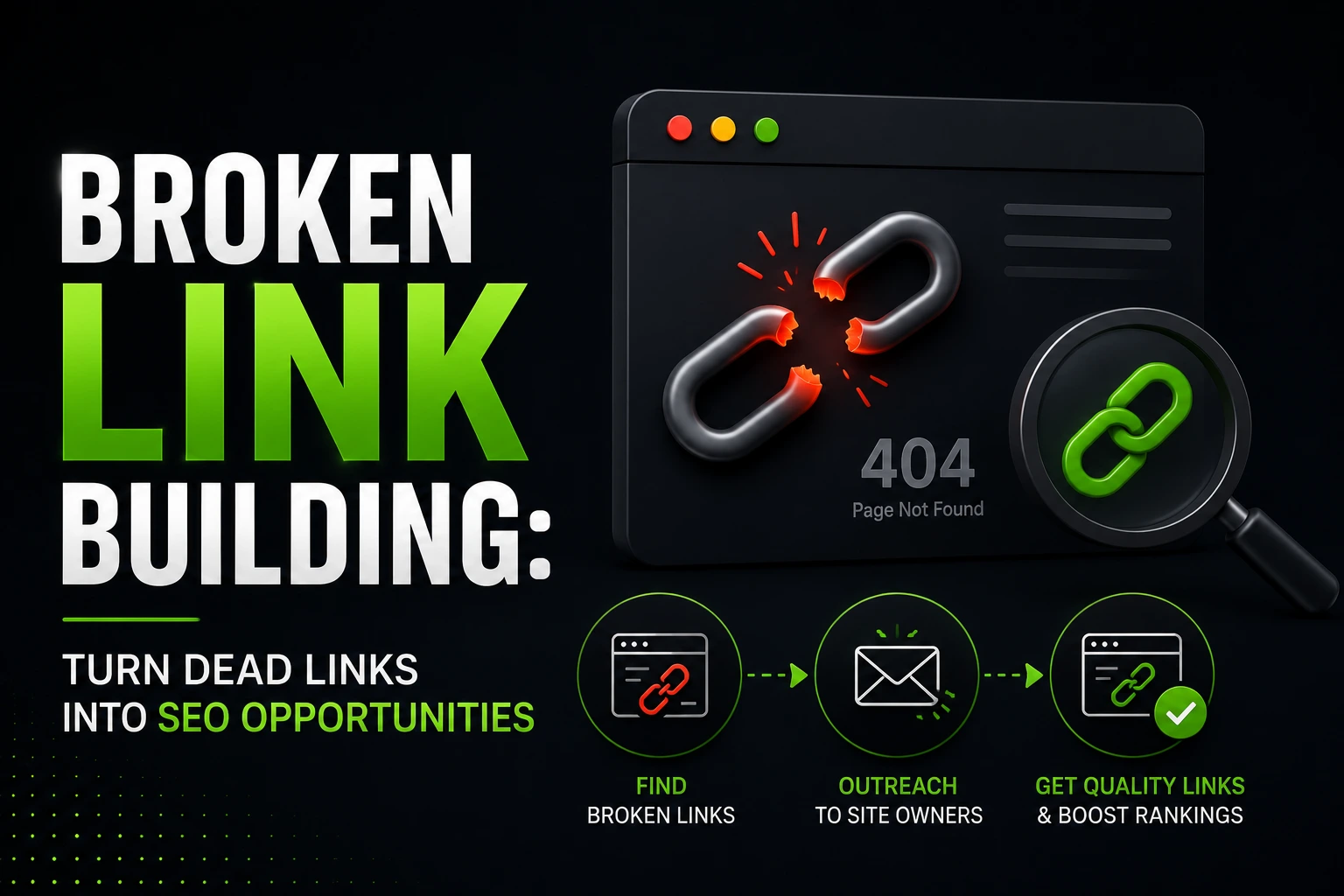
Broken link building, sometimes referred to as dead link building, is the process of locating links on external websites that point to pages no longer in existence, then offering your own relevant content as a working replacement.
The premise is straightforward on paper. A page somewhere links out to a resource that has since been deleted, moved, or merged into something else.
You find that link, confirm it genuinely leads to a dead page, and reach out to the site owner with a page of your own that covers similar ground. If the fit is right, they swap the link and you walk away with a backlink earned entirely on merit.
What separates this from most outreach-based link building is the framing. You are not asking someone to do you a favor. You are flagging something that is already working against their own site and offering a fix, which tends to land very differently in an inbox.
Why This Tactic Consistently Outperforms Cold Outreach?
Dead links are a quiet liability. They frustrate readers, undermine a page’s credibility, and can work against a site’s own search performance over time. That gives the site owner genuine incentive to act, and it is the reason broken link building tends to convert better than a standard link request.
A few factors explain why this approach holds up so well:
Reply rates tend to run higher. You are not asking for a favor out of nowhere. You are surfacing a problem the site owner did not know existed and handing them the fix.
The resulting links read as editorial. Because your link slots into an existing, already-published page, it looks like a natural part of the content rather than something bolted on.
It opens doors that are usually closed. Long-standing resource pages, association directories, and university sites routinely turn down guest contributions, yet many are perfectly willing to update a dead link once someone points it out.
The cost structure is favorable. There is no placement fee and no media spend. The investment is almost entirely your own time: research, content, and a well-targeted email.
It tends to open longer-term relationships. Fixing something on someone’s site is a strong first impression, and a fair number of these exchanges evolve into repeat opportunities down the line.
Finding Broken Links Worth Your Time
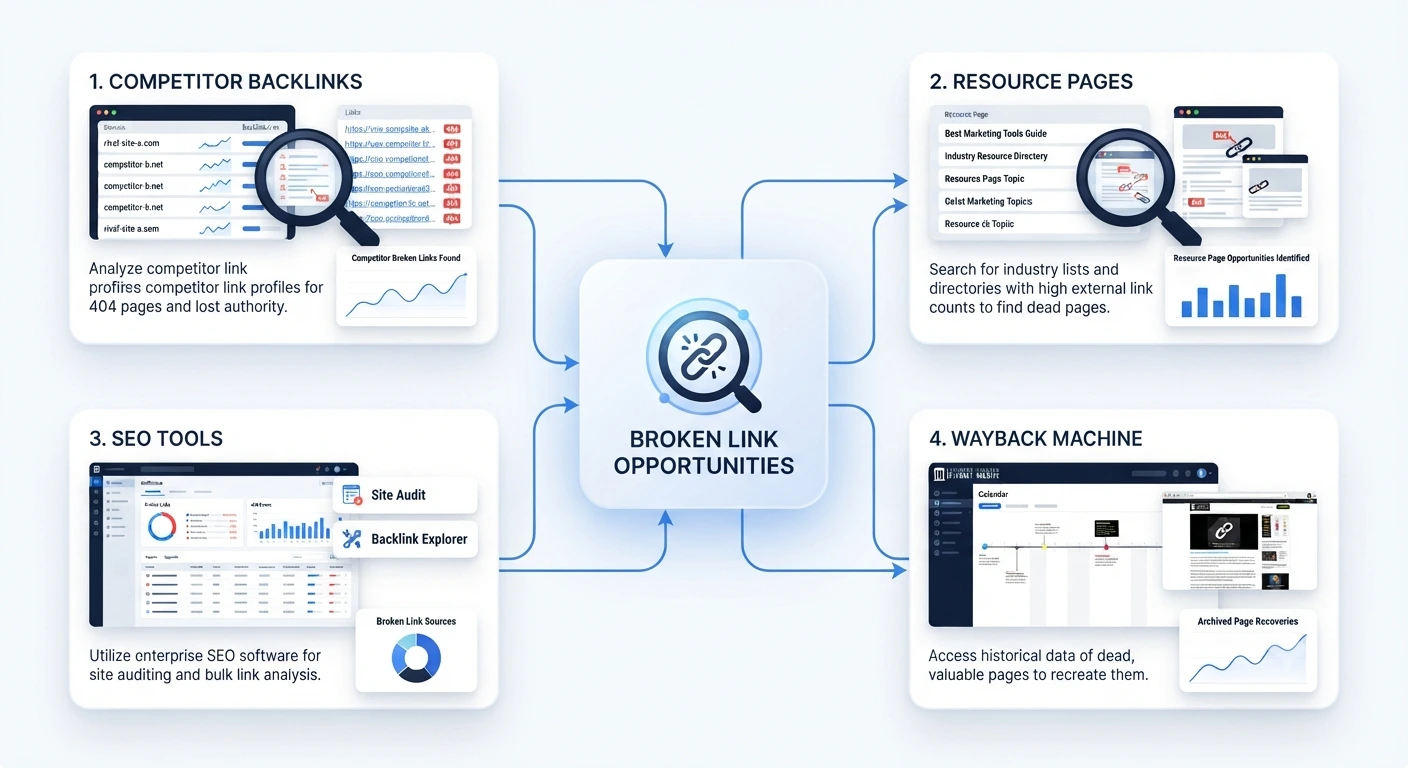
Locating a dead link is rarely the hard part. Locating one that sits on a page with real authority, relevant traffic, and topical alignment with your content is where the actual skill comes in.
Mine Your Competitors’ Backlink Profiles
Run a competitor’s domain through a backlink tool such as Ahrefs or Semrush and filter specifically for broken pages. Any page still linking to a competitor’s now-dead URL is a genuine lead, and if your own content covers similar territory, you already have a pitch that requires very little extra work.
Target Resource and “Best Of” Pages
Curated lists tend to age poorly. A page titled something like “Top Tools for Content Marketers” or “Helpful SEO Resources” is often built once and rarely revisited, which means links inside it go stale over the years. Searching for these page types alongside your niche keyword is a reliable way to surface a steady stream of candidates.
Lean on the Right Tools
A handful of tools cover most of what you need:
- Ahrefs Site Explorer filters a domain’s backlink profile down to broken pages, showing you precisely who is still linking to a dead URL and how many domains are involved.
- Screaming Frog SEO Spider crawls a full list of prospect pages and flags every broken outbound link at once, which matters once your prospect list grows beyond what you can check manually.
- Check My Links, a free browser extension, scans a single page in seconds and highlights broken links instantly, which is ideal for quick spot checks.
- Semrush Backlink Audit surfaces broken backlinks pointing at both your own site and any competitor you choose to analyze.
Confirm the Original Context With the Wayback Machine
Once a broken link turns up, run the dead URL through the Wayback Machine to see what the page originally contained. This tells you exactly what the site owner was linking to in the first place, so your replacement can match that intent closely and, ideally, exceed it.
Analyzing Opportunities Before You Reach Out
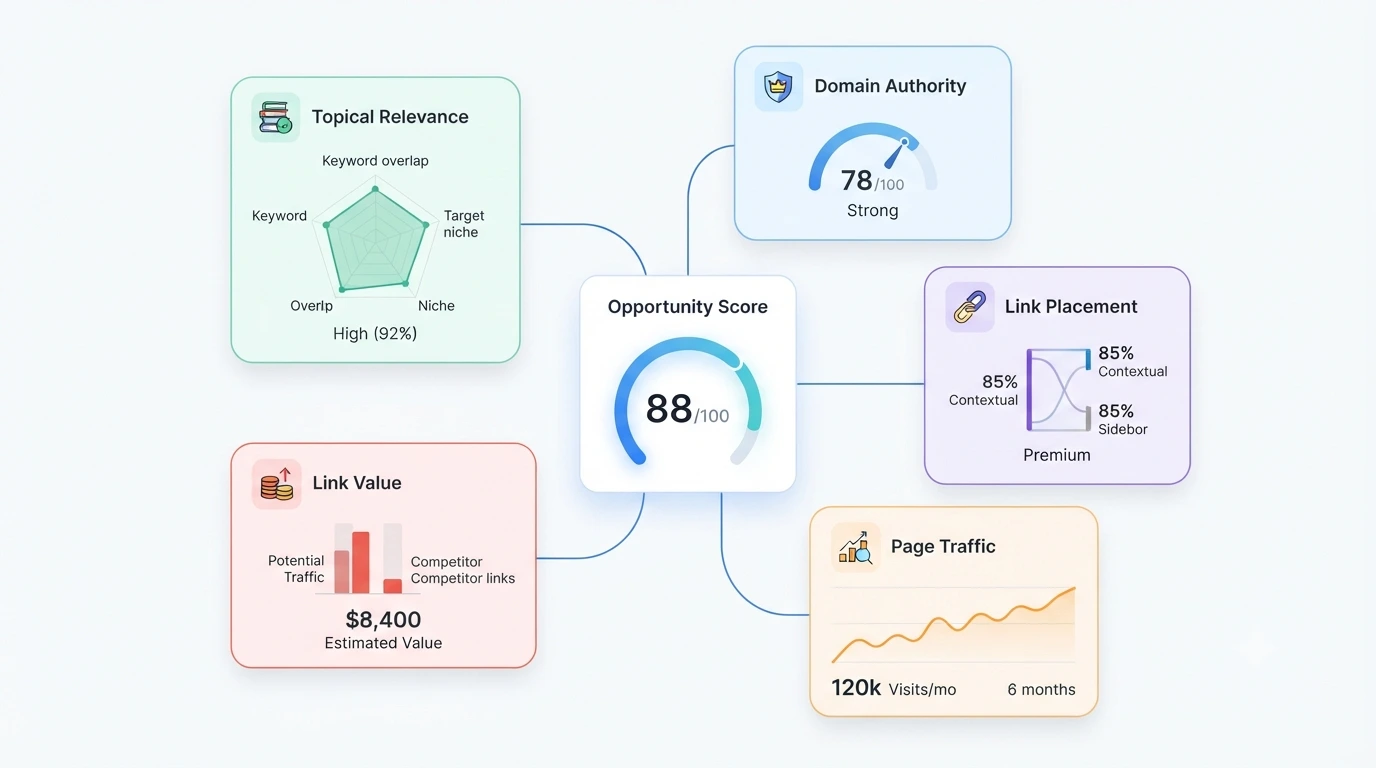
Not every broken link deserves a pitch. Chasing weak prospects burns time that would be better spent on stronger ones, so a short evaluation step before outreach pays for itself.
Before committing to a pitch, weigh the opportunity against these criteria:
- Topical relevance. Your replacement needs to genuinely align with what the dead link was covering. A loose or forced connection rarely convinces an editor to make the change.
- Domain authority. Prioritize domains that carry real weight within your industry over low-traffic sites with minimal influence.
- Link placement. A link embedded in the body of an article typically carries more value than one tucked into a sidebar, footer, or comments section.
- Page traffic. Checking estimated traffic tells you whether the page still draws visitors, which adds referral value on top of the SEO benefit.
A useful test throughout this process: imagine you were the editor managing that page. Would you genuinely want to replace that dead link with what you are offering? If the honest answer is yes, the opportunity is worth pursuing.
Building a Replacement That Earns the Link
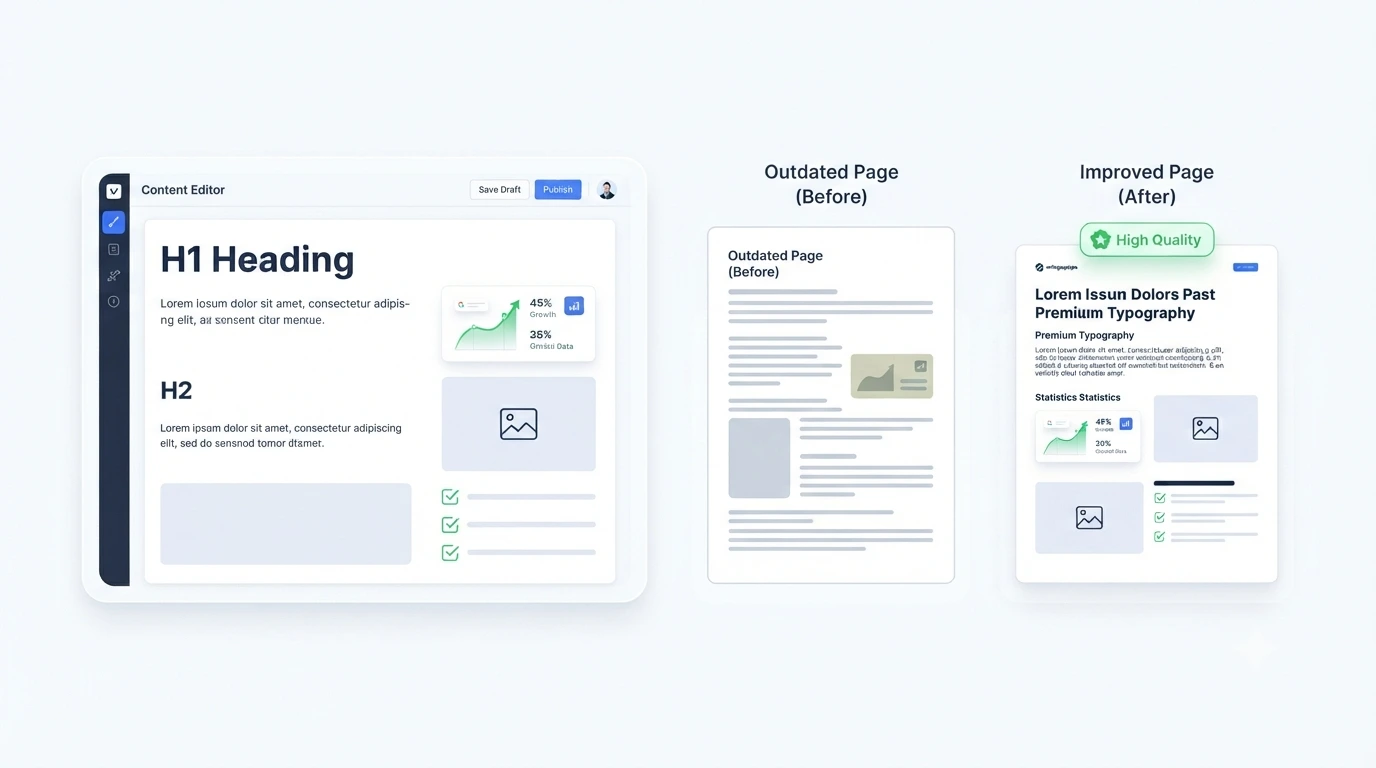
This is the stage most campaigns fall short on. A thin or generic page rarely persuades anyone to update their site, no matter how polite the outreach email is. Your replacement needs to read as a clear improvement over what used to be there, not simply a substitute.
A few practices consistently strengthen a replacement page:
- Update any outdated statistics, examples, or screenshots to make sure that your page looks fresh and relevant rather than old.
- Structure your page in a way that will allow readers to scan it easily. This means adding proper subheadings, checklists, or summary blocks.
- Your page should be consistent with the original page whenever possible. If the original page included a step-by-step tutorial on a certain topic, create something similar but even better.
- Focus on just one topic. It is easier to obtain links to pages that focus on one topic in great detail than to those that cover multiple unrelated topics.
If you have a page on this topic in your inventory, use it as it is. In case the existing content is not enough, you can build something new, especially if there were multiple broken links referring to this topic.
Crafting Outreach That Actually Converts
With a vetted list of opportunities and a strong replacement page ready, outreach becomes the final step. A message that is specific, brief, and easy to act on will consistently outperform anything generic.
A dependable structure looks like this:
- Lead with the problem. Reference the exact page and the specific broken link you found, so there is no ambiguity about what you are pointing out.
- Present the fix. Introduce your content as the replacement and explain briefly why it fits the original context.
- Keep the message tight. Editors and site owners are busy, and a short, direct email consistently performs better than a long one.
- Remove friction. Include the exact URL of your replacement so acting on your suggestion takes no extra effort on their end.
If a week or so passes without a response, a brief, polite follow-up is worth sending. Many first emails simply go unnoticed in a crowded inbox, and a short nudge is often enough to prompt a reply.
Don’t Overlook Your Own Broken Links
Even though much of the activity in the broken link-building strategy is geared towards opportunities elsewhere, your own website should not be left out of the loop. In essence, a broken link on your own website is doing nothing but ruining the experience and SEO efforts you have made.
Conducting an audit of your website is an integral part of the process, which can be conducted together with all the other activities mentioned. If there are no dead links on your own site, you will have a solid ground for other link-building activities to develop on.
Final Thoughts
Broken link building works because it reverses the usual dynamic of outreach. Rather than asking a site owner for something, you arrive with a solution to a problem their site already has. That shift alone changes how the request is received, and it is why response rates on this tactic tend to hold up so well against cold pitching.
It does require patience. Some emails will go unanswered no matter how well-targeted the opportunity was, and that is a normal part of the process. But when a placement lands, it comes with real weight behind it: an editorial backlink from a site that chose to link to you because the content genuinely earned its place.
A sensible starting point is picking one competitor, running a backlink audit, and shortlisting a handful of broken links you can realistically replace with something better. Once that first small campaign is underway, scaling the process becomes considerably easier.
Frequently Asked Questions
Is broken link building still a relevant practice in 2026?
Absolutely. Search engines still value editorial backlinks, and this strategy remains one of the most organic approaches to gaining them since the backlink is present in the published content.
How long does it take for a broken link-building campaign to yield results?
This varies by industry and number of outreach emails but generally takes a couple of weeks for the results to be seen. The longest part of the process is sourcing potential pages and writing the replacement content; outreach will take additional weeks after.
What are the best tools to find broken links?
Ahrefs and Semrush work great in terms of identifying broken backlinks on an industrial scale; Screaming Frog suits large lists better, while Check My Links works perfectly for manual research and checking one page at a time.
Do I need to create new content for every broken link I find?
Not necessarily. If a relevant page already exists on your site, pitching it as is often works fine. Building new content makes more sense when several broken links point to a topic your site does not currently cover well.
How many outreach emails should one send in order to get one link?
It depends on the industry and the relevancy of the targeting, but typically one needs to send multiple emails to get even just several links back. The higher relevancy and properly designed replacement page will help to increase the chances greatly.
Is broken link building a white-hat SEO technique?
Yes. Since the linking is at the discretion of the site owner, it qualifies as white hat SEO completely and has much fewer risks compared to other methods such as paid and manipulative linking.
Is this SEO technique suitable for smaller/new sites?
Yes. It is among the easiest SEO techniques to use on the part of smaller/newer sites, as it relies on relevancy and research, not on authority and marketing capabilities.
What should one do if he/she never gets any response from the site owner?
Sending a polite follow-up email approximately in a week will often be quite helpful since quite often an initial email is simply overlooked and not ignored on purpose. In case it didn’t work out anyway, moving on to the next opportunity will probably make more sense.