
If you ever did some thorough research into SEO optimization, you know that you will come across the term “domain authority” quite frequently. The problem is that people often refer to this concept quite loosely and without explaining it clearly enough.
This leaves many webmasters who agree with the necessity of boosting it without knowing what it really is and how to do it.
Domain authority is one of the most clear-cut indicators that can help you understand your website’s position relative to others. By itself it cannot boost your rank, yet it will show where you stand, and the improvement of domain authority often goes hand in hand with those factors that affect your ranking.
This article explains all of these concepts and shows you how to boost the domain authority effectively.
What Is Domain Authority?
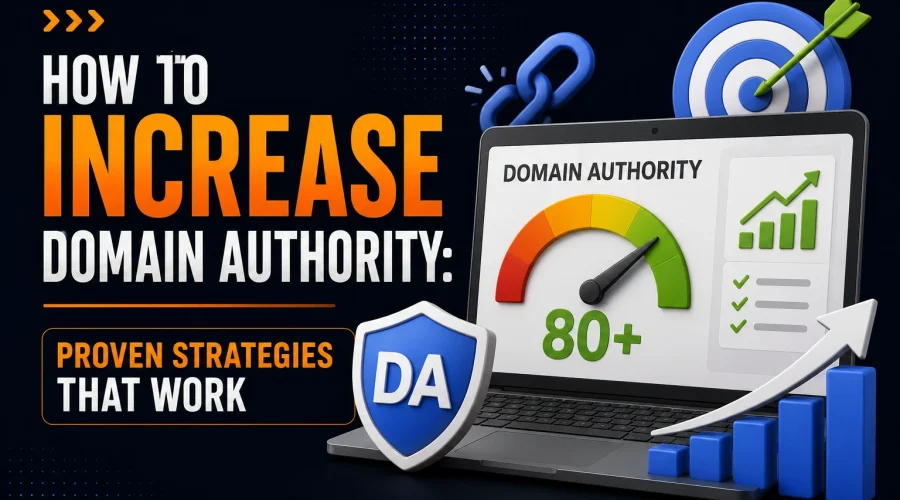
Domain Authority (DA), a metric developed by Moz, scores websites from 1 to 100 to predict their search engine ranking potential. A higher score indicates stronger performance, while a lower score suggests room for growth.
DA relies primarily on your backlink profile the collection of links pointing to your site. Credible websites linking to your content serve as votes of confidence, signaling to search engines that your site is authoritative. Consequently, DA acts as a proxy for a site’s overall credibility and thought leadership.
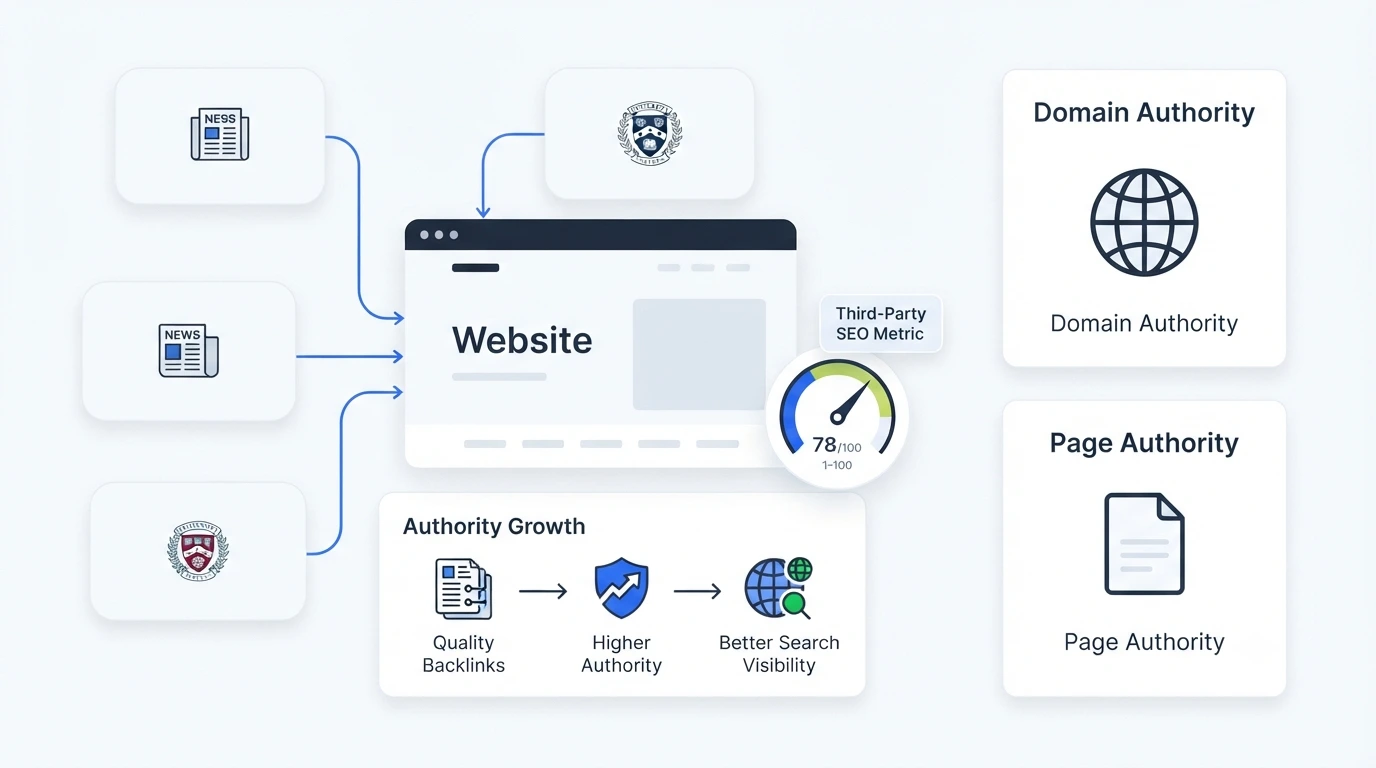
Distinguishing between DA and Page Authority (PA) is essential: DA evaluates the entire website, whereas PA assesses a specific page. Confusing the two can misdirect your competitive analysis and SEO strategy.
Importantly, DA is not a Google ranking factor. While Google does not use Moz’s metric to determine search results, DA effectively reflects the relevance, authority, and credibility that Google does value.
Therefore, focus on the underlying work that builds these qualities rather than simply chasing the score itself.
Why Increasing Domain Authority Actually Matters?
Even though Google never looks at your DA score directly, ignoring it would be a mistake. In competitive industries, search engines tend to favor established, authoritative sites over newer or thinner ones. If your DA sits well below your competitors, ranking for the keywords that matter most to your business gets a lot harder.
There’s a real relationship between higher authority scores and stronger keyword rankings. Look at any major publication that dominates competitive search terms, and you’ll usually find a huge, long-built backlink profile behind it. That kind of authority doesn’t happen by accident. It’s the product of years of earning links from other credible sources.
None of this means a lower DA site can’t rank at all. A large number of websites actually rank well for low-competition keywords even though they don’t have an extremely high score.
However, if you want your website to rank in highly competitive niches, increasing its domain authority is going to put you in a much better position, especially once you also provide good quality content.
What Counts as a Good Domain Authority Score?
Not everyone is aware of the fact that there isn’t a standard number for everyone. That’s why many find themselves confused when comparing their own websites with others’.
On average, a score between 40 and 50 is an average one. Once you get closer to 50-60, you have something great. Getting past 60 means that you have really good stuff. The absolute top is reserved for extremely big websites that have been around for decades, and their scores are typically in the 80-90 range.
| DA Score | Rating |
| 1 to 20 | Weak |
| 21 to 39 | Below average |
| 40 to 50 | Average |
| 50 to 60 | Good |
| 60+ | Excellent |
Generally, a fresh website will start somewhere around 10-20. Moving from there up to 25-30 will happen quite fast. However, moving up from 55 to 65 will require much more effort since now you’ll compete with sites that already have built some authority during the last few years.
Forget about trying to reach some target number. Look aside check the DA value of the websites ranking for those keywords that you want to rank for. They can teach you a lot about what “good DA” value is for your niche better than any general DA score chart would do.
If you’re a local dentist, 20 DA is enough to become the leader, but if you’re in the SEO software niche, you might need to have 70+ DA just to be considered as competitive.
How Is Domain Authority Calculated?
Moz developed its algorithm by implementing a machine learning algorithm which evaluates a large number of signals and then gauges the performance of the website in relation to millions of other websites included in the index. Some of the most important signals include the following.
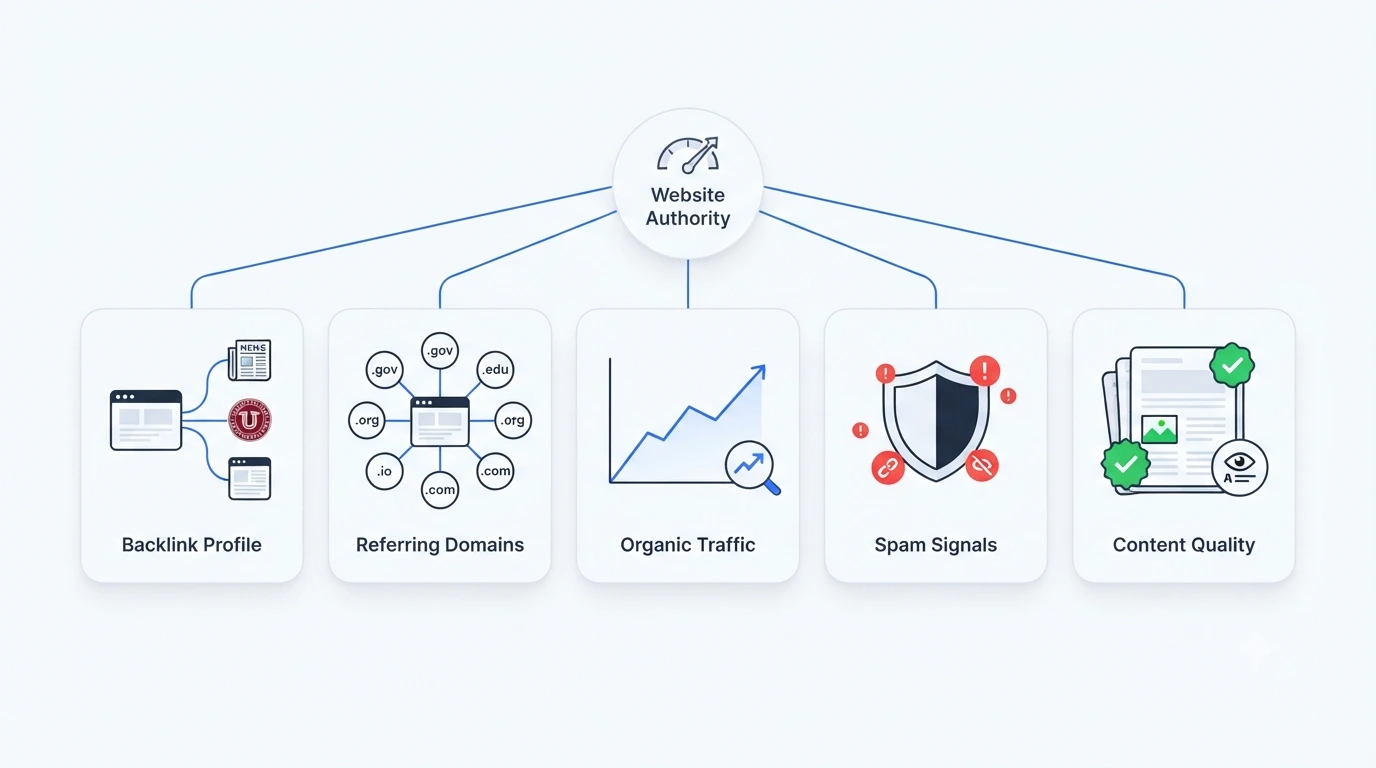
- Backlink Profile. It includes all the links pointing to your website, including their quantity and quality. The higher the quality of links coming to you and the greater the relevance of the sources providing links, the better.
- Number of Referring Domains. Moz evaluates unique referring domains and not the total backlinks. One hundred links coming from one website will have the same value as one link from the point of view of this signal.
- Keyword rankings and organic traffic. Performance of your website in terms of keyword rankings and natural traffic is evaluated by the algorithm.
- Spam Signals. The algorithm also calculates your spam score depending on how similar your backlink profile is to the profiles of manipulative link building websites.
Other platforms measure similar ideas with their own formulas. Ahrefs calls its version domain rating, and it weighs things like how many unique domains link to you, the authority of those linking domains, and how selectively those domains link out to other sites in general.
The exact math differs between tools, but the underlying logic stays consistent: quality and diversity of links beat sheer quantity every time.
Proven Ways to Increase Your Domain Authority
Raising your DA is a long game. It rarely moves overnight, and progress tends to show up gradually over weeks and months rather than days. That said, these strategies consistently move the number in the right direction when applied consistently.
1. Publish Content Built Around Search Intent
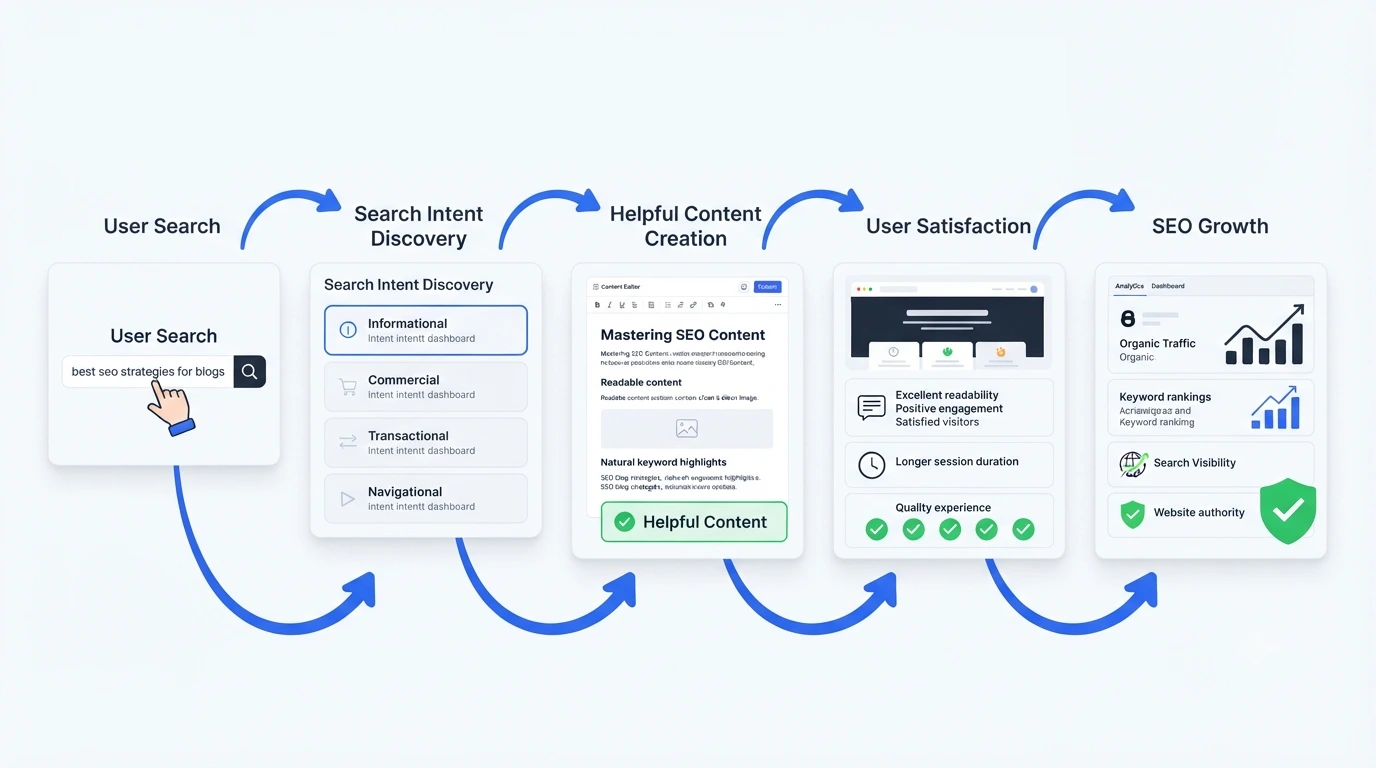
Organic traffic and keyword rankings both feed into your domain authority score, so the content you publish needs to actually satisfy what searchers are looking for, not just include the right keywords.
Start by researching the terms relevant to your business and weaving them naturally into your pages. Then match the format to the intent behind the search. Informational keywords call for guides and how-to articles. Transactional and commercial keywords call for clear, well-built product or service pages.
Beyond keyword placement, pay attention to readability and solid on-page fundamentals. Content that’s genuinely easy to read tends to keep visitors on the page longer, which sends its own positive signal back to search engines.
2. Earn Backlinks From High Authority Websites
Once your content foundation is solid, shift focus to your link profile. You’re aiming to earn backlinks, ideally from domains that already carry meaningful authority themselves.
A few approaches tend to work particularly well:
- Guest blogging. Find bloggers and websites in your niche who have some editorial requirements and give them an opportunity to publish something valuable from you in return for linking to your website. You should try to find those sites that have strict criteria for guest blogs; otherwise they will just accept anything.
- Niche editing and link insertion. In this case you need to persuade the owner of the site to place your link on an already published and ranked web page. In such a way, your link will be highly valued because it is placed on a valuable page.
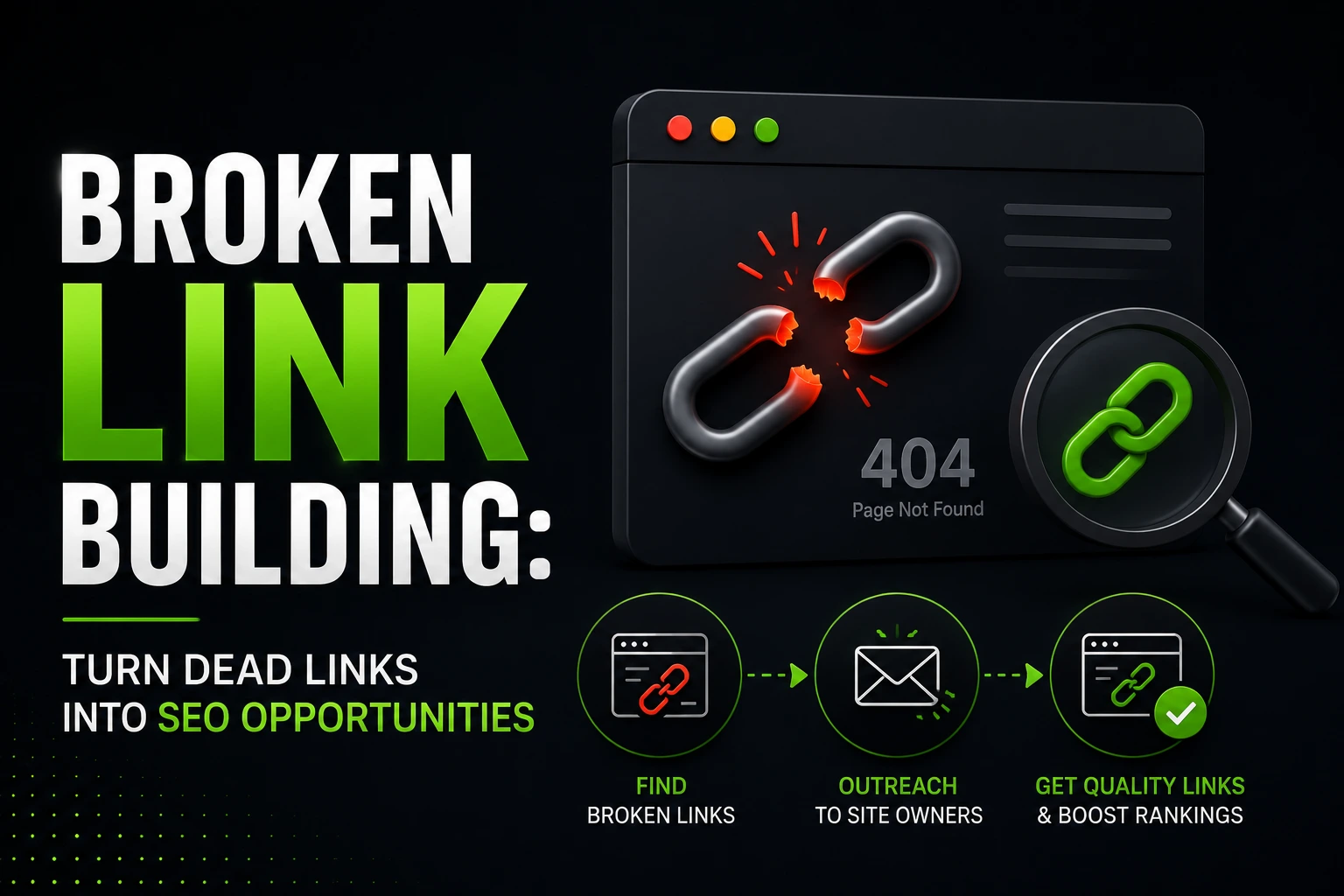
- Broken link building. Find broken links on some resource pages, and replace them with a link to your website. It will be useful for both the website owner and you.
- Digital PR and outreach to journalists. To be mentioned in news or press releases will give a strong signal about the trust in your website.
Whichever route you take, relevance beats raw numbers. A link from a smaller site that closely matches your niche will often help more than a generic link from a massive, unrelated domain.
3. Create Content People Naturally Want to Link To
Some of the best backlinks come without any outreach at all, because the content itself gives people a reason to reference it.
Original research, data-backed studies, detailed guides, and free tools tend to perform especially well here. Publishers love pointing readers toward sources that save them time or offer information they can’t easily find elsewhere.
Look at what already resonates with your audience. Which existing pages get the most traffic and engagement? Building more content in that same direction, and making sure it’s genuinely more useful than what’s currently ranking, tends to pay off over time.
4. Track Down Unlinked Mentions and Broken Links
Not every website that talks about your brand actually links to you. Sometimes you’ll be mentioned by name with no link attached, or an old link pointing to your site will quietly break.
Set up a simple alert for your brand name so you catch new mentions as they happen. When you find one without a link, reach out politely and ask the site owner to add one. Do the same for broken links you find on relevant resource pages elsewhere.
This tactic works best once your brand already has some visibility, since people need to be talking about you in the first place for it to apply.
5. Build a Strong Internal Linking Structure
The internal links, which are basically the links linking one page on your website to another page, don’t receive as much focus as backlinks do, although they are more important than they seem.
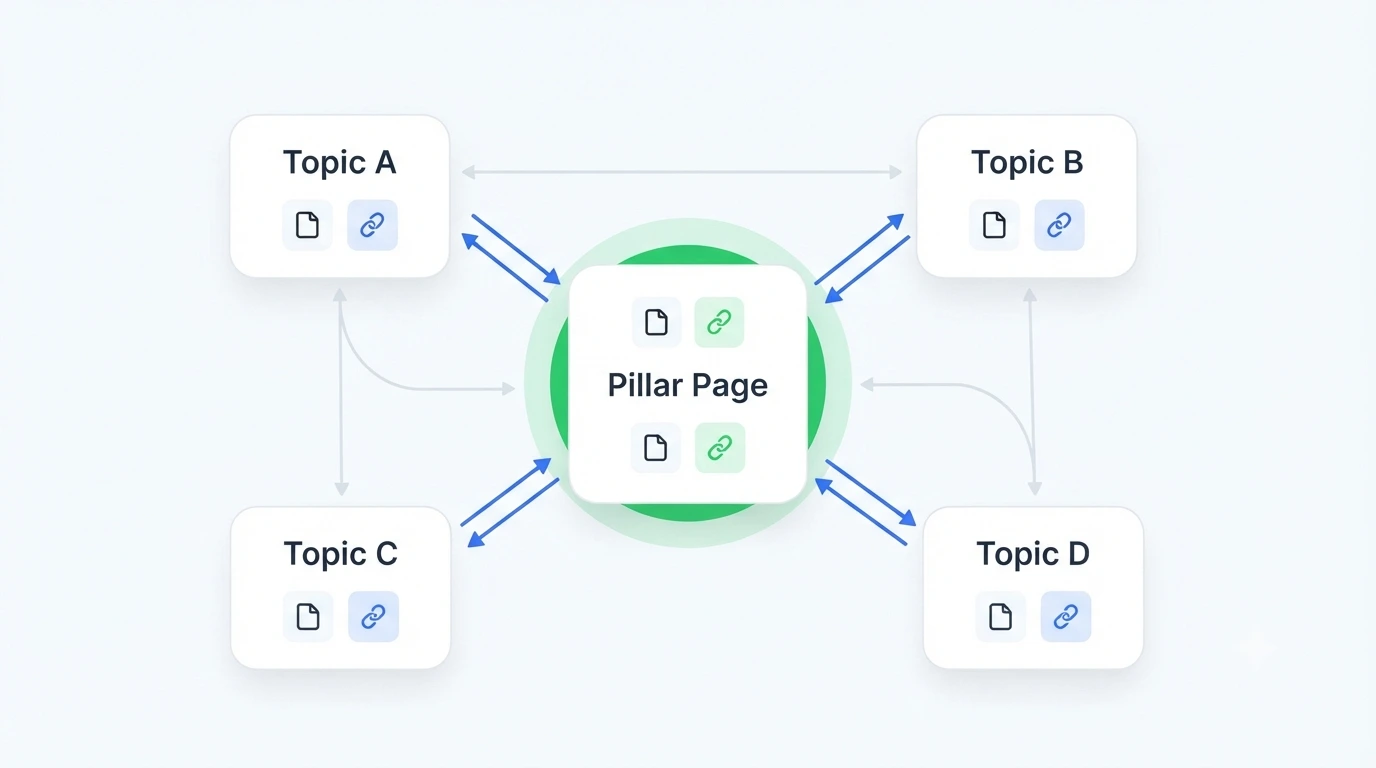
They transfer the authority from one page to another, allow visitors to find other information on your website through natural means, and make the process of crawling and understanding your website by search engines much easier.
An efficient method for doing that is creating topic clusters. Start with a pillar post, which will be talking about a general topic, and then link it out to several posts talking about the various subtopics of that topic.
6. Clean Up Your Backlink Profile Regularly
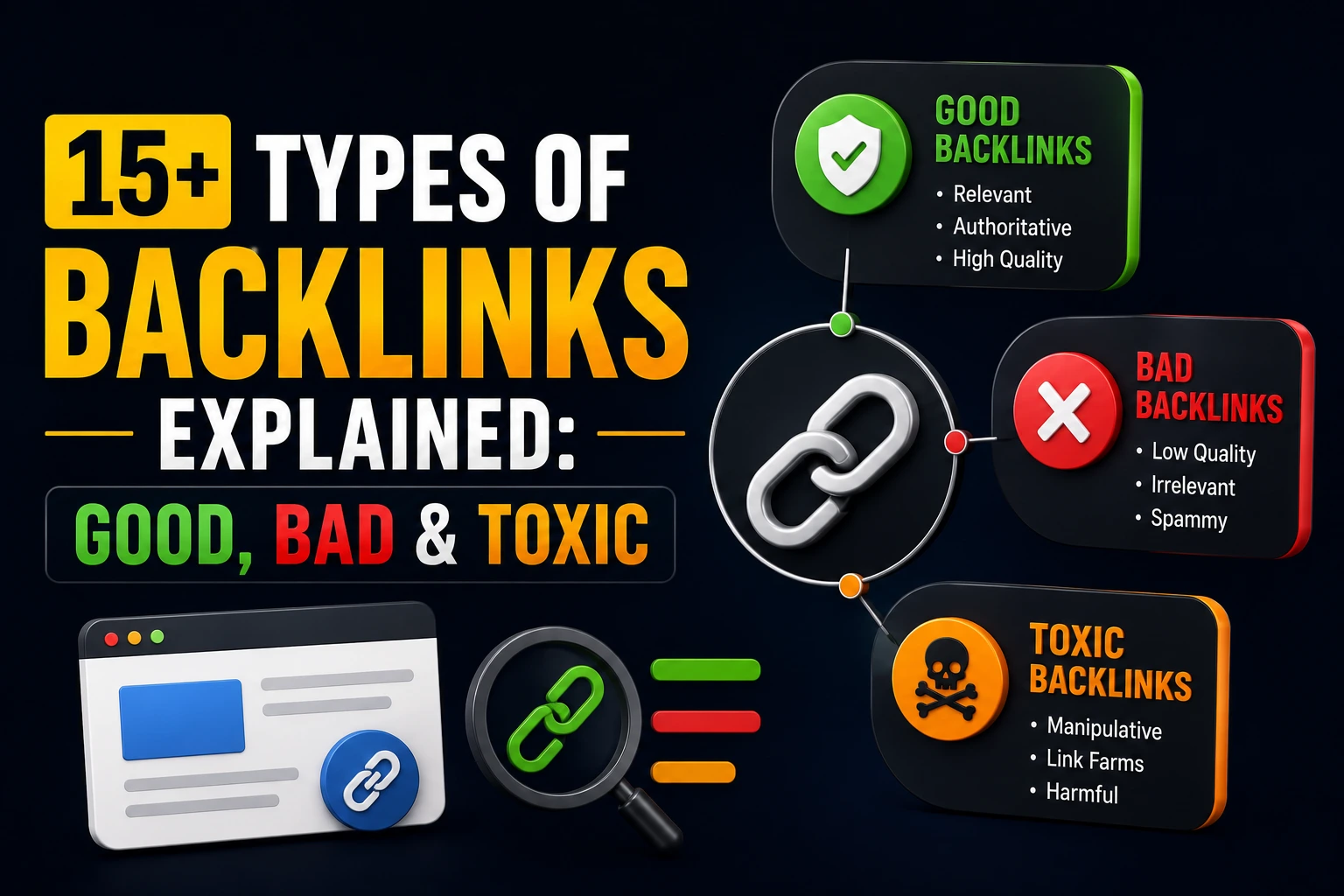
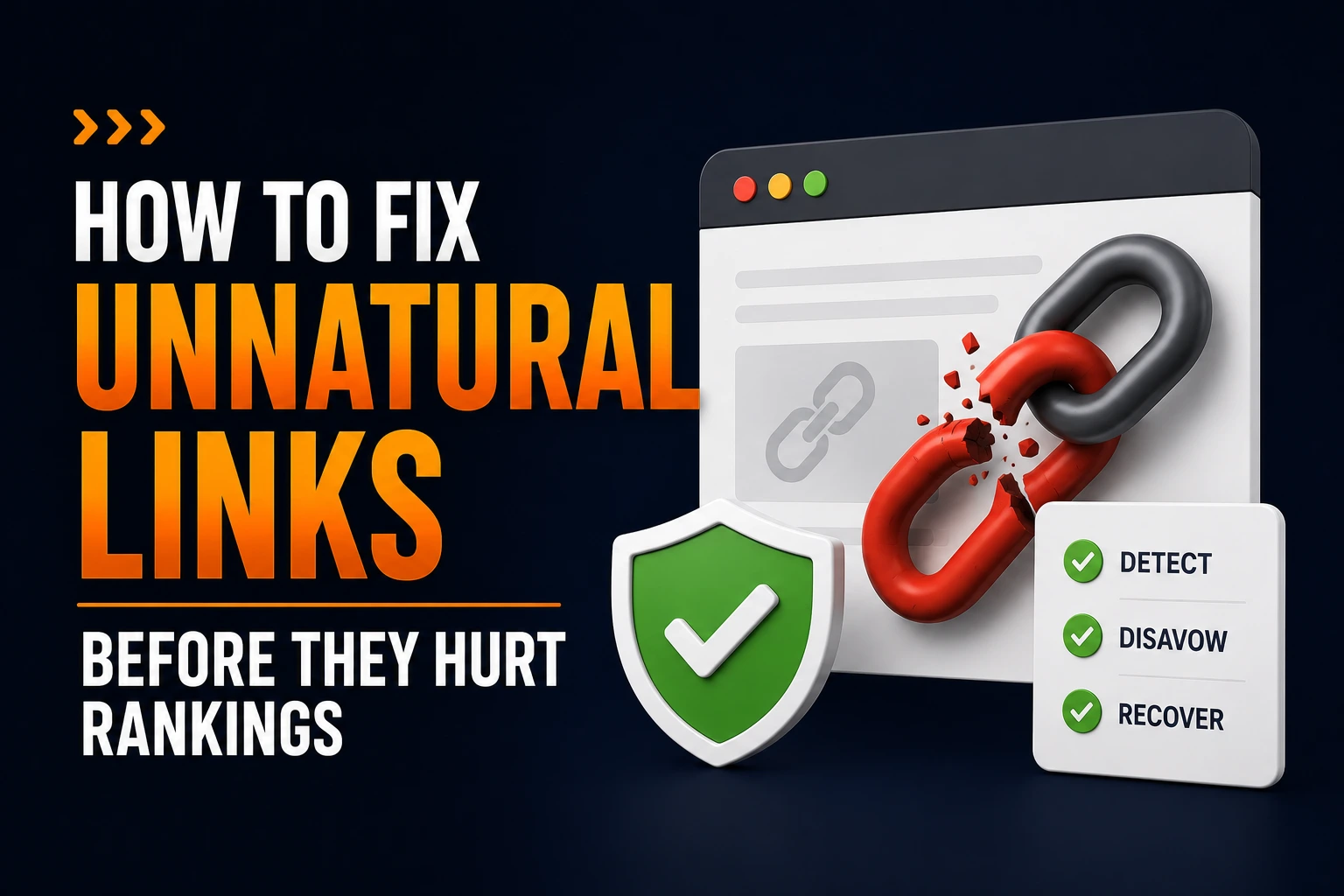
Not all links will be beneficial to you; some might even silently harm you. Spammy or poor-quality backlinks may end up linking back to your website unbeknownst to you.
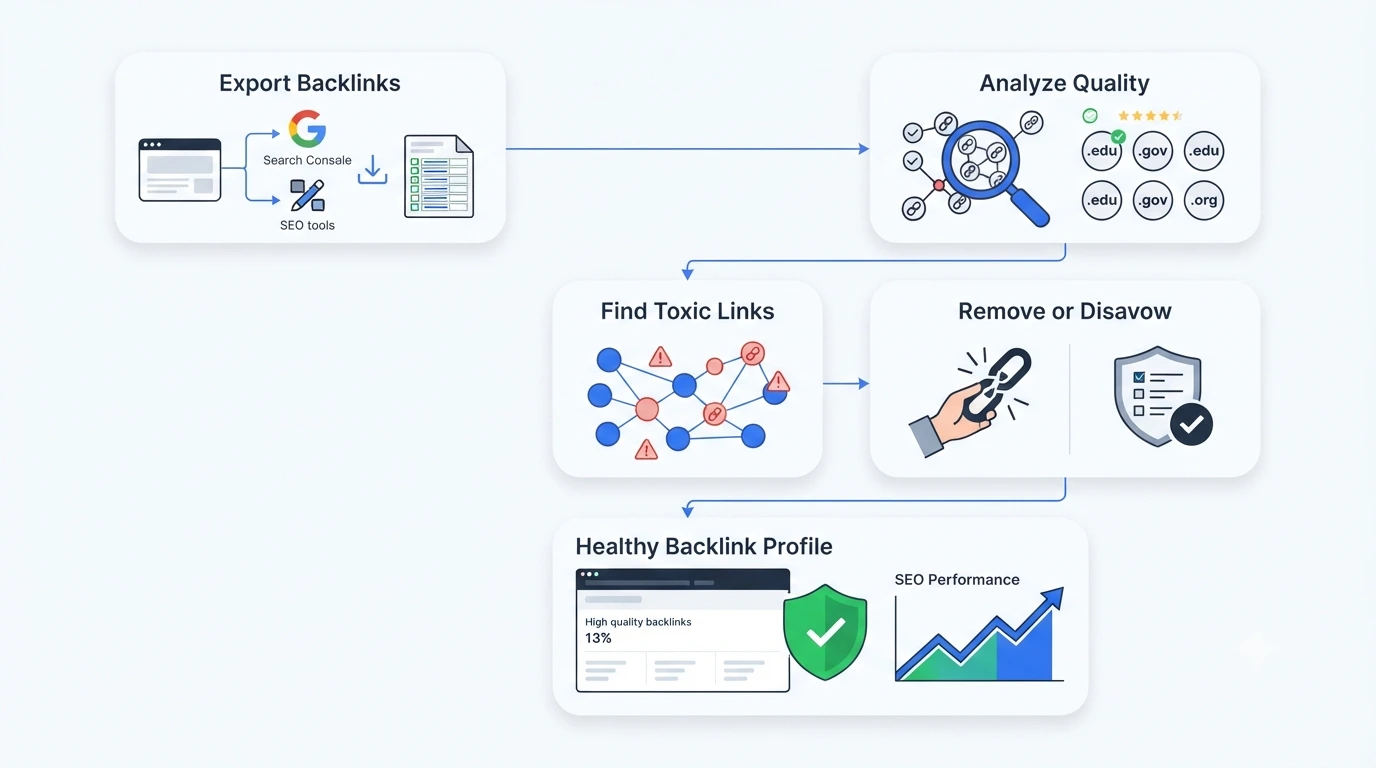
Conduct a link audit from time to time to see if there is anything harmful on your website. If it is possible to have a bad link disavowed directly, then that is the way to go. Otherwise, you can use Google Search Console to have the link disavowed by Google.
Consider it an activity that needs to be done regularly, particularly if you start having more and more backlinks.
7. Strengthen Your On-Page and Technical SEO
A technically sound site earns links more easily, simply because both visitors and search engines can move through it without friction.
A few fundamentals worth checking regularly:
- Site speed. Slow loading pages frustrate visitors and satisfy a factor Google has openly confirmed matters for rankings.
- Mobile experience. Google evaluates the mobile version of your site first, so a clunky mobile layout can hold everything else back.
- Clear site structure. A well-organized sitemap helps search engines crawl and index your pages properly.
- Security. Moving to HTTPS with a valid SSL certificate builds trust with visitors and search engines alike.
None of these steps move your DA number directly, but they build the foundation everything else depends on, including how well your link-building efforts actually pay off.
Domain Authority vs Page Authority
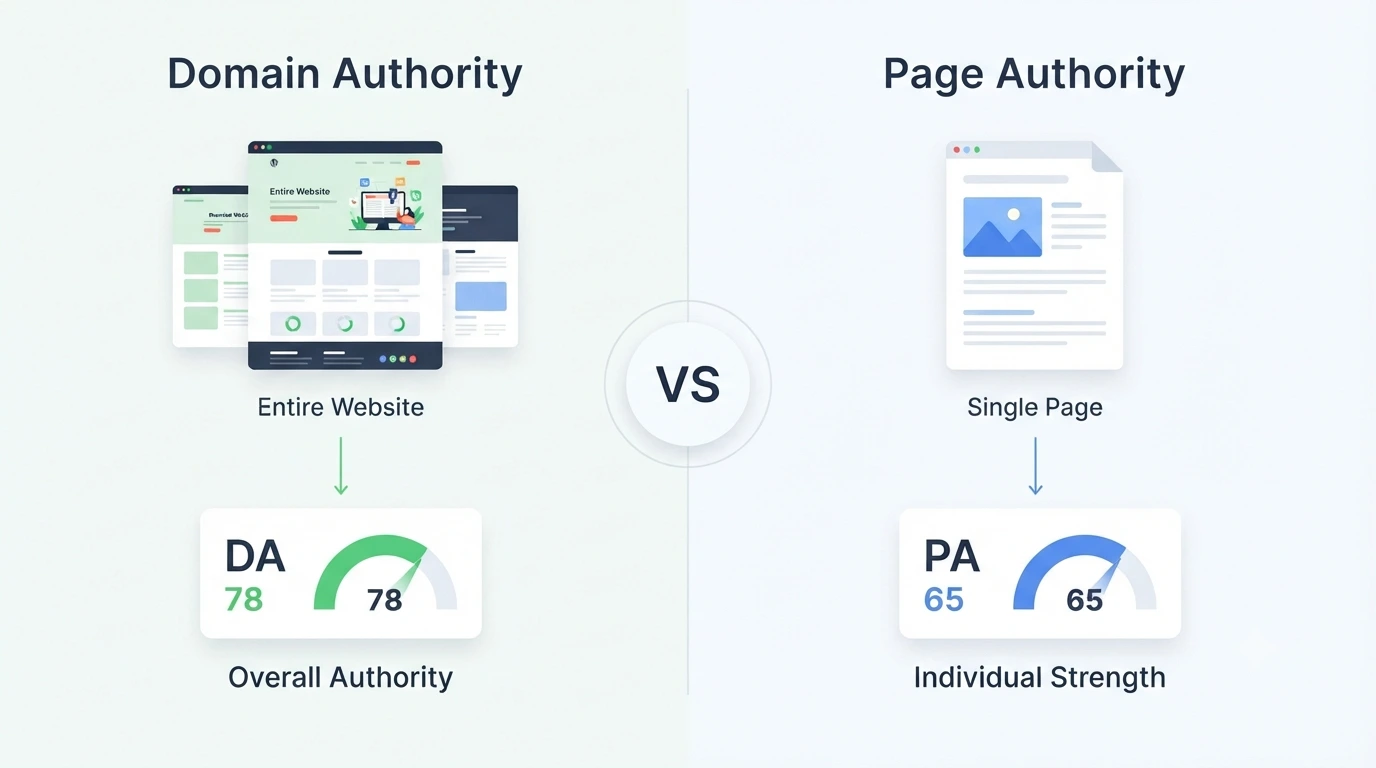
It’s worth pausing on this distinction one more time, since it comes up constantly. Page authority looks at how a single page is likely to perform, while domain authority looks at your site as a whole.
Improving the page authority of individual articles, especially ones targeting competitive keywords, can help even a site with a modest overall DA outrank stronger competitors on specific terms. And as you build up strong, well-linked pages one by one, your overall domain authority tends to rise right along with them.
Final Thoughts
The domain authority is not something that will affect the ranking of a website in Google, but it does give you some actual information regarding how your site stands against others that are competing with you for visibility. Establishing the domain authority will be beneficial in many ways, such as getting increased organic visibility and credibility with your readers and future partners.
What you need to do in order to increase your domain authority score is to create link-building strategies, write useful content that will attract citations, maintain a healthy backlink profile, and make your website more appealing for crawling.
Frequently Asked Questions
Is domain authority a Google ranking signal?
No. DA is an external metric developed by Moz, and according to Google itself, DA is not used in its ranking algorithm. Nevertheless, DA represents such important factors as relevance, authority, and credibility, all of which have a genuine impact on how Google ranks pages.
How often does domain authority get updated?
DA gets refreshed by Moz once a month, so it is absolutely normal to see slight fluctuations in your DA score without any changes from your side.
What is a high domain authority score?
It greatly depends on the niche you are working in. As a rule of thumb, you can consider DA 40 to 50 as average, DA 50 to 60 as good, and anything higher than 60 as very good. However, comparing your DA score with that of the currently ranking websites for your keyword makes much better sense.
How long does it take to boost domain authority?
There is no definite timeframe. Improvements are expected in weeks and months, not in hours, especially after you reach the DA score between 40 and 50, as further improvements will be much harder to make.
Can a high number of backlinks on a single website improve my DA?
Not as much as you’d imagine. Instead of counting the number of links you have, Moz measures the unique referring domains, meaning that a hundred backlinks from a single website will be counted the same way as just one for this particular indicator. The source diversity is more important.
Do I need to disavow low-quality backlinks on my own?
If you manage to make the website owner remove them personally, that would be the best option. If not, you can always use the Google Search Console to disavow your links.
Can domain authority influence my organic traffic?
It cannot do that directly as it is not a ranking factor used by Google. Still, DA tends to increase along with those factors that positively influence traffic, like high-quality backlinks or proper content optimization.
Is there any other metric I should monitor except DA?
Certainly not. In fact, DA performs best when used together with other metrics, such as organic traffic, keyword rankings, referring domains, and page speed.