
Open any backlink report and you will find links of every shape and size pointing at your site. Some have been quietly lifting your domain authority for months. Others are sitting there doing absolutely nothing. And a small number, if you are not paying attention, could be the reason your organic traffic keeps sliding without any obvious explanation.
Here is the thing most generic SEO guides skip over: backlinks are not a single category. They behave differently, send different signals, and have different kinds of repercussions based on their source, the means by which they are built, and the nature of the relationship between the link-building page and your site. You cannot afford to overlook this fact if you want to be serious about developing a sustainable backlink profile.
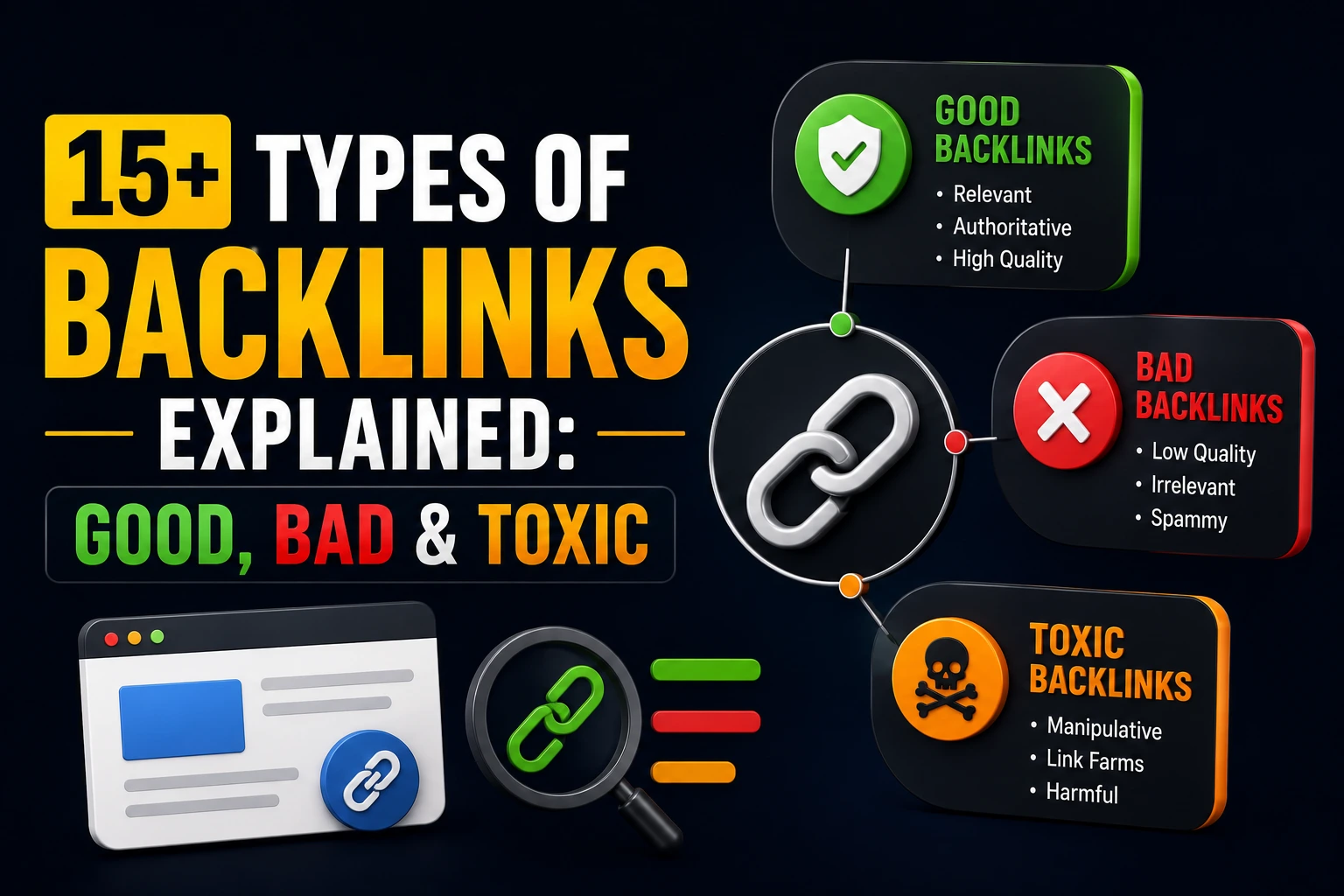
This guide breaks down 15+ types of backlinks into groups based on the effect they have, and all you need to do is to learn about them so that you know which ones matter.
18 Type of Backlinks and How Search Engines Actually Read Them
Google’s original PageRank algorithm treated backlinks as “votes of confidence,” a core principle that remains a powerful ranking factor today. However, the evaluation of these links has evolved significantly.
Modern search engines prioritize the quality and context of a link over simple quantity:
- Contextual Relevance: A link from a topic-related domain is far more valuable than one from an unrelated site, regardless of the site’s authority.
- Strategic Signals: Anchor text informs search engines about the destination page’s content, while sophisticated systems now penalize manipulative, low-value link building.
- Link Equity: Known as “link juice,” this is the ranking power transferred via a dofollow link. Not all links pass equity, and the amount passed varies based on the source’s authority and relevance.
A successful SaaS marketing strategy now requires focusing on earning high-quality, contextually relevant listicle links rather than simply accumulating volume.
The Good: Link Types Worth Prioritizing
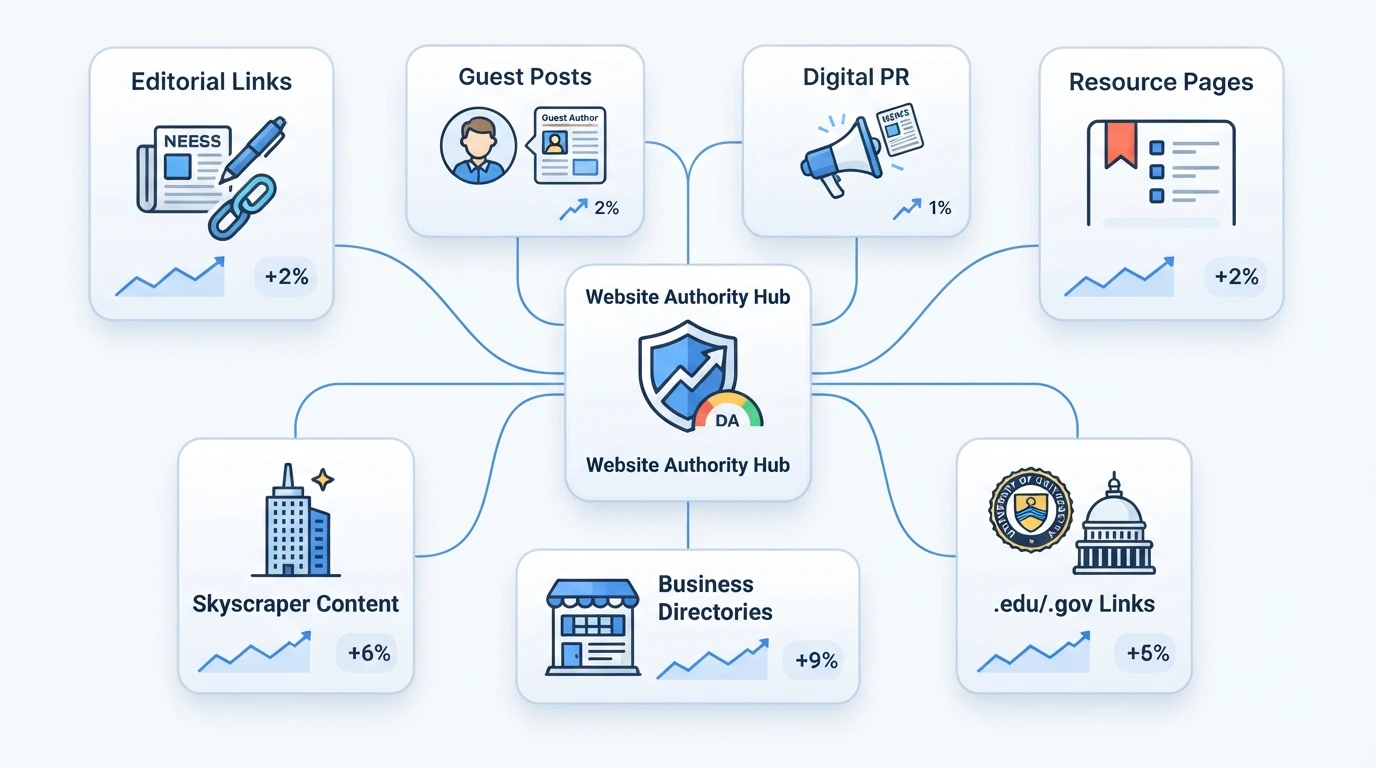
These are the backlinks that do the work. They build domain authority, send referral traffic, and signal genuine credibility to search engines.
1. Editorial Backlinks
The editorial link is exactly what each link builder wants to achieve. This happens when the publisher, journalist, or writer has deemed your content worth mentioning and linking to without having had any discussion or deal whatsoever.
The reason for such a link appearing is that you have written a piece that was considered worthy enough of a mention by somebody.
Editorial links carry trust that cannot be artificially created through any outreach effort because there is human judgment at play here. A respected site has made the decision to point their visitors in the direction of your content, and there’s no way of mimicking this, which is why search engines highly value editorial links.
2. Guest Post Backlinks
Guest posting means writing an informative article that you will post on some other website within your field. If the host publication is a reputable one and if it is being actually read by your potential clients, the links from there would give you a lot of authority and traffic as well.
Placement is much more important than what most people realize. The link that is naturally embedded within the article would pass much more authority compared to the one that has been posted at the end in the author’s bio part of the article.
The quality of your publications is more important than the number of guest posts that you have made.
3. Digital PR Backlinks
Digital PR is what happens when traditional public relations meets link-building strategy. When a journalist at an online publication covers your brand, cites your research, or quotes your expertise in a news article, the backlink that comes with the coverage is the kind most site owners can only dream about earning through outreach alone.
These links tend to come from news sites, industry publications, and authoritative blogs with strong domain authority and real editorial standards. Because coverage happens on merit, the links arrive without violating any guidelines and typically sit on pages that themselves attract further links over time.
4. Resource Page Backlinks
A resource page is a curated list of recommended tools, guides, and articles maintained by a website to help its audience find useful information in one place. Getting your content listed on one means an editor reviewed what you published and decided it belonged alongside their other trusted recommendations.
These pages exist across nearly every industry vertical, from digital marketing and finance to healthcare and engineering. A well-targeted resource page pitch, paired with content that genuinely deserves inclusion, can earn links from some of the most authoritative domains in your space.
5. Skyscraper Backlinks
The skyscraper method works by identifying content that already attracts links in your niche, creating a substantially improved version of it, and then reaching out to sites currently linking to the older, weaker piece.
When executed well, the links you earn come from pages with a proven track record of attracting links themselves, which compounds their value.
The approach requires real investment in content quality. There is no shortcut to making something genuinely better than what already ranks well.
6. Profile and Business Directory Backlinks
Links from reputable business directories, professional platforms, and industry-specific listings contribute meaningfully to local SEO and overall brand legitimacy. Google Business Profile, LinkedIn, Crunchbase, Chamber of Commerce listings, and niche-specific directories all fall into this category.
These links rarely move rankings dramatically on their own. But they establish a foundational layer of legitimacy, particularly for newer sites or local businesses building their first layer of online presence.
7. Backlinks From .edu and .gov Domains
Educational institutions and government agencies maintain domains that search engines associate with high editorial standards and institutional credibility.
A backlink from a university research page, a government resource listing, or an academic publication carries trust signals that are genuinely difficult to replicate from commercial domains.
Earning these links is challenging by design, which is part of what makes them valuable when they appear in a backlink profile naturally.
The Neutral: Links That Exist Without Doing Much
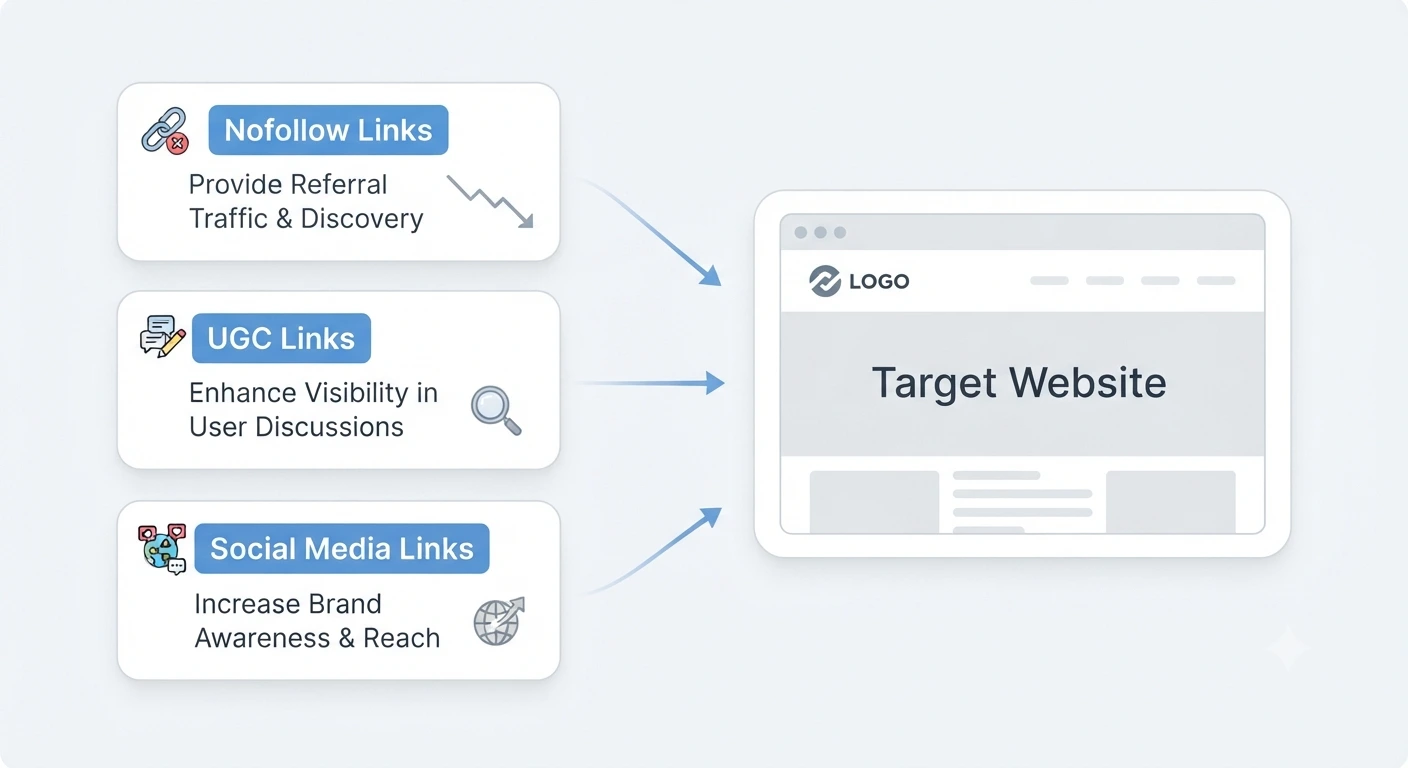
These link types sit in most backlink profiles without causing harm. They are worth understanding and occasionally worth pursuing, but they should not form the backbone of any link-building strategy.
8. No-follow Backlinks
The nofollow attribute was introduced by Google in 2005 as a way to let publishers signal that a link should not pass ranking credit. Today it appears on most social media platforms, many news sites, and any placement a publisher does not feel comfortable endorsing editorially.
Nofollow links do not pass link equity in the traditional sense. However, they contribute to a backlink profile that looks naturally varied, can send genuine referral traffic, and sometimes lead to editorial interest that produces dofollow links further down the line.
A profile made up exclusively of dofollow links, with no nofollow variation, can actually raise flags during a manual review.
9. UGC and Sponsored Link Attributes
Google expanded its link attribute options in 2019 by introducing the UGC tag for user-generated content and the Sponsored tag for paid placements. Both signal to search engines that the link should not be treated as an editorial endorsement.
Using the correct attribute matters from a compliance standpoint. A paid placement without a Sponsored tag violates Google’s guidelines.
A forum contribution marked with UGC keeps the participating site in good standing. Getting these right protects your site’s relationship with search engines even when link equity is not being passed.
10. Social Media Backlinks
All large social media platforms, from Facebook and Instagram through to LinkedIn, X, Reddit, and Pinterest, use the nofollow attribute for their outbound links. These backlinks don’t give any direct SEO ranking power.
However, these backlinks can help get traffic, improve content discoverability, and draw the attention of editors, who can cover your content editorially. It may be useful to think of social media distribution as a tool for amplification of your content, even though the links are neutral by nature.
11. Forum and Community Backlinks
Posting a valuable piece of information to a forum thread or community discussion could contain a link, driving traffic and increasing awareness of the brand among a certain group of people.
Outbound links on Reddit, Quora, and niche forums have nofollow and UGC attributes, thus providing only limited benefits in terms of ranking.
However, the value of these links is primarily in generating referral traffic and brand visibility but not passing link juice. The key point in this case is the usefulness of the posted information. Dropping links without any sense is comment spam and, therefore, harmful.
The Bad: Links That Quietly Dilute Your Profile
These link types rarely trigger penalties on their own, but they weaken overall profile quality and signal to search engines that a site may have pursued links without much regard for relevance or editorial standards.
12. Low-Quality Directory Backlinks
Directory submissions were once a recognized part of any link-building checklist. That era ended when Google’s algorithm began distinguishing between directories that genuinely served users and those that existed purely as a vehicle for generating backlinks.
Most generic, low-quality directories fall into the second category. A link from one adds nothing to rankings and edges the profile closer to looking artificially built.
Reputable, niche-specific directories are a different story, but the bar for what qualifies as reputable is higher than it used to be.
13. Undisclosed Paid Links
Buying a link placement in editorial content, without applying the Sponsored attribute, is a direct violation of Google’s Webmaster Guidelines. The placement might look organic on the surface, but the patterns associated with paid link networks, uniform anchor text, high volumes of links from the same cluster of domains, and abnormally fast link velocity, have become increasingly recognisable to Google’s spam detection systems.
The risk is a manual action or algorithmic suppression, either of which can take months to recover from fully.
The Toxic: Links That Can Actively Damage Rankings
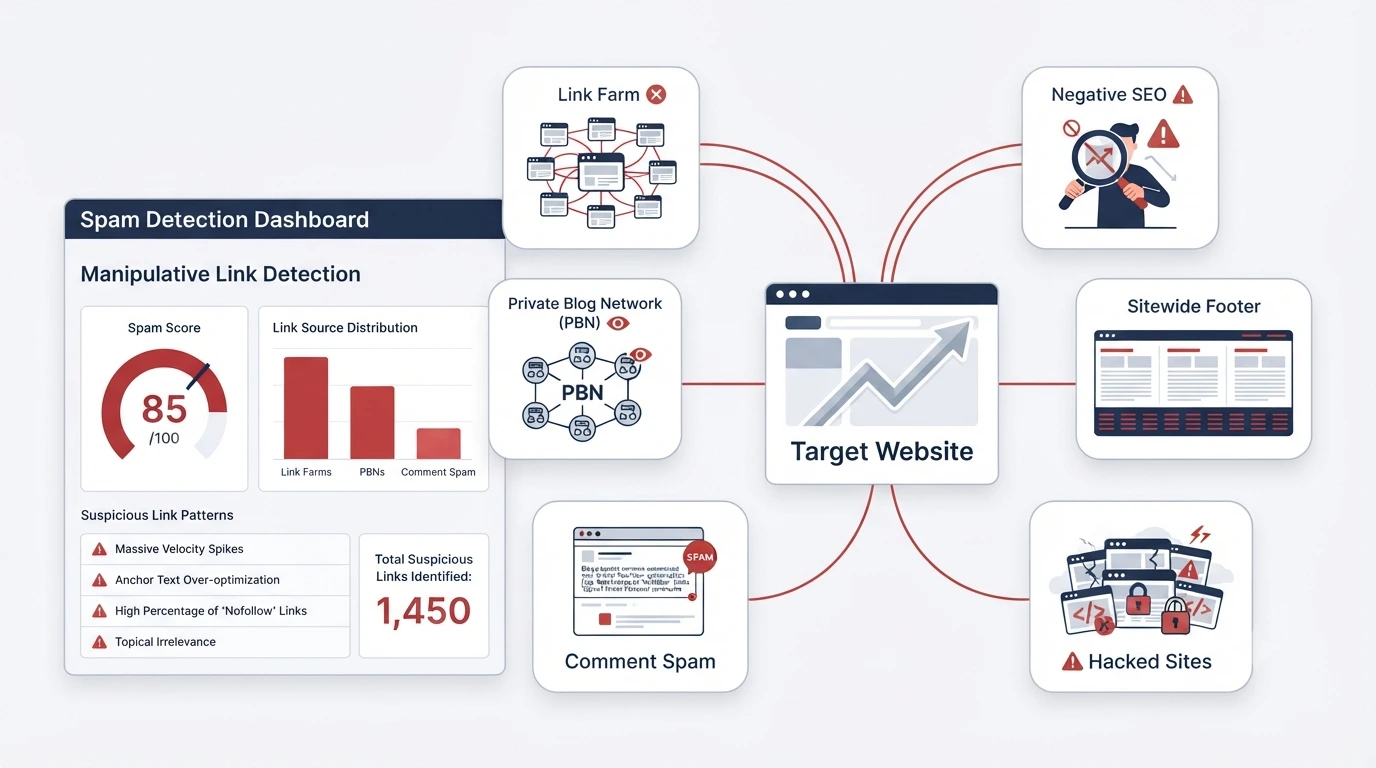
These are the link types capable of triggering manual penalties, suppressing page visibility, or drawing a Google spam team review.
14. Link Farm and PBN Backlinks
Link farms are collections of low-quality websites built for the sole purpose of generating backlinks. Private blog networks are a more structured version of the same concept, where a single operator controls a network of domains and sells link placements across them.
Google’s spam detection identifies these networks through shared footprints: common hosting environments, similar site structures, low-quality thin content, and unnatural anchor text patterns. Links from these sources risk triggering algorithmic filters or a manual unnatural links action.
15. Blog Comment Spam
Automated software can drop links into blog comment sections across thousands of unrelated websites within hours. These links are now almost universally discounted algorithmically before they can influence rankings, but a heavy cluster of comment spam in a backlink profile still signals manipulation risk during a manual review.
16. Negative SEO Attack Links
A competitor building large volumes of spammy or irrelevant links pointing at your domain, with the intent of triggering a penalty, is a recognized tactic called a negative SEO attack. Google’s systems catch and discard many of these automatically, but sustained campaigns targeting a smaller or newer site can occasionally gain traction.
Monitoring your backlink profile for unusual spikes in low-quality links from unrelated domains is the most effective early warning system. The disavow tool is available if a manual action is ever issued.
17. Sitewide Footer and Sidebar Links
A link placed in a site’s footer or sidebar renders on every single page of that domain. When purchased or arranged artificially, the resulting link count from a single domain is immediately conspicuous. Search engines treat sitewide links with scepticism because natural editorial links almost never appear sitewide.
Organic sitewide links from a genuine partner or vendor are viewed differently, but purchased sitewide placements are consistently discounted or flagged.
18. Links From Hacked or Compromised Sites
Backlinks sometimes appear in a profile because an attacker injected links into a hacked website. These are toxic through association rather than intent, but search engines cannot always distinguish between a link a site owner arranged and one that appeared through a security breach on a third party’s server.
When these appear, adding them to a disavow file with supporting documentation is a reasonable precaution.
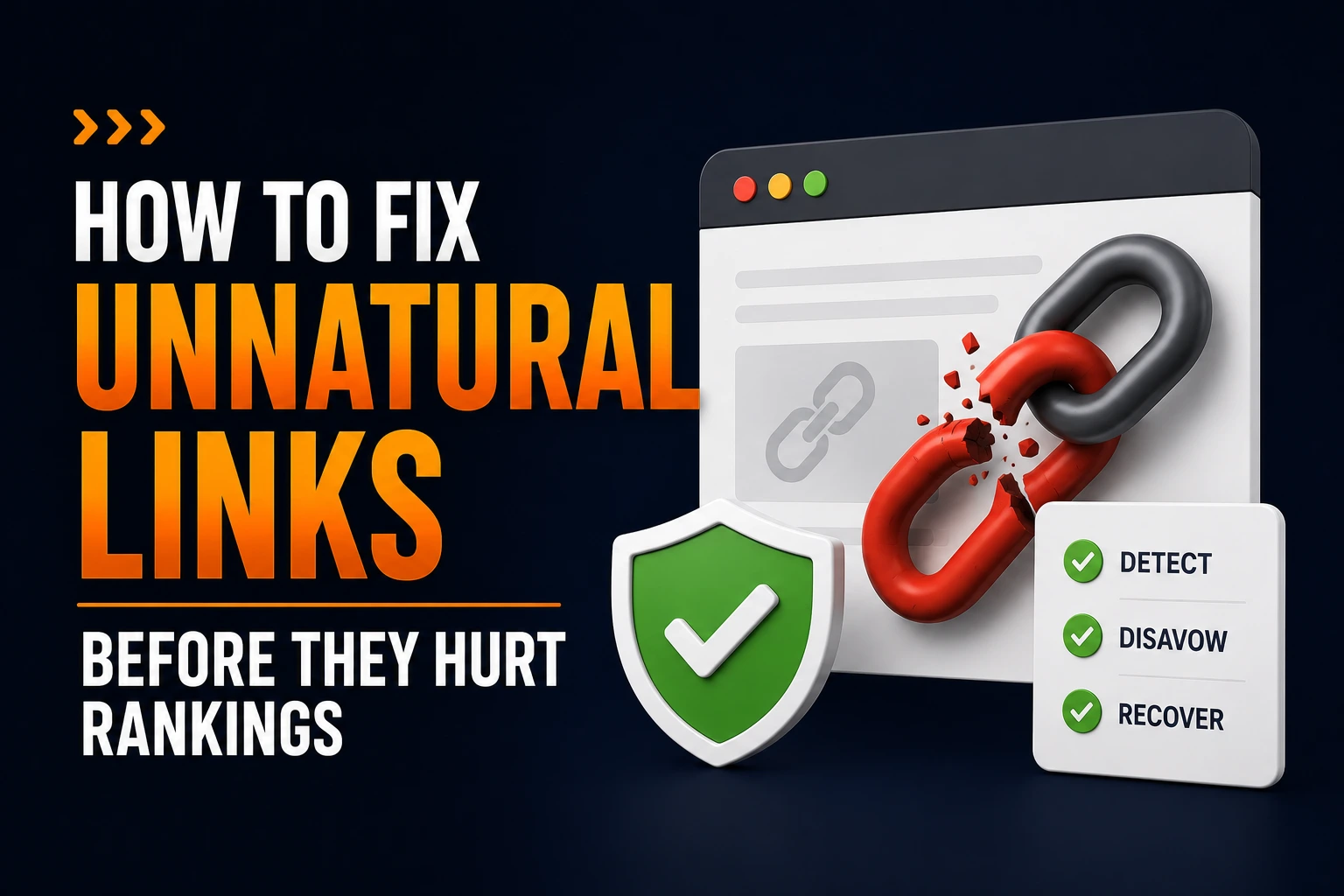
How to Find and Handle Toxic Backlinks?
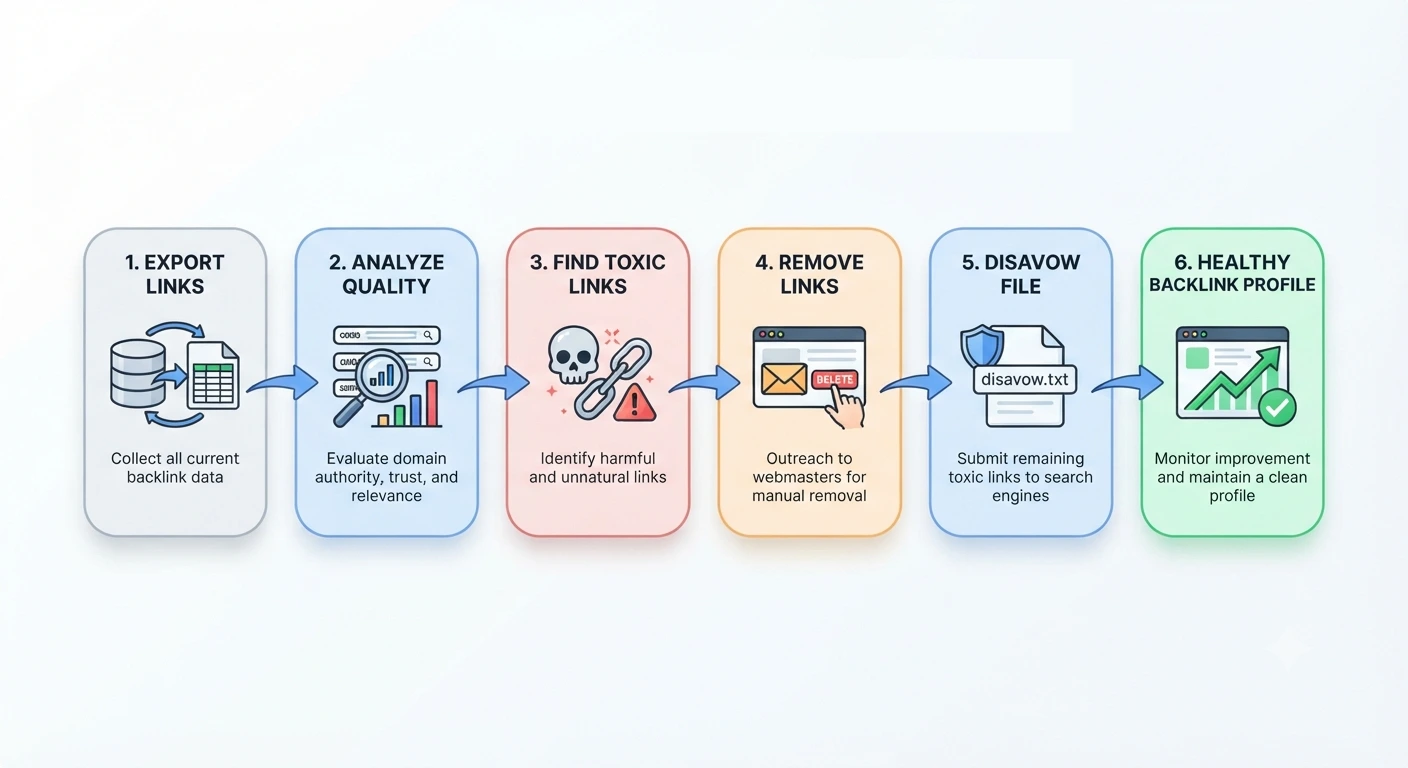
Identifying problem links early keeps small issues from growing into ranking problems that take months to reverse.
Start with a full backlink audit. Tools like Ahrefs, Semrush, and Moz pull a complete picture of your inbound link profile. Sort by spam score, look for unusual link velocity spikes, and pay close attention to anchor text distribution. A heavily keyword-stuffed anchor text profile is one of the clearest signs of a manipulative link-building history.
Use Google Search Console as your first stop. It is free, it comes directly from the source, and it flags manual actions and security alerts faster than any third-party tool. Configuring email alerts means you help build as they emerge rather than weeks later.
Be cautious with the disavow tool. Google’s algorithm ignores a significant proportion of low-quality links without any action from you. Mass disavowing without careful review has caused real damage to sites that accidentally removed links contributing positively to their authority. Use the disavow file for confirmed manual actions or clearly coordinated spam campaigns, and review each link manually before including it.
Attempt removal before disavowing. Reaching out to the webmaster of a domain hosting a genuinely harmful link and requesting removal is the preferred first step. If the request is ignored or the domain appears abandoned, include the link in the disavow file and move on.
Document everything. If a reconsideration request ever needs to be submitted after a manual action, detailed records of what was found, what removal attempts were made, and when the disavow was submitted demonstrate a good-faith effort to Google’s review team.
What a Healthy Backlink Profile Looks Like
Sites that maintain strong organic rankings over multiple algorithm updates tend to have a few things in common when it comes to their backlink profiles. Links arrive at a steady, natural pace rather than in sudden artificial bursts. Anchor text is varied, mixing branded terms, generic phrases, partial match keywords, and bare URLs.
The linking domains span multiple industries, as any genuinely popular piece of content attracts links from different types of publishers. And the vast majority of links were earned through content quality, relationship building, or genuine editorial recognition rather than purchased or manufactured.
Building toward that kind of profile is slower than buying links. It also does not require constant cleanup, survives algorithm updates far more consistently, and compounds in value as each new link builds on the authority of the ones already there.
Frequently Asked Questions
What is the actual difference between a bad backlink and a toxic one?
Bad backlinks tend to be low-quality or irrelevant links that add no real value but cause limited direct harm on their own. Toxic backlinks carry a genuine risk of triggering algorithmic suppression or a manual penalty. The distinction matters because toxic links need active attention while many bad links can simply be left alone.
Do no-follow backlinks contribute anything useful to SEO?
Not in terms of direct link equity transfer. But they support a naturally varied link profile, drive referral traffic from relevant sources, and sometimes connect your content with publishers who later provide editorial dofollow coverage. They are worth having as part of a diverse profile.
Should every suspicious link go into the disavow file straight away?
Not at all. Google’s systems disregard a large number of low-quality links independently. Mass disavowing without careful manual review risks removing links that are contributing positively to your rankings. Save the disavow file for manual actions or clearly organized link spam campaigns.
How frequently should a backlink profile be audited?
Monthly audits work well for most sites with active link building. For sites in competitive verticals or those that have experienced penalties in the past, checking every two to three weeks gives earlier visibility into problems.
Can negative SEO backlinks from a competitor cause real ranking damage?
In most cases, Google’s spam filters catch these before they cause measurable harm. Sites with an established, diverse backlink profile are much more resilient to these attacks. Monitoring for unusual link spikes and disavowing under a confirmed manual action are the appropriate responses.
Are all paid links against Google’s guidelines?
Links purchased to pass PageRank without proper disclosure violate Google’s policies. Paid placements that carry the Sponsored attribute are compliant. The distinction is transparency: disclosed paid links are acceptable, undisclosed ones are not.
What does an unnatural anchor text distribution actually look like?
A backlink profile where the majority of links use the same exact-match keyword phrase as anchor text looks engineered rather than organic. Natural profiles include a spread of branded anchors, generic terms, partial match phrases, and plain URLs, with keyword-rich anchors appearing occasionally rather than dominating the distribution.
What is the most effective starting point for cleaning up a toxic backlink profile?
Run a full audit in Ahrefs or Semrush, filter for high spam score links, verify each flagged link manually before taking action, attempt webmaster removal requests for confirmed harmful links, and submit a disavow file for anything that cannot be removed directly. From there, redirect energy toward earning quality links so the positive signals in the profile continue to grow.