
Creating content randomly is no longer enough. Google prefers sites that structure info neatly, tying linked subjects to prove know-how. A pillar page works as a key center, joining all backup pieces on a theme to offer a full view for users and search tools.
This guide breaks down what a pillar page means, its key role in SEO for 2026, and easy steps to make one, helping you set up a hub that boosts visits, trust, and interaction.
What Is a Pillar Page?
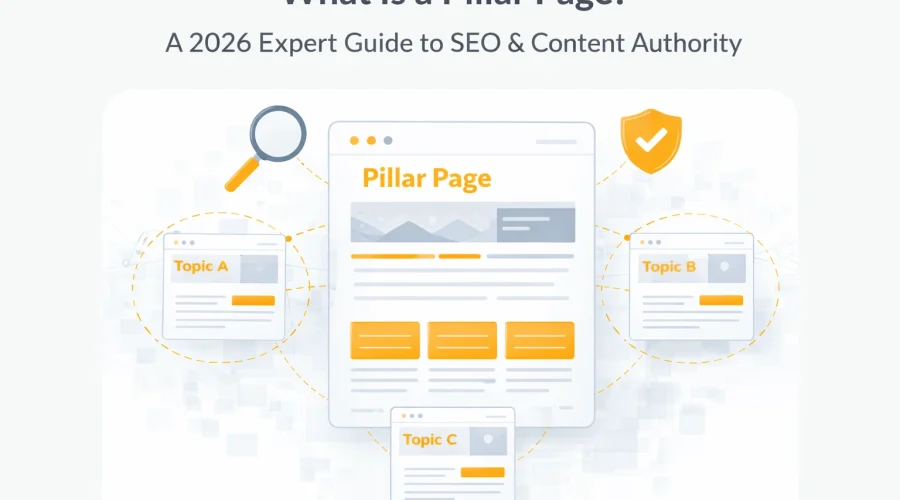
A pillar page is a high-level guide on a central topic, giving readers an overview while linking to more detailed cluster pages. Think of it as the main hub in a topic network.
Readers gain from quick access to connected thoughts in one area, and search engines spot the richness and layout of your material.
Example: A pillar about SEO fundamentals might connect to clusters on:
- Keyword search
- On-page tweaks
- Link creation
This positions your site as complete and reliable.
How Pillar Pages Work (Topic Cluster Model)?
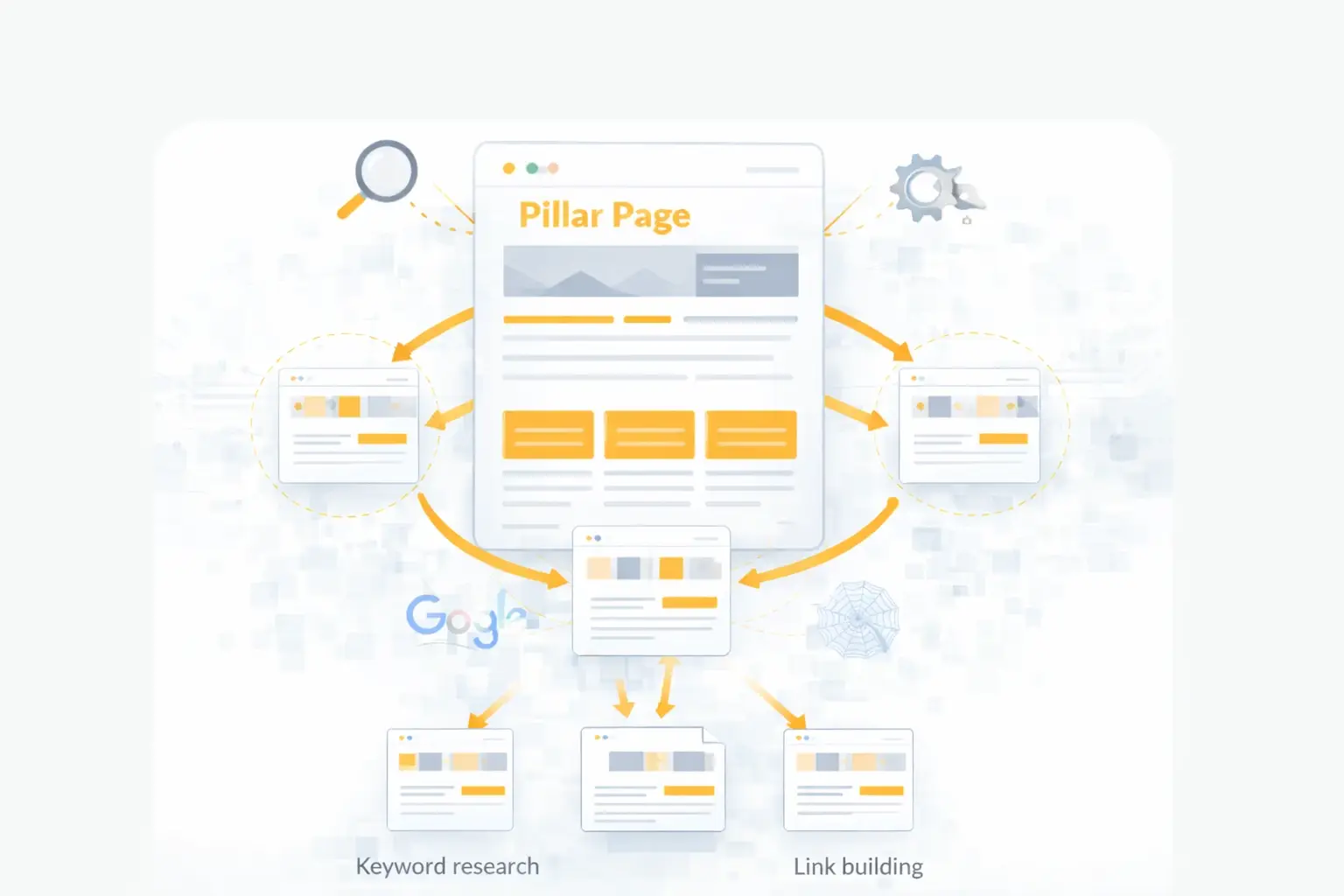
Pillar pages follow the hub-and-spoke setup, also known as topic clusters.
- The pillar page is the hub, providing a wide summary.
- Cluster pages serve as spokes, exploring detailed sub-areas.
- Links flow both ways between pillars and clusters, enhancing crawl ease, spreading link strength, and showing topic depth to Google.
Example: A pillar on SEO basics might link to clusters on:
- Keyword research
- On-page optimization
- Link building
Linking these parts lets users move smoothly, and search engines grasp your content’s range.
Tip: Pick clear, descriptive anchor text for every link. Skip fuzzy terms like “click here” so readers know what’s ahead.
Pillar Page vs Blog Post
Pillar pages and blog posts serve different roles on your website:
| Aspect | Pillar Page | Blog Post |
| Purpose | Builds topic authority and overviews a broad area | Covers one specific idea or timely point |
| Word Count | 3,000–10,000+ words | 1,000–2,500 words |
| SEO Role | Targets wide keywords, supports clusters | Targets narrow or long-tail keywords |
| Update Frequency | Quarterly or as topics evolve | Often once or infrequent |
In short, pillar pages are long-term SEO assets, while blog posts often act as supporting content that links into them.
Pillar Page vs Landing Page
Landing pages focus on conversion goals, such as sales or sign-ups, and often have limited navigation. Pillar pages, in contrast, focus on educating and guiding users, with numerous internal links for further exploration rather than direct sales pitches.
Why Pillar Pages Matter for SEO in 2026?
Pillar pages remain critical because Google now prioritizes topic authority over individual keywords. Linked, in-depth content signals expertise, improves crawlability, and helps search engines understand how your content pieces relate.
Users also benefit: clear navigation keeps them on your site longer and improves engagement. Internal links distribute authority across your pages, amplifying SEO impact.
Expert quote:
“Pillar pages help create an experience that works for visitors AND search engines.” — Content Marketing Institute
Types of Pillar Pages
Ultimate Guide Pillar
An ultimate guide covers everything a reader needs to know, from basics to advanced topics. It’s ideal for establishing authority.
Example: HubSpot’s “The Ultimate Guide to SEO” links to technical SEO and content guides.
Resource Hub Pillar
A resource hub collects tools, templates, statistics, and references, giving readers quick access to helpful materials.
Example: A SaaS company’s “Marketing Resources Hub” connects users to e-books, checklists, and guides.
Product-Led (SaaS) Pillar
Product-led pillars educate readers while subtly highlighting products or services.
Example: Zapier’s “Ultimate Guide to Remote Work” links to automation tools and workflows that demonstrate product benefits.
How to Create a Pillar Page?
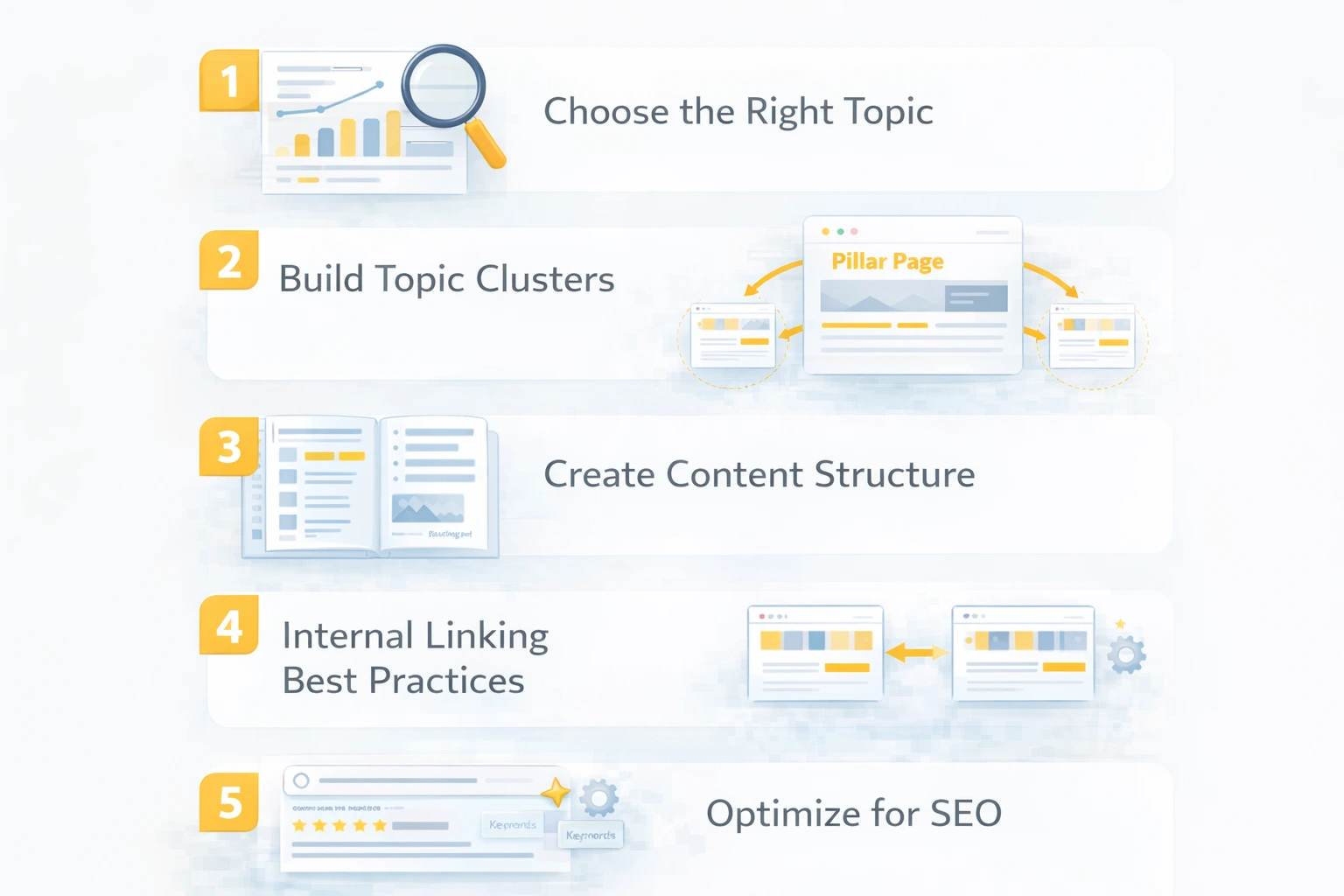
Step 1 – Choose the Right Topic
Pick topics that are relevant to your business and have good search demand. Keyword search tools like Semrush or Ahrefs help find broad, searchable terms. Align the topic with your expertise and what your audience is looking for.
Step 2 – Build Topic Clusters
Identify 8–20 subtopics to create your cluster content. Map these to search intent, whether informational or transactional, and use clustering tools to fill gaps in your coverage.
Step 3 – Create Content Structure
Organize with H2 and H3 headings, a clickable table of contents, and short paragraphs. Use bullets, images, and examples to make scanning easy and improve readability.
Step 4 – Internal Linking Best Practices
Link naturally from pillar to clusters and clusters to pillar. Include clear anchor text like “See our full guide for more.” Following a proper on-page SEO checklist strengthens your internal structure.
Step 5 – Optimize for SEO
Include a meta title and description, weave in semantic keywords, and add FAQ schema to appear in featured snippets. Refresh the page every few months to keep content up-to-date.
Common Pillar Page Mistakes
- Topic too broad → reader overload: Narrow the focus to a clear audience or angle.
- Weak internal links → lost authority: Map links before launch.
- Skipping updates → content aging: Plan quarterly reviews with fresh information.
Expert view:
“Pillar pages connect scattered content and prove your expertise to search engines and readers.” — Siteimprove
How to Measure Pillar Page Performance?
Monitor performance using Google Analytics and Search Console:
- Organic traffic growth across the hub and clusters
- Keyword ranking improvements (broad and long-tail)
- User behavior: time on page and click-throughs
- Internal link clicks and conversions assisted
- Backlink acquisition and topical reach
These metrics show both SEO impact and user engagement, giving a clear picture of pillar page effectiveness.
Pillar Pages for SaaS & B2B Websites
SaaS and B2B businesses benefit particularly because long sales cycles demand trust and expertise. Pillar pages educate early-stage leads, demonstrate authority, and support product-led SEO strategies.
Examples:
- CRM software: “The Ultimate Guide to CRM” links to features, integrations, and setup guides.
- SaaS link building: “Complete Guide to Link Building for SaaS” connects to outreach tools and tutorials.
Final Thoughts
Pillar pages are long-term SEO assets that build real authority. They connect content, improve internal linking, and offer readers a structured, informative experience.
Start with one strong pillar, plan clusters, add internal links, and refresh periodically. This approach improves rankings, increases user engagement, and establishes your site as an authoritative resource.
“Effective pillar pages and clustered content improve site structure, internal linking, and on-page SEO.” — Search Engine Journal
FAQs
What sets a pillar page apart from cornerstone content?
Cornerstone content is your key expert content. Pillar pages specifically use the cluster model to connect related articles.
How long should a pillar page run?
Aim for 3,000+ words for comprehensive coverage. Quality and structure matter more than length alone.
Do pillar pages work in 2026?
Yes. They align with Google’s push for topic depth and user value.