
Every person who develops an online brand reaches a frustrating point at some stage when the actual process of link building consumes too much time, but you need to deliver on your growth plans at the present time. This extreme level of pressure is often the time when the phrase “black hat link building” makes its appearance through a backlink audit or even a process of evaluating a newly discovered SEO agency, which guarantees quick results. In order to make informed decisions on whom to team up with for growth, one has to comprehend the basic structure of the link ecosystem.
What Is Black Hat Link Building?
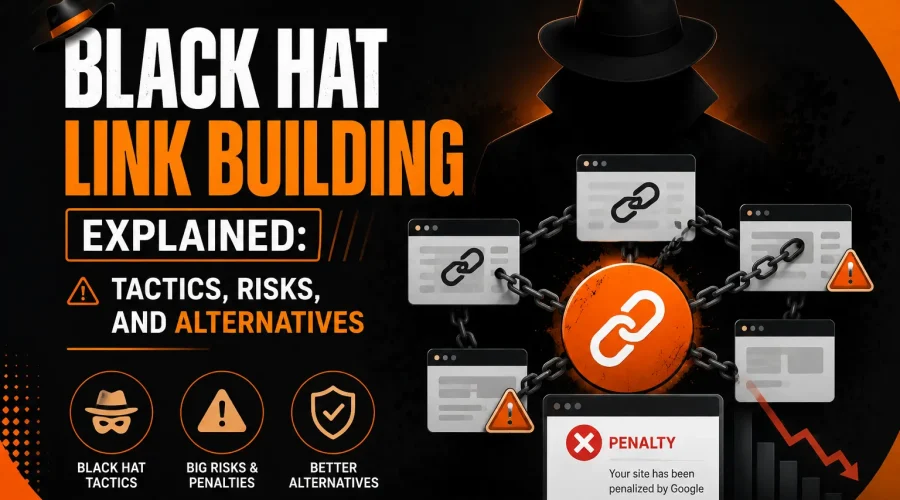
Black Hat link building is a type of link-building activity aimed at obtaining backlinks via methods beyond search engine guidelines as opposed to being inside them. Rather than earning backlinking based on the genuine interest of other websites, the link would be acquired or paid for just to affect how the search engine sees your authority. The reason behind such a strategy is that search engines treat backlinks as an indicator of trust; hence, the focus is on building a signal rather than gradually earning one.
One can easily envision link building as a continuum:
- White hat – obtained as a result of independent outreach, originality of content, and editorial choice by other website;
- Grey hat – relies on grey areas and legal tactics but those loopholes might get sealed in the next update;
- Black hat – involves link acquisition via networked, automated processes or secret payments.
As the name suggests, the idea is borrowed from classic Western movies featuring the white hats of the protagonist and dark hats of his opponents; the terminology became common place in SEO long ago.
Why Do People Still Use Black Hat Tactics?
The Appeal of Speed
Black hat tactics remain popular for a simple reason. They promise speed. Building authority through content and outreach can take months, while a bulk link package can arrive within days. For a business eager to show fast growth, that pace is genuinely appealing, even though patient methods tend to deliver stronger, steadier results once enough time has passed.
Sometimes It Happens by Accident
Not everyone ends up with black hat links on purpose, either. Plenty of site owners are simply new to SEO and choose a backlink package from a provider that turns out to be a link farm. Sellers offering these services show up often, through outreach emails, freelance marketplaces, and SEO forums, usually promising authoritative links at prices that seem attractive, especially if you’re unfamiliar with the average cost of hiring a SaaS SEO agency or haven’t fully weighed the pros and cons of hiring one. These offers can look legitimate on the surface, but they’re usually worth double-checking before committing.
Common Black Hat Link Building Techniques
These are the tactics that show up most often, each with its own recognizable pattern.
Private Blog Networks (PBNs)
A PBN is a group of websites built or acquired specifically to link back to one target site. Operators typically purchase expired domains that still carry leftover authority from a previous owner, then add content quickly enough to give each site a basic presence.
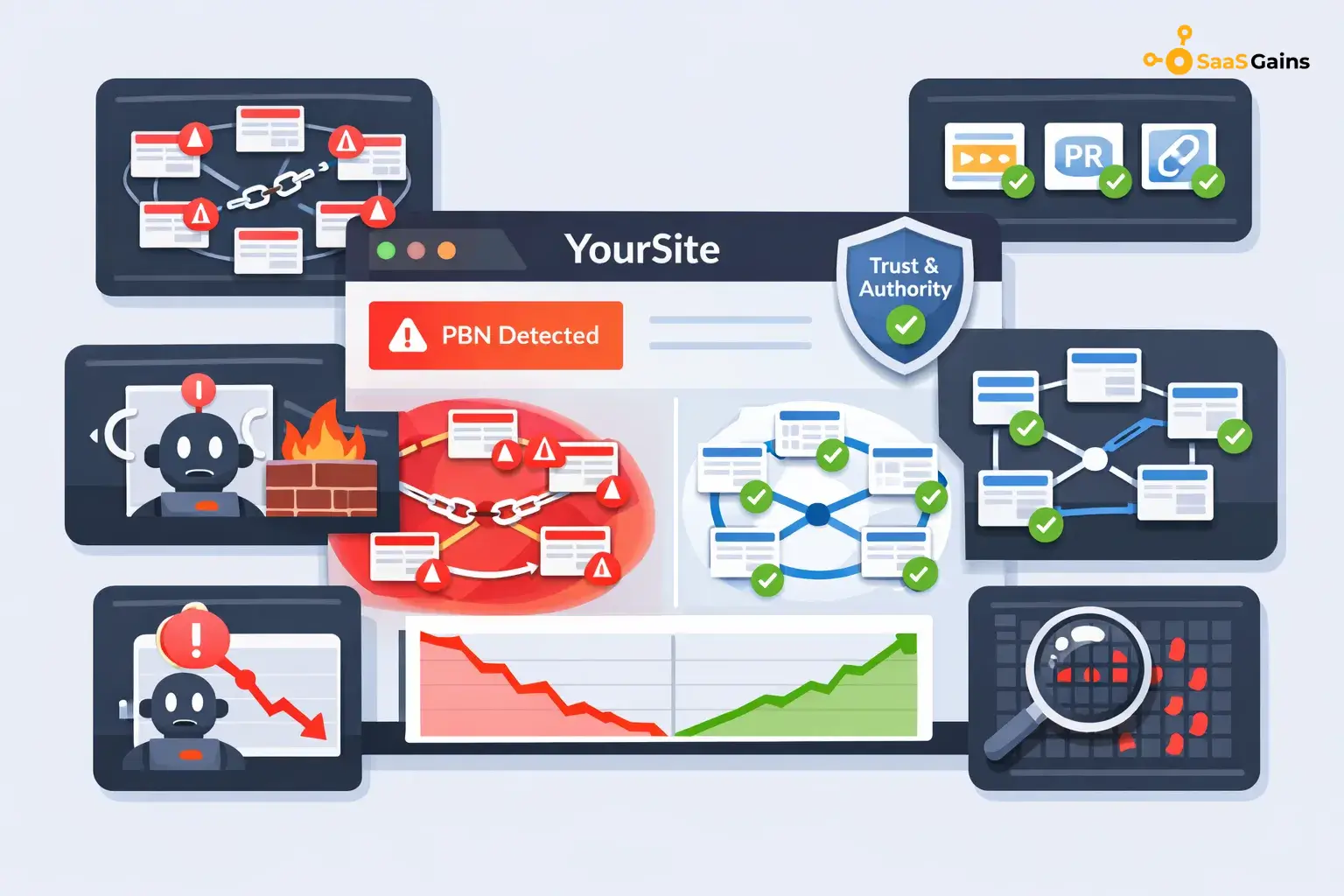
These networks are usually spread across different hosting providers and registered under different names to keep them looking independent, though search engines have become skilled at recognizing the pattern, and once one site in a network is identified, the value connected to the whole group tends to shift at the same time.
Link Farms and Bulk Paid Links
A link farm is a website, or a network of websites, built mainly to sell backlinks in bulk. Buyers pay a flat fee for a set number of links, generally without much input on where those links appear or which other businesses share the same page.
These sites are usually built quickly, with minimal original content and links pointing out to dozens of unrelated industries at once, a pattern that is fairly easy to recognize once you know what to look for.
Automated Blog Comments and Forum Posts
This tactic relies on automated software that posts the same link across thousands of blog comments and forum threads, regardless of relevance. Genuine commenting works very differently. Someone reads a post and leaves a thoughtful reply with a useful link, which most site owners genuinely welcome.
The automated version skips that step entirely, and the resulting links are almost always set to nofollow, which means they carry little ranking value from the outset.
Cloaking, Hidden Links, and Doorway Pages
Cloaking means showing search engines one version of a page while showing visitors a different version, usually to include extra keywords or links that would look unusual if everyone could see them. Hidden links work on a smaller scale, placing white text on a white background or using font sizes too small to notice.
Doorway pages take a similar idea further, existing mainly to direct visitors toward a different destination than the page search engines actually indexed.
Negative SEO and Unwanted Links
Not every black hat link actually belongs to the site it points at. A negative SEO situation happens when a competitor or another party builds a wave of low-quality links toward someone else’s domain, hoping a search engine connects that site with the same pattern.
It is worth knowing about even if you would never use black hat tactics yourself, since it explains why keeping an eye on your backlink profile is a good habit regardless of how careful you have been.
Article Spinning and Mass-Produced Content
Spinning runs a single article through software that swaps out words and rearranges sentences to create multiple versions of the same piece. The writing often reads a little unnatural, since the priority was passing duplicate content checks rather than readability, with each version created mainly to carry another link.
Risks Worth Understanding
Algorithmic Penalties vs Manual Penalties
Two types of response strategies have been formulated by search engines in dealing with the practice of black-hat link building, and it is important to understand them in order to gain some perspective on the topic.
- The first strategy is algorithmic and occurs automatically when something like Google’s Penguin update or SpamBrain spots an unusual link pattern and assigns a certain degree of importance accordingly.
- The second strategy involves manual penalties, where a person from the search engine inspects the website personally and decides that the website requires action to be taken in relation to its backlinks.
What This Can Mean for Your Site
- Rankings can shift once a pattern is identified, which is exactly why catching it early makes such a difference.
- In rarer, more serious cases, a site can be removed from search results, though this is uncommon and usually reversible with the right cleanup.
- Budget spent on links that lose their value is budget that could have gone toward a strategy built to last.
- Visitors occasionally form an impression based on where your link appears, which is worth keeping in mind when choosing partners.
- Rebuilding a link profile properly takes some patience, though the result tends to be far steadier than the shortcut it replaces.
How to Spot Black Hat Links in Your Own Profile
A short audit is usually enough to confirm whether anything needs attention. Worth checking for:
- A sudden, noticeable increase in referring domains within a short window of time
- Backlinks from sites with little real connection to your industry or audience
- The same anchor text repeated closely across many unrelated domains
- Links from sites in unrelated languages or covering very different topics
- A shift in organic traffic that lines up closely with a spike in new links
Google Search Console covers the basics for free and makes a great regular habit, even when everything looks fine. Paid tools such as Ahrefs and Semrush go a layer deeper, showing exactly where each link originates and how trustworthy that source looks overall.
Strengthening Your Backlink Profile
If an audit turns up a few links worth addressing, the process is straightforward and follows a handful of clear steps.
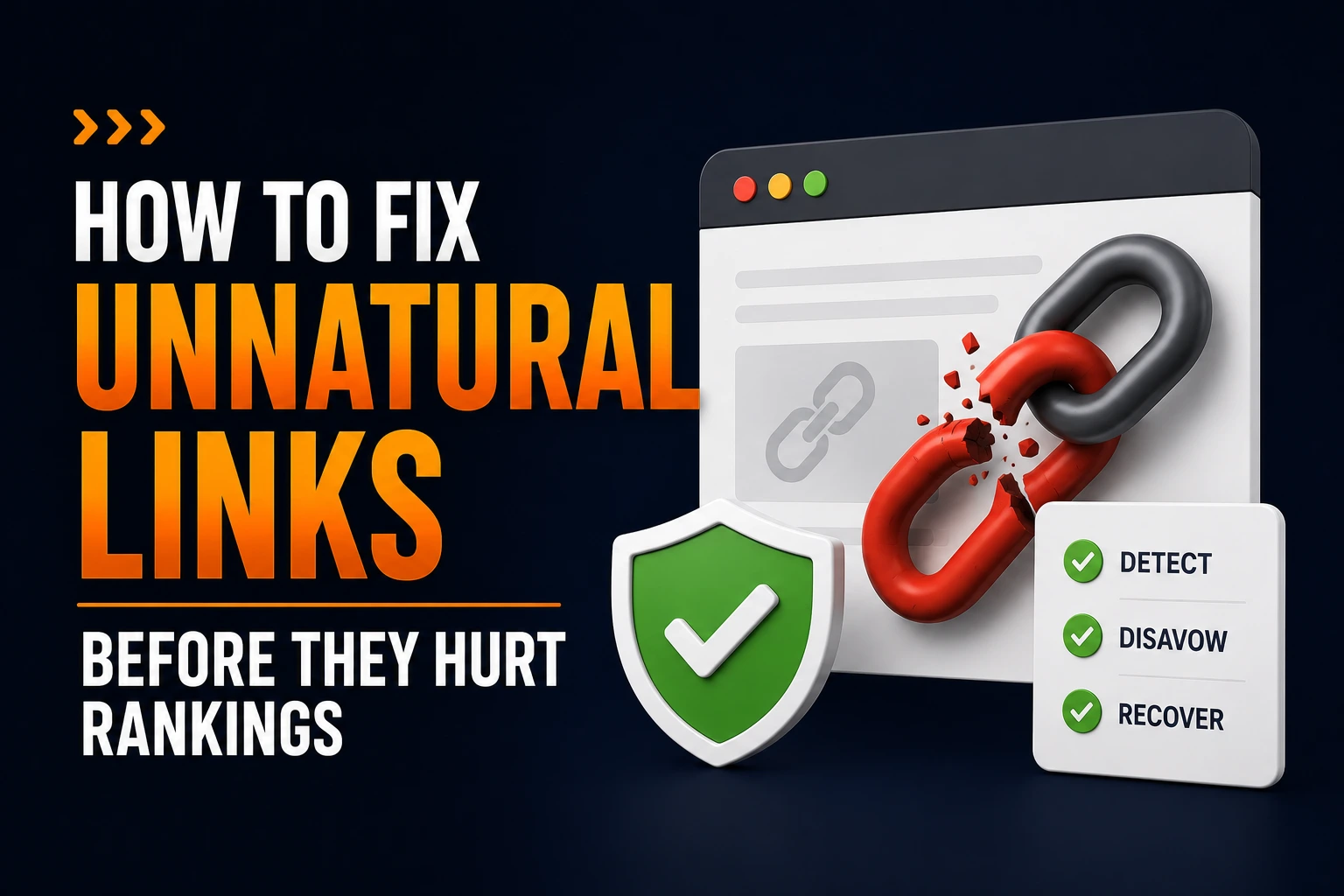
- List every link that looks low quality or clearly unrelated to your site.
- Reach out directly to the site owners and request removal, which is usually the cleanest fix when it works.
- For links that cannot be removed through direct contact, compile the remaining domains into a file and submit it through Google’s disavow tool, which tells the search engine to set those links aside when evaluating your site.
- Keep monitoring your profile regularly afterward, so new issues get noticed early rather than building up over time.
White Hat Alternatives Worth Building Instead
Every black hat tactic has a legitimate counterpart that builds the same kind of authority in a way that holds up well, usually with stronger results once enough time has passed.
Create Genuinely Linkable Content
A useful tool, an original study, or a thorough guide gives other sites a real reason to reference you. This is about as close as link building gets to something that keeps working on its own once it is published and discovered.
Guest Posting on Relevant Sites
Writing for a publication with a real editorial process, rather than one that accepts anything for a fee, earns a link along with exposure to an audience that already trusts the host site.
Digital PR and Earned Media
Pitching real data, an informed opinion, or a genuinely newsworthy story to journalists and niche publications tends to earn links that arrive with traffic and credibility already attached.
Broken Link Building
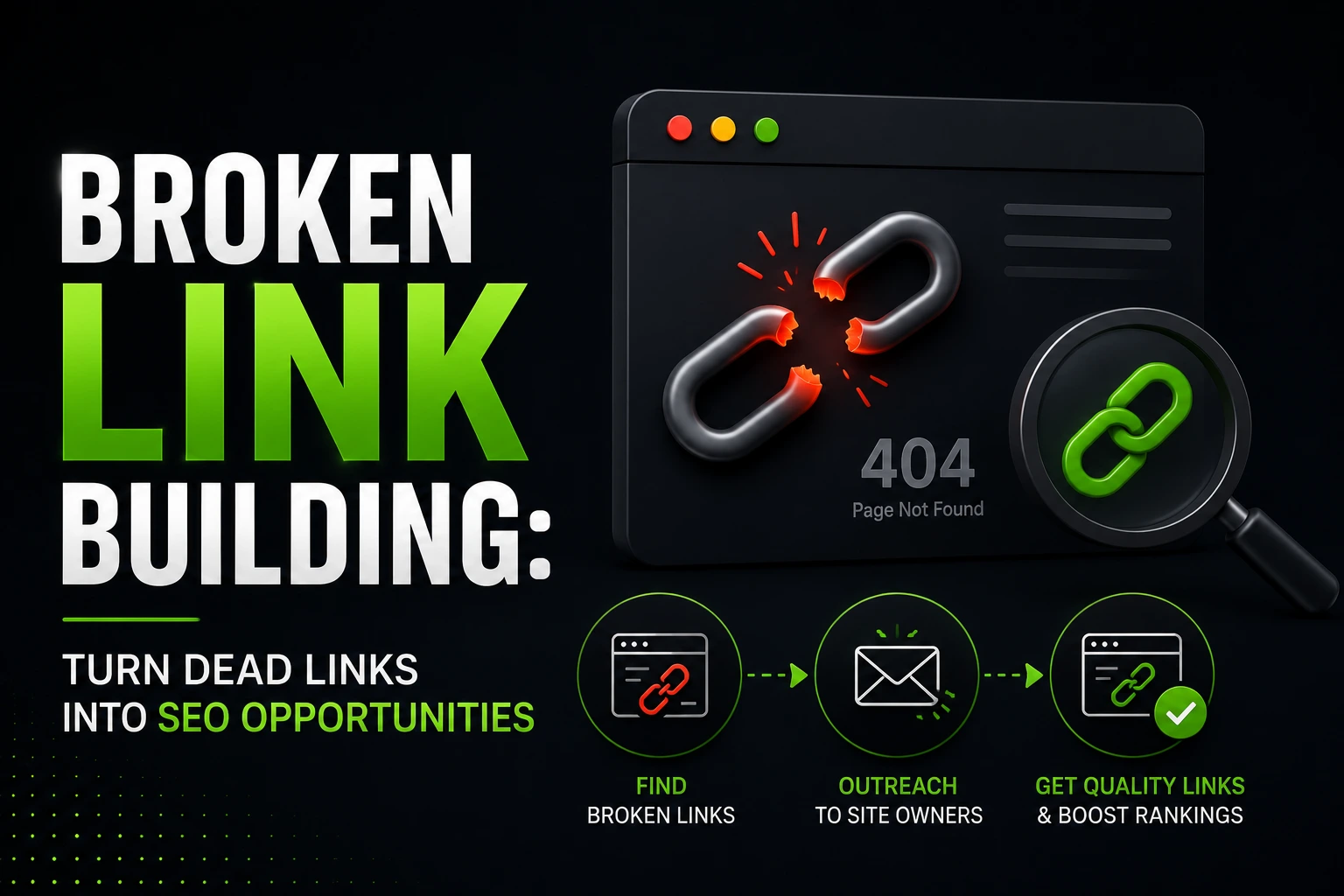
Finding outdated or dead links on resource pages relevant to your industry, then offering your own content as a working replacement, solves a real problem for the site owner while earning you a link that fits naturally into the page.
Relationship-Based Outreach
Genuine connections with bloggers, editors, and people working in your space tend to produce repeat placements over time, since the relationship outlasts any single email or campaign.
Final Thoughts
Black hat link building is not a mystery, and understanding it puts you in a much stronger position either way. It comes down to a simple trade between speed and durability. The tactics above can move a ranking for a little while, but the alternatives build something that holds up well: a backlink profile a search engine trusts without a second look. To protect your brand, shift your focus toward a resilient SaaS backlinks strategy.
Investing in contextual link building ensures:
- High Trust: A backlink profile search engines verify instantly.
- Durability: Rankings that survive core algorithm updates.
- Real Traffic: Clicks from actual humans, not bot networks.
Frequently Asked Questions:
Is black hat link building against the law?
No, in the majority of situations, this process isn’t illegal but rather against the guidelines of the search engines. However, there are some actions that could go beyond the boundaries of the law, for example, unauthorized access to a website with a subsequent link.
Is it possible for someone else to create black-hat links that will negatively impact my website’s rankings?
Yes, precisely. That describes a negative SEO situation when the other person tries to hurt your site via using black hat tactics with the aim of affecting the website’s search rankings. Backlink monitoring is the only solution here.
What are the differences between the algorithmic penalty and the manual one?
The first type of penalty occurs automatically in case of any unusual behavior on the website detected by algorithms, such as SpamBrain. The second type is issued as a result of the review done by a human.
How do I disavow bad backlinks?
Compile a list of the lower-quality domains you were not able to get removed through direct outreach, then submit that list through Google’s disavow tool in Search Console. This lets the search engine know to set those links aside when evaluating your site.
Is paying for a link always considered black hat?
No. A paid placement marked clearly with a sponsored or nofollow attribute stays within the guidelines. The issue is specifically links that pass ranking value in exchange for payment without that disclosure.
Do black-hat tactics ever actually work?
They can produce a short burst of movement before detection catches up, which is exactly why they continue to draw interest. The bigger picture is that search engines are designed to find these patterns over time, so durable results tend to come from approaches built to last from the start.