
The way we search for information is undergoing its most radical transformation since the invention of the search engine itself. We are moving away from a world of “ten blue links” and toward a world of “one perfect answer.”
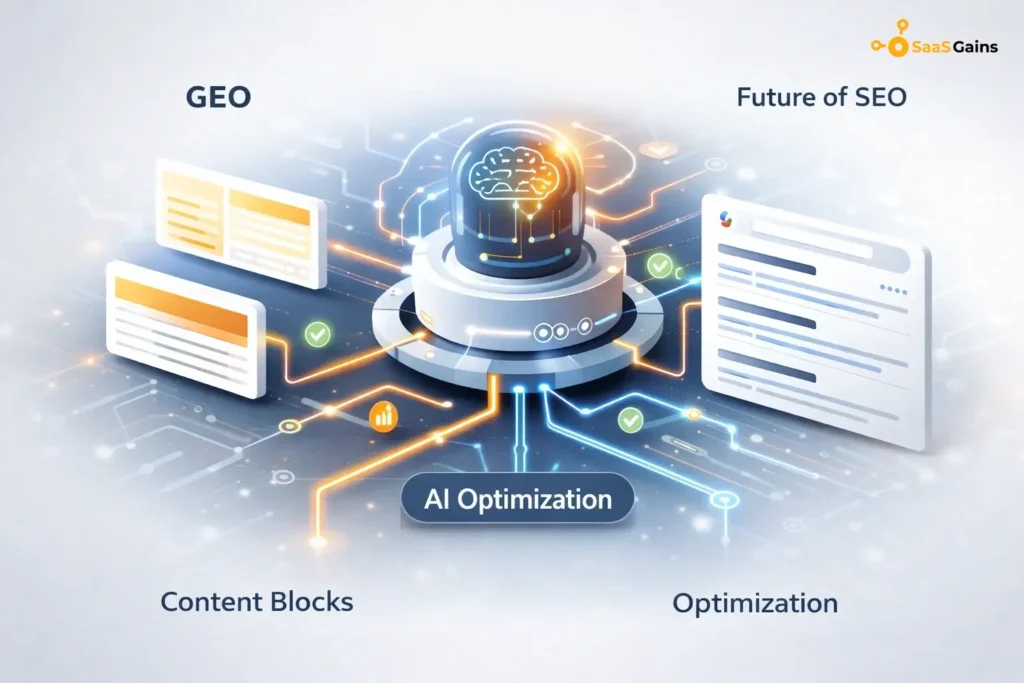
This new environment has created a specialized field called Generative Engine Optimization (GEO).
If you are a creator, marketer, or business owner, the rules of the game have changed. It is no longer enough to rank #1 on a results page. Today, success means being the source that AI like Google’s AI Overviews, ChatGPT, and Perplexity uses to build its answers.
What is Generative Engine Optimization (GEO)?
Generative Engine Optimization (GEO) is the process of optimizing content so that it is easily discovered, understood, and cited by artificial intelligence models.
While traditional SEO focuses on getting users to click a link, GEO focuses on getting your brand mentioned and cited inside the AI’s response. It’s the difference between being a book on a shelf and being the quote the librarian reads aloud.
The Core Difference: SEO vs. GEO
| Feature | Traditional SEO | Generative SEO (GEO) |
| Primary Goal | Rank high for clicks | Get cited and recommended by AI |
| Format | Long-form articles, blogs | Structured, “chunkable” facts |
| Trust Signal | Backlinks and Keywords | E-E-A-T and Original Data |
| User Experience | Navigating a website | Receiving an instant answer |
| Metric of Success | Organic Traffic / CTR | AI Citation / Share of Voice |
Why GEO is the New Essential Strategy?
The rise of “zero-click” searches is the primary driver behind GEO. Recent industry data shows that when an AI summary appears, the click-through rate to the top organic result can drop by over 50%.
AI engines don’t just want to send users away; they want to synthesize information. If your content isn’t “AI-ready,” you risk becoming invisible in this new search environment.
“SEO gets you found, but GEO gets you mentioned. Brands that treat content like a structured database for AI will own the next frontier.” — Industry Insight
How AI “Reads” Your Content: The Technical Side?
To optimize for generative AI SEO, you have to understand how these engines work. They don’t just look for target keywords; they look for entities and information gain.
RAG (Retrieval-Augmented Generation)
This is the tech behind most AI searches. It searches the web for a few “grounding” sources, then writes an answer based on them.
Citation Velocity
AI models prefer sources that are frequently mentioned across trusted platforms.
Entity Linking
AI connects your brand name to specific topics. If you write about “Email Marketing,” the AI needs to “know” you are an expert in that specific entity.
5 Pillars of a Winning GEO Strategy
To stay ahead, your content needs to speak the language of Large Language Models (LLMs). Here is how you can make your content AI-ready:
1. Lead with the “Answer-First” Model
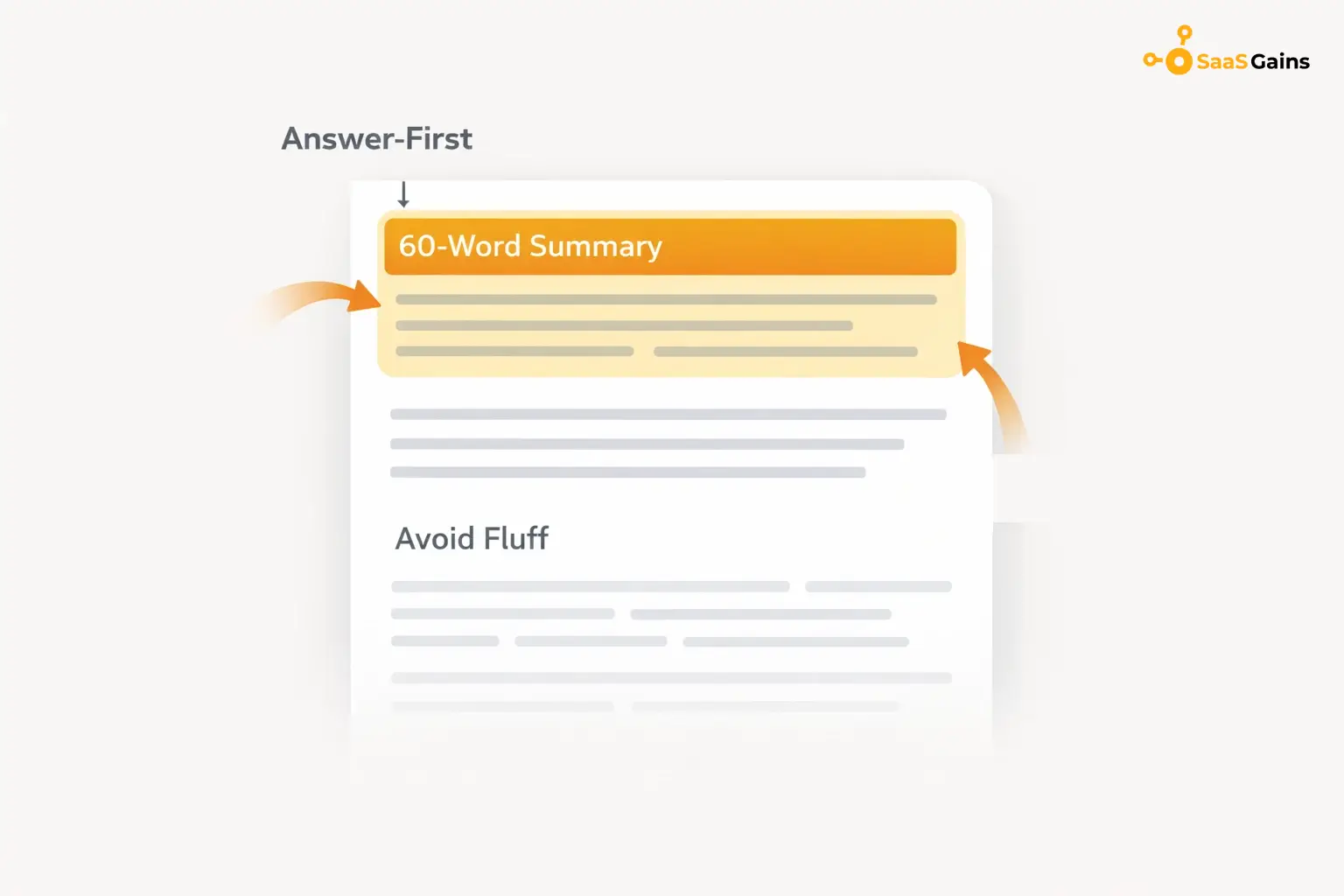
AI models prioritize “information gain.” They look for the most direct answer to a user’s prompt.
- The 60-Word Summary: Start every article or section with a 50–60 word summary that directly answers the primary question.
- Avoid Fluff: Don’t bury the lead. AI engines often “snip” the first few sentences to create their summaries.
2. Use Structured and Modular Content
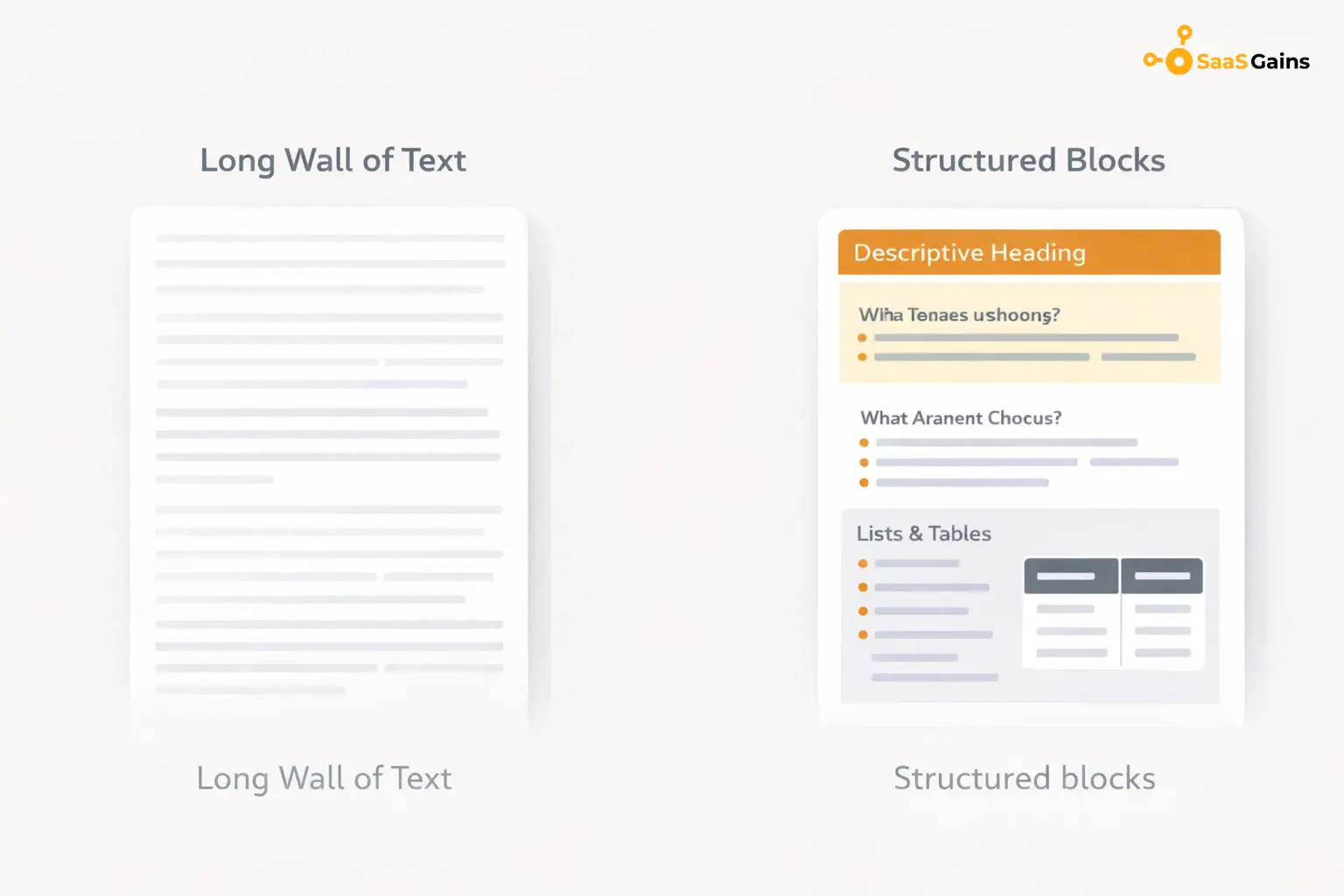
AI models process your content by slicing it into smaller, manageable “chunks.” If your content is one long wall of text, the AI will likely ignore it.
- Descriptive Headings: Use H2 and H3 tags that are phrased as questions (e.g., “What is Generative Engine Optimization?” instead of just “GEO Basics”).
- Lists and Tables: Data presented in bullet points or comparison tables is much easier for AI to extract and display.
3. Focus on “Entity” and Brand Authority (E-E-A-T)
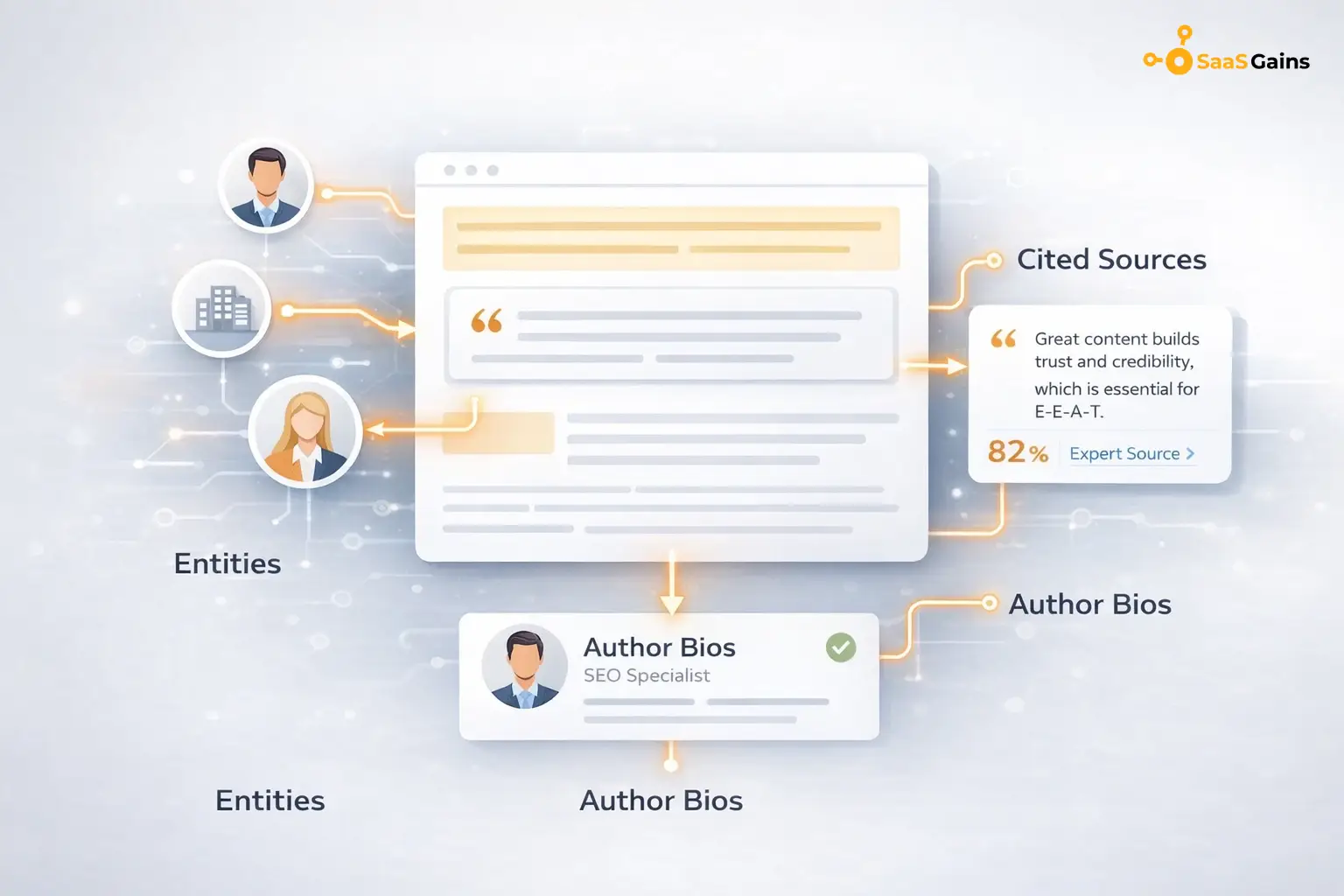
AI engines don’t just look for words; they look for entities (people, brands, and organizations).
- Cite Sources: Back up every claim with statistics or quotes from recognized experts.
- Author Bios: Ensure every piece of content has a clear author with verifiable credentials. This builds the “trustworthiness” that AI models crave.
4. Optimize for Conversational Queries
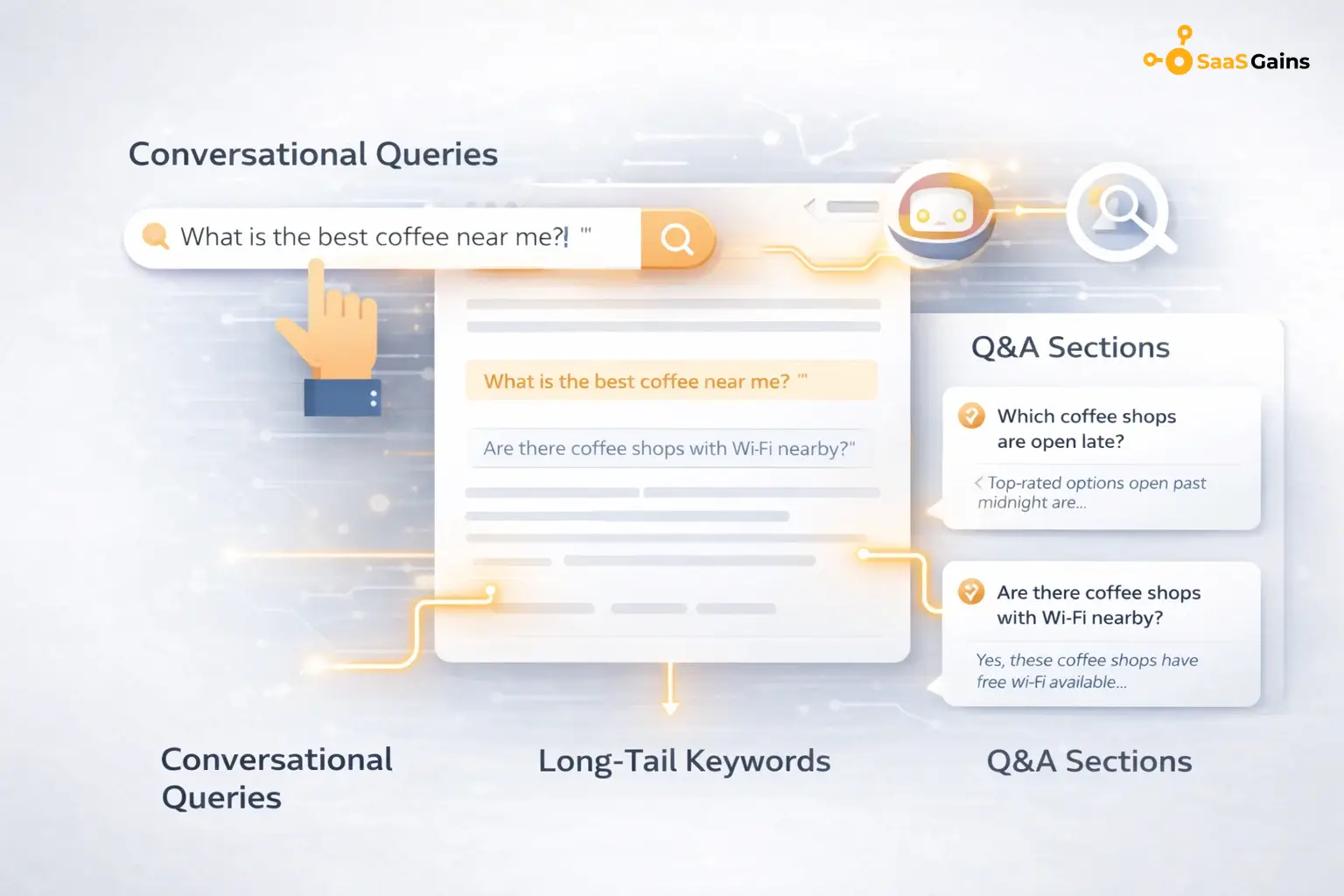
Search is becoming more natural. Instead of typing “best coffee,” users are asking, “What is the best coffee near me for working on a laptop?”
- Long-tail Keywords: Focus on full sentences and natural phrasing.
- Q&A Sections: Incorporate FAQ sections that mirror how people talk to AI assistants or chatbots.
5. Technical AI Readiness

Your website must be a clean “knowledge base” for AI crawlers.
- Schema Markup: Use FAQ, HowTo, and Organization markup. This provides machine-readable context.
- Citable Passages: Write sentences that can stand alone as a quote without needing the rest of the paragraph to make sense.
Comparison: GEO vs. Traditional SEO Strategy
To justify the shift in your budget, look at how the priorities have moved:
| Factor | Traditional Search Engine Optimization | Generative Engine Optimization (GEO) |
| Content Structure | Optimized for readability and keywords | Optimized for AI “extraction” and parsing |
| Keyword Usage | High-volume keyword matching | Semantic meaning and topic coverage |
| Internal Linking | Passing “Link Juice” | Building “Topical Authority” clusters |
| External Signals | Backlinks from high DA sites | Mentions in news, forums, and AI training data |
| Freshness | Updated once or twice a year | Constant updates for real-time AI retrieval |
Examples of GEO in Action
Consider the query: “What are the benefits of organic gardening?”
- Traditional Result: A list of 10 blogs about gardening. You click one and read 2,000 words.
- Generative Result: An AI provides a 4-point list. Beside the list, it cites “The Gardening Guru” as the source for these facts.
By using GEO SEO tactics, that site got the “brand mention” and the citation link, even if the user didn’t read the whole article.
Common Content Gaps to Avoid
Many companies fail to rank in AI summaries because they leave “context gaps.”
- Lack of Specificity: Don’t just say a product is “fast.” Use data: “It processes 50 GB per second.”
- Missing Definitions: AI loves to define terms. If you don’t have a “What is…” section, you’re missing an easy citation opportunity.
- Low Proof Density: If you make a claim without a stat or a quote, AI is less likely to trust it as a “fact” for its response.
Advanced GEO: Moving Beyond Keywords
As we dive deeper, we see that optimization engines are no longer just matching strings of text. They are performing semantic analysis. This means your content must cover a topic exhaustively but concisely.
- Synonym Integration: Use variants of your main keywords naturally. If you focus on “Generative SEO,” you should also use “AI-centric search optimization” and “LLM search visibility.”
- User Intent Alignment: Does your content solve a problem or just state a fact? AI engines prefer “instructional” and “analytical” content over pure sales pitches.
Conclusion
Generative Engine Optimization is not a replacement for SEO; it is the natural evolution of it. As AI becomes the primary interface for the internet, the brands that win will be those that provide the most “citable” value.
By focusing on direct answers, structured data, and high authority, you ensure that your voice is the one the AI chooses to amplify. The future of being found is being the answer.
Frequently Asked Questions
What is generative engine optimization?
Optimizing content to be summarized and cited by AI engines like ChatGPT and Gemini.
How does GEO differ from SEO?
SEO targets search rankings for clicks, while GEO targets AI citations for brand visibility.
Is SEO still important?
Yes, traditional SEO provides the foundation of authority that AI engines use to find you.
How do I get cited by AI?
Use clear headings, provide direct answers in the first 50 words, and include original data.
What are the best keywords for GEO?
Conversational, question-based “long-tail” phrases that mimic how people talk to AI.