
Building high-quality backlinks remains a top priority for anyone looking to rank on Google. However, the path to gaining these links is often filled with shortcuts that can do more harm than good. One of the most discussed and controversial methods is the use of a private blog network.
This guide explains everything you need to know about PBN SEO. We will cover what these networks are, how they work, and why most SEO experts recommend staying away from them if you want long-term success.
What is PBN in SEO?
A private blog network is a collection of websites built primarily to provide backlinks to a single central website. The goal of this setup is to manipulate search engine rankings by passing authority from the network sites to the main “money” site.
In most cases, these networks consist of expired domains that already have existing authority. By purchasing these domains and adding new content, owners try to trick Google into thinking the main site is getting natural mentions from multiple reputable sources.
What Are PBN Links?
When people talk about PBN links, they are referring to the actual hyperlinks placed within the content of these network sites. Because the person who owns the network also owns the main website, they have total control over the anchor text and where the link is placed.
While this sounds like an easy way to build authority, it is a direct violation of Google Webmaster Guidelines. These are considered artificial links rather than earned ones.
How Private Blog Networks Work?
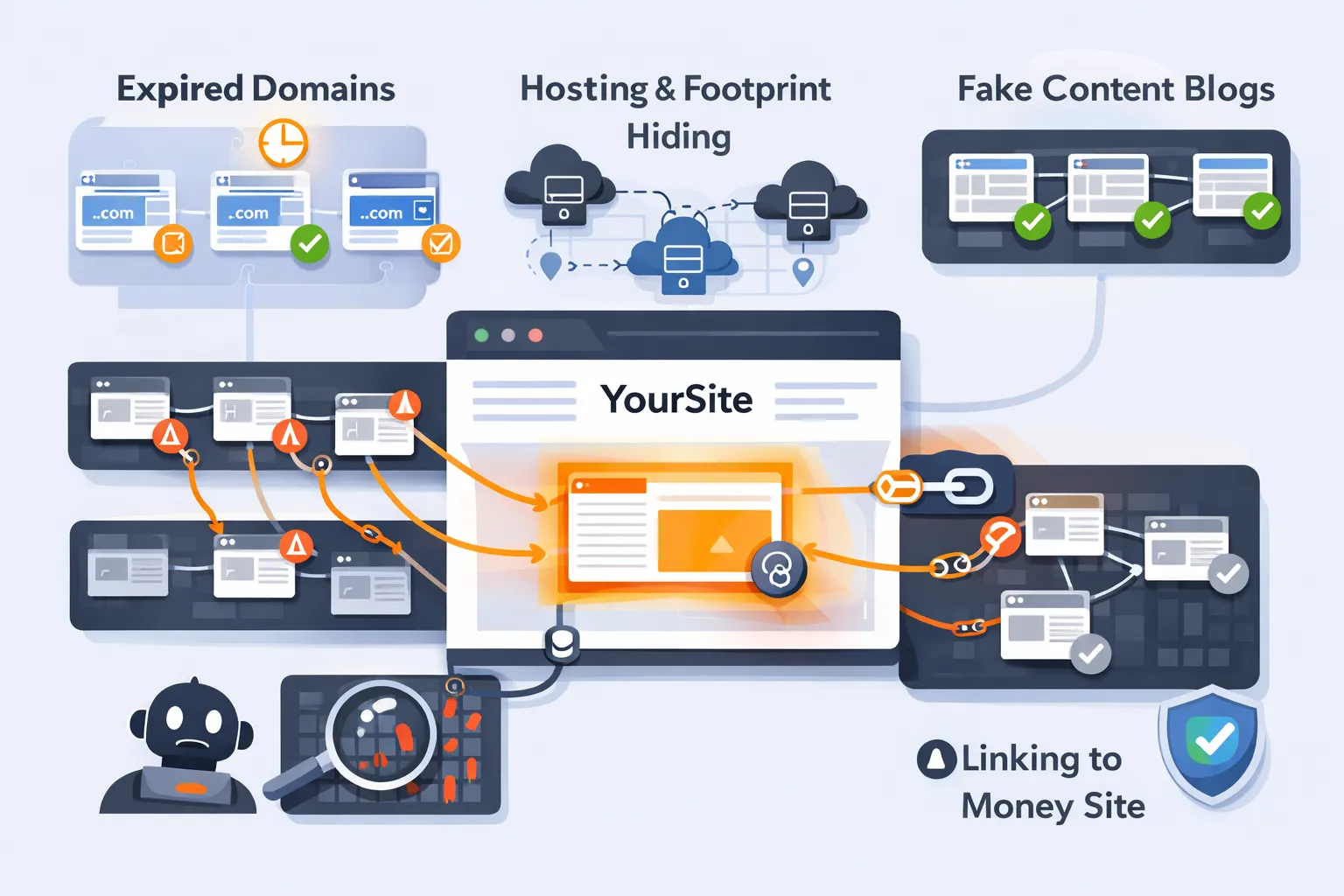
The process of building a private blog network involves several specific steps. Understanding these steps helps explain why search engines find them so problematic.
- Buying Expired Domains: Owners look for domains that were previously active and had good backlink profiles.
- Setting Up Hosting: To hide the network, owners often use different hosting providers for each site to avoid “footprints.”
- Adding Content: Simple articles are posted on these sites to make them look like real blogs or news portals.
- Linking Out: Once the site is indexed, a link is placed pointing back to the owner’s main commercial website.
Why People Use PBN SEO Backlinks?
Despite the risks, many people still use PBN backlinks. The main reason is control. When you use a network, you do not have to reach out to editors or wait for someone to like your content. You simply log in and create the link yourself.
Another reason is speed. Traditional link building takes months of networking and content creation. With a private blog network SEO strategy, you can generate dozens of links in a single afternoon. However, this speed often comes at a very high cost to the site’s safety.
The Risks of Using PBN Backlinks
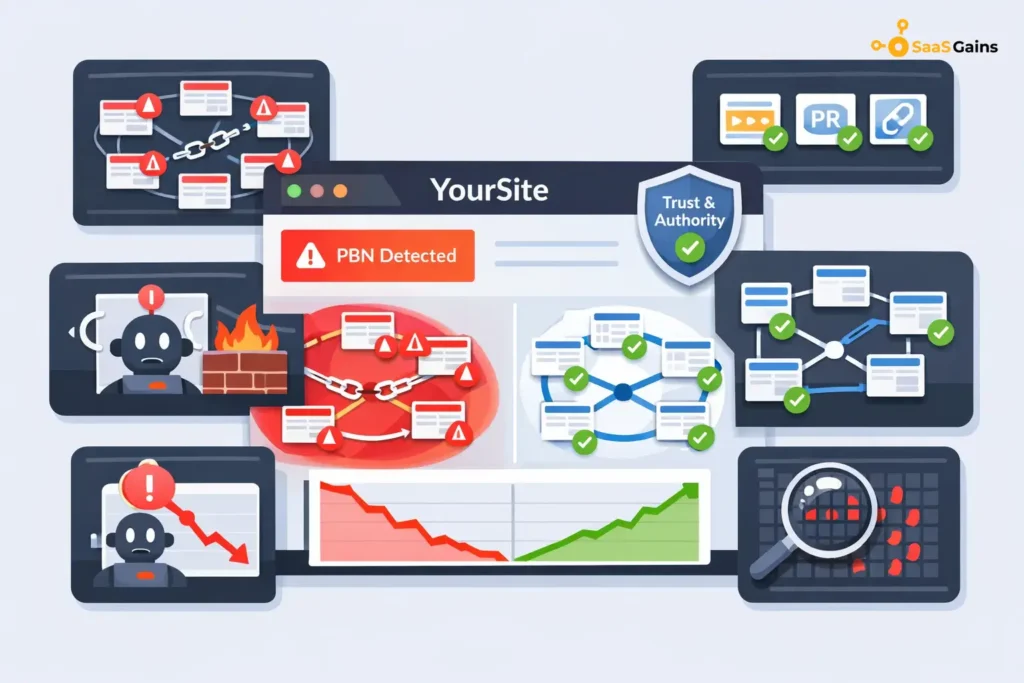
Google has become very sophisticated at detecting artificial link patterns. If you are caught using a network, the consequences are usually severe and difficult to recover from.
Deindexing of the Network
If Google identifies a site as part of a network, that site will be removed from the search results entirely. When this happens, all the “authority” it was passing to your main site disappears instantly, causing your rankings to crash.
Manual Actions and Penalties
Your main website might receive a manual penalty. This is a notification from Google stating that they have detected unnatural links. A manual penalty can take months to resolve and often requires you to disavow every link you worked so hard to create.
Algorithmic Suppression
Sometimes Google does not ban you outright. Instead, their algorithm simply ignores the links from these sites. This means you spend time and money building a network that provides zero benefit to your SEO performance.
How Google Detects Private Blog Networks?
Google uses advanced AI and manual reviewers to find these networks. They look for specific “footprints” that suggest multiple sites are owned by the same person.
- IP Addresses If many sites linking to you share the same IP or server, it looks suspicious.
- WHOIS Information Shared ownership details in domain registrations are a major giveaway.
- Content Patterns Using the same themes, plugins, or low-quality content across multiple sites.
- Linking Patterns If a group of sites only links to one specific money site, the connection is obvious.
PBNs vs White Hat Link Building
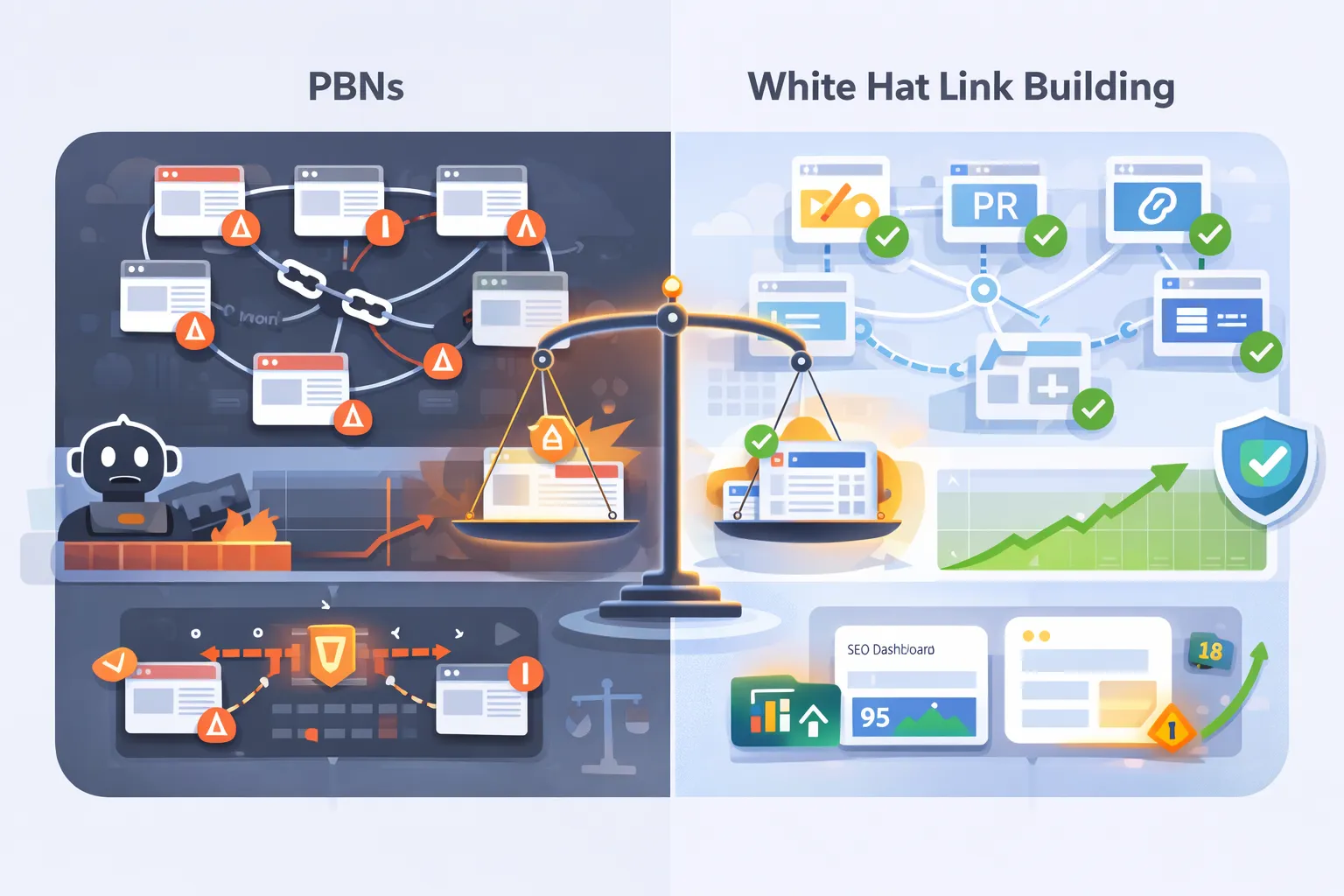
The difference between PBN links and white hat links is the intent and the method of acquisition. White hat link building focuses on creating value so that other webmasters want to link to you naturally.
PBNs focus on deception. While white hat methods like guest posting or resource page outreach are slower, they build a foundation that is safe from future Google updates. PBNs are a gamble that usually ends in a loss.
Why You Should Avoid Buying PBN Links?
Many SEO agencies offer “cheap” link packages that are actually just PBNs in disguise. Buying these is dangerous because you have no control over the quality of the network.
If the network owner is careless, your site is the one that suffers. These links are often placed on sites with thin content and “spammy” outbound links to other high-risk niches. This associates your brand with bad neighborhoods on the internet.
Alternatives to Private Blog Network SEO
If you want to grow your traffic without the risk of a penalty, there are several proven strategies to follow. These methods focus on building real authority and trust.
- Digital PR creates interesting stories or data studies that journalists want to write about.
- Skyscraper Technique Improve upon existing popular content and reach out to those who linked to the original.
- Broken Link Building Find dead links on relevant sites and offer your content as a working replacement.
- Guest Posting Contribute high-quality articles to reputable websites in your specific industry.
How to Identify if a Link is From a PBN?
If you are auditing your backlink profile or considering a service, look for these red flags. High-quality sites usually have a clear “About” page, active social media, and a history of organic traffic.
PBN sites often have no real traffic. They might look like a blog but lack any engagement or comments. If the site covers dozens of unrelated topics like “plumbing” and “crypto” on the same homepage, it is likely part of a network.
The Cost of Maintaining a Network
Building a safe network is not just risky; it is expensive. You have to pay for individual domain registrations, various hosting accounts, and unique content for every site.
When you calculate the time and money spent trying to hide a network from Google, it is often more expensive than simply doing legitimate outreach. Legitimate links also provide referral traffic, which PBNs almost never do.
Future-Proofing Your SEO Strategy
Google’s goal is to provide the best possible answer to a user’s query. They want to reward sites that are genuinely helpful. Using shortcuts like PBNs goes against this core mission.
By focusing on content quality and genuine relationships, you ensure that your rankings remain stable even when Google releases new updates. A site built on a foundation of real links is an asset that grows in value over time.
Conclusion
Knowing what is PBN in SEO is essential for every digital marketer. Although the idea of fast rankings sounds very attractive, the truth about private blog networks is that they are constant risks and ultimately failures. Spending your resources on proper link building and quality content is the only way to ensure sustainable growth in search rankings.
FAQs
What is a PBN backlink?
It is a link from a site within a private network used to artificially boost search rankings.
Are PBNs illegal?
They do not break laws, but they strictly violate Google’s terms of service and can get you banned.
Can Google detect PBNs?
Yes, Google employs advanced algorithms and manual analysis to detect and punish network footprints.
Are PBN links still effective?
They can be effective in the short term, but they will almost always result in a penalty or a rankings drop at some point down the line.
What is the best way to replace PBNs?
By earning links through high-quality content and direct outreach to reputable sites in your industry.
How can I determine if an agency uses PBNs?
If they offer a large number of links for a very low price with “guaranteed” results, they probably do.
Should I disavow PBN links?
If you have a manual penalty or notice a large number of spammy network links, using the Google Disavow tool is a good idea.